Artwork
Stripping the Slain
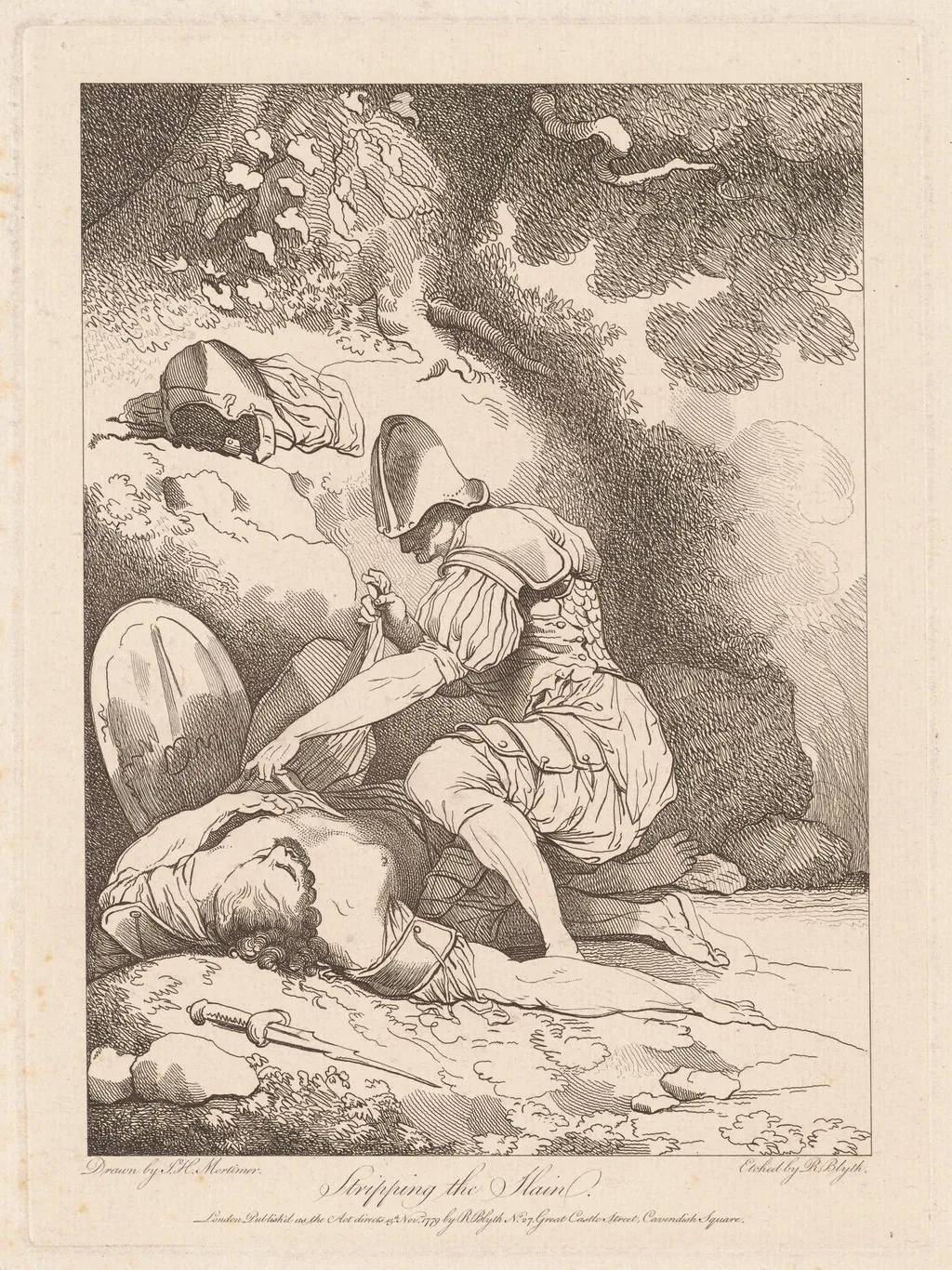
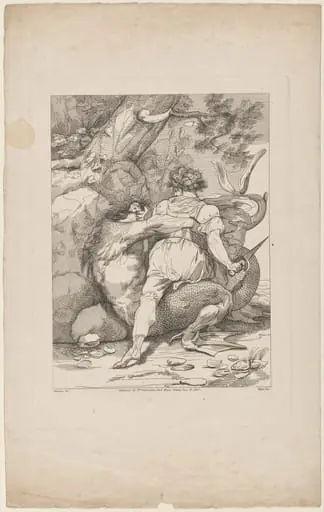
Stripping the Slain is an ink print by the Romanticist artist Robert Blyth. It dates from 1779 and is held in the collection of the National Gallery of Art.
About this work
Overview
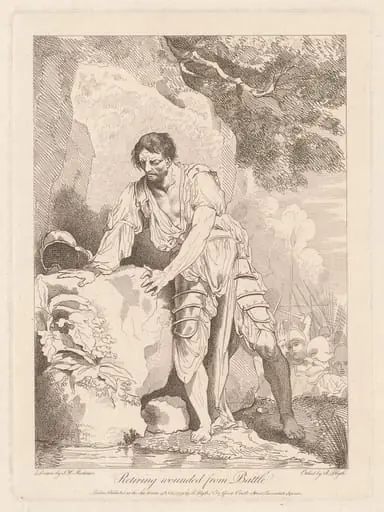
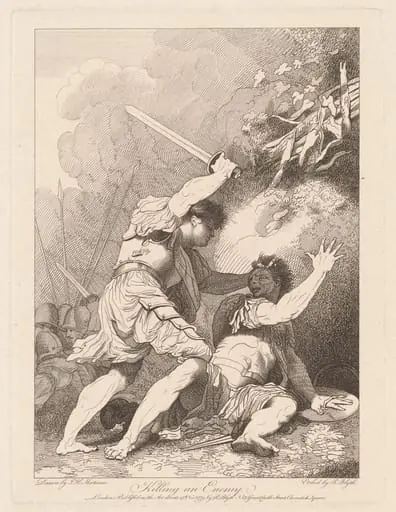
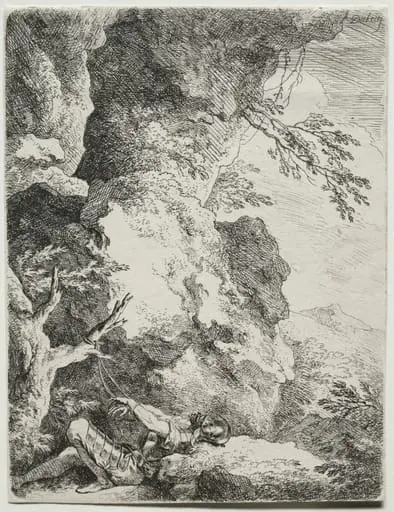
Robert Blythe’s 1779 etching titled *Stripping the Slain* presents a violent tableau rendered in monochrome on laid paper. A lone figure, clad in a hat and tunic, leans over a fallen body, his arm extended and leg bent in a moment of decisive action. A sword rests nearby, while craggy rocks and turbulent clouds frame the scene, creating a stark, dramatic composition.
Subject & Meaning
The work captures a fleeting instant of battlefield aftermath, focusing on the act of removing a dead combatant’s armor or weapon. The juxtaposition of the active, almost ritualistic gesture against the inert, lifeless form underscores themes of mortality, honor, and the harsh realities of war, inviting viewers to contemplate the human cost behind martial triumph.
Technique & Style
Executed as an etching, Blythe employed fine incised lines and varied hatching to achieve a rich tonal range of grays. The texture of the laid paper contributes subtle surface variation, enhancing depth in the rocky landscape and cloud formations. The composition’s dynamic pose and emotive lighting reflect the heightened drama characteristic of late‑18th‑century Romantic sensibilities.
History & Provenance
Created in 1779, the print emerged during a period when British artists increasingly explored dramatic historical subjects.
Created in 1779, the print emerged during a period when British artists increasingly explored dramatic historical subjects. While specific ownership records are sparse, the piece has been catalogued in several 19th‑century print collections, indicating its circulation among connoisseurs of narrative etchings. Its survival on original laid paper attests to careful preservation over more than two centuries.
Artist & collection