Artwork
Giulia Gonzaga
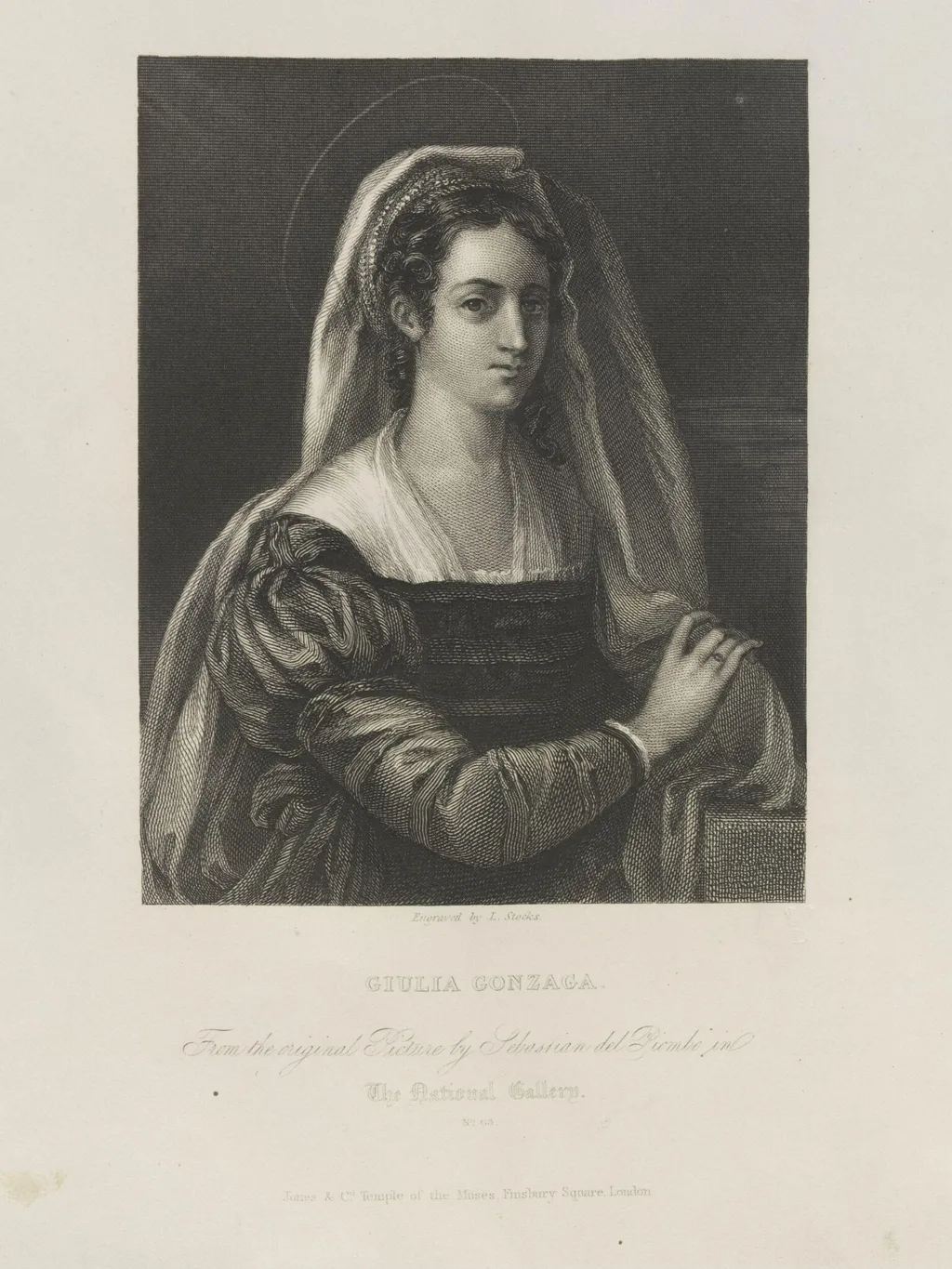
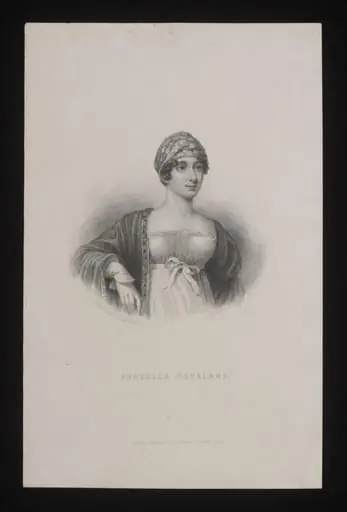
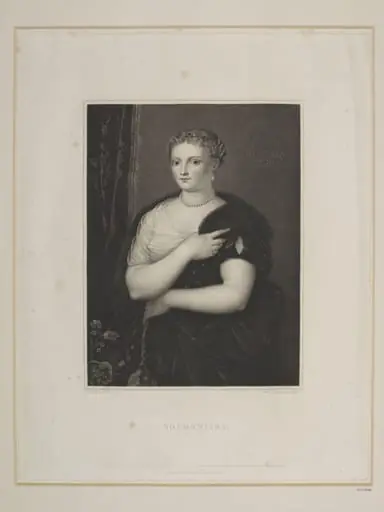
Giulia Gonzaga is a print by Lumb Stocks. It dates from 1850 and is held in the collection of the Victoria and Albert Museum.
About this work
Overview
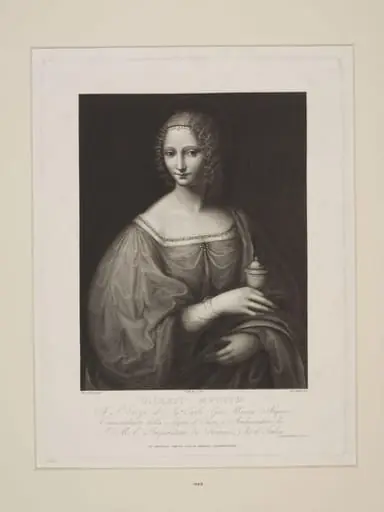
The print captures the sitter’s likeness with careful tonal gradations, mimicking the modeling of light and shadow typical of Renaissance painting.
This black-and-white print portrays Giulia Gonzaga, an Italian noblewoman of the early 16th century. Created by Lumb Stocks, it reproduces a painted portrait originally executed by Sebastiano del Piombo. The print captures the sitter’s likeness with careful tonal gradations, mimicking the modeling of light and shadow typical of Renaissance painting. Its plain background directs attention entirely to the figure’s poised expression and attire.
Subject & Meaning
Giulia Gonzaga was known for her intellectual circles and patronage of the arts. The portrait presents her with quiet dignity: hands folded over her chest, gaze steady, and attire modest yet refined. The high neckline and puffed sleeves reflect contemporary aristocratic dress, while the restrained composition conveys restraint and inner composure. The image functions less as a personal likeness and more as a symbol of cultivated nobility.
Technique & Style
Lumb Stocks employed engraving or etching to translate del Piombo’s oil painting into a monochrome print. He used fine lines and cross-hatching to simulate the chiaroscuro effects of the original, creating depth through contrast between light and shadow. The soft rendering of her hair and the crisp definition of her collar demonstrate technical precision. The absence of color emphasizes form and texture over decorative detail.
History & Provenance
The original painting by Sebastiano del Piombo dates to around 1530, commissioned during Giulia’s time in Mantua. Lumb Stocks produced the print in the 19th century, likely as part of a broader revival of interest in Renaissance portraiture. This reproduction served educational or decorative purposes, circulating the image beyond the confines of private collections. Its survival reflects enduring fascination with early modern elite portraiture.
Context
In the 16th century, portraits of noblewomen like Giulia Gonzaga were tools of social representation, often circulated among courts to affirm status and virtue. The emphasis on modesty and composure aligned with ideals of female conduct. By the 1800s, such images were reprinted as historical artifacts, bridging Renaissance aesthetics with Victorian tastes for classical refinement and moral seriousness.
Legacy
Though not an original Renaissance work, this print preserves the visual language of del Piombo’s portrait for later audiences. It contributed to the 19th-century canonization of Renaissance figures as cultural icons. The print’s endurance in archives and collections underscores how reproductive media extended the reach of early modern imagery, shaping perceptions of historical identity long after the sitter’s lifetime.
Artist & collection