Artwork
Flori albe
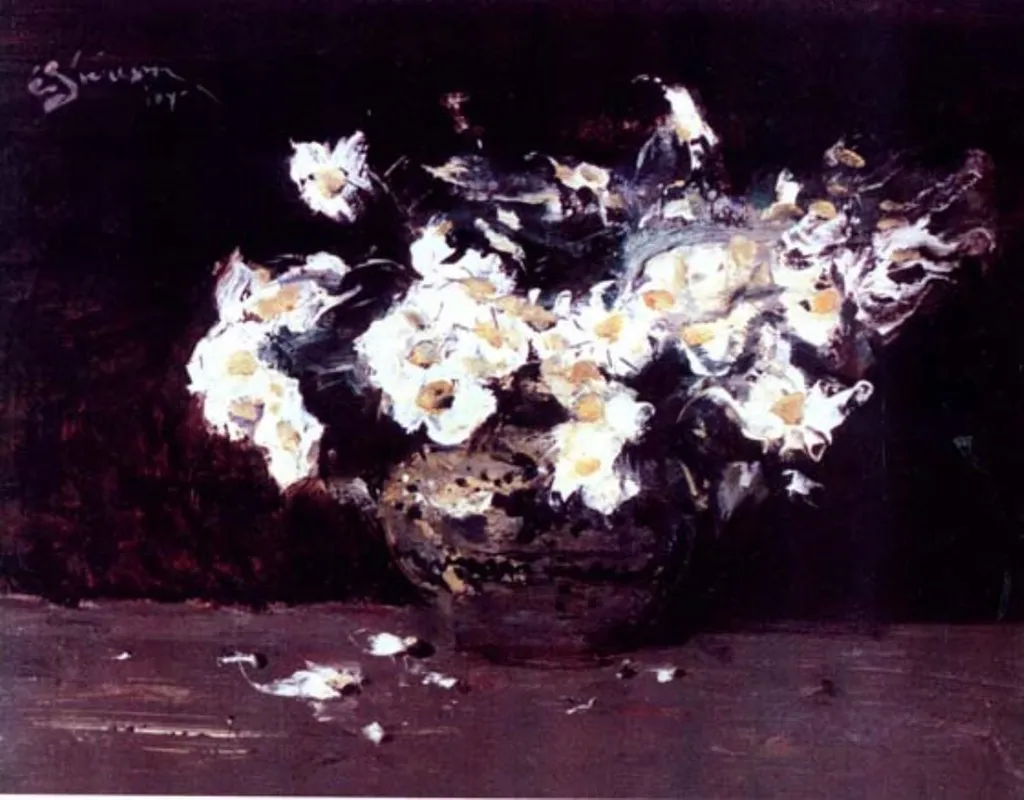
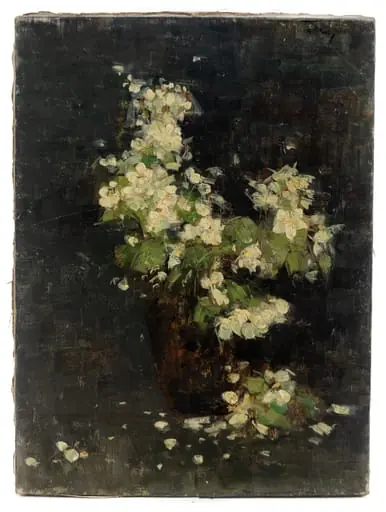
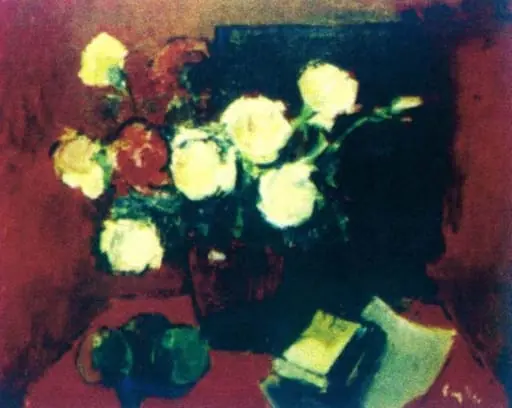
Flori albe is an unspecified painting by Eustațiu Stoenescu. It dates from 1945 and is held in the collection of the National Museum of Art of Romania.
About this work
Overview
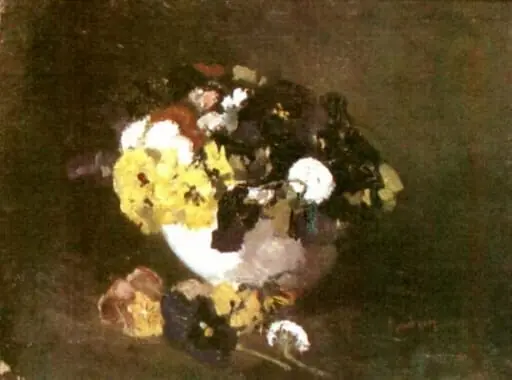
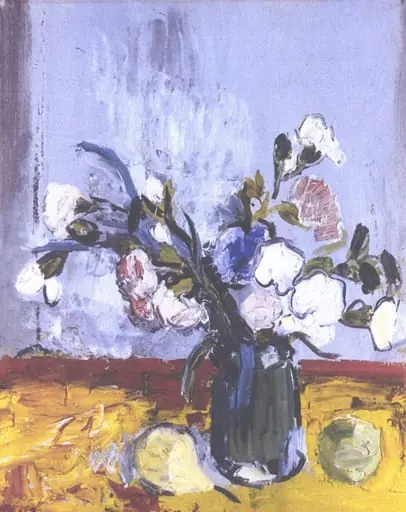
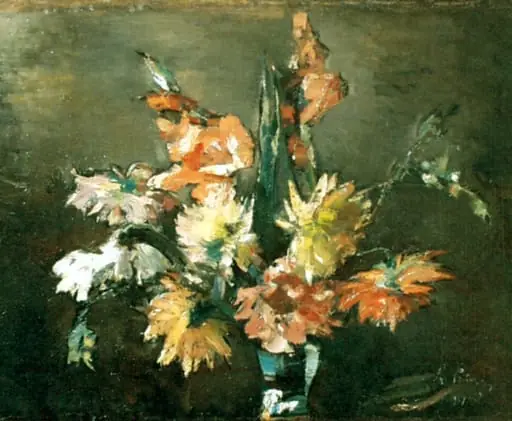
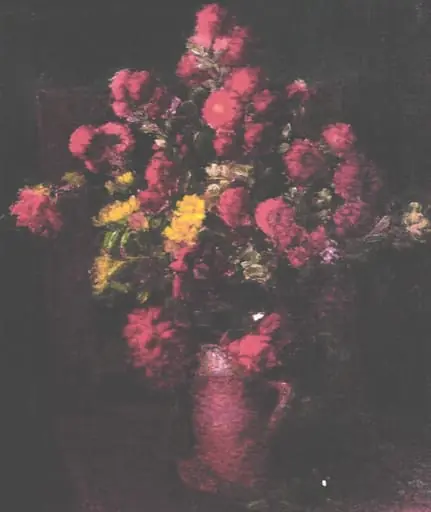
Eustațiu Stoenescu, a Romanian artist noted for his portrait work, painted the canvas titled *Flori albe* in 1945. The composition centers on a densely arranged bouquet of white and yellow blossoms set against a nearly black backdrop, creating a stark visual contrast.
Subject & Meaning
The work presents a dark, textured vase brimming with flowers whose thick, uneven petals and tangled stems convey a sense of organic vitality. The juxtaposition of luminous blooms against the deep background emphasizes the fleeting beauty of the natural subject.
Technique & Style
Stoenescu employed heavy impasto, applying paint in thick layers that appear scraped onto the surface. This vigorous handling produces a rough, tactile quality, giving the blossoms a palpable, almost three‑dimensional presence rather than a polished finish.
History & Provenance
Born in Craiova in 1884, Stoenescu studied under Jean‑Paul Laurens after moving to Paris in 1900. He exhibited early works in Paris and his hometown in 1905, establishing his reputation. Later he settled in New York City, where he lived until his death in 1957; *Flori albe* dates from his later period.
Context
Created in the immediate aftermath of World War II, the painting reflects a period when many European artists explored expressive surface treatment and vivid color contrasts, aligning Stoenescu’s approach with broader trends in mid‑century modernism.
Artist & collection
Artist
Eustațiu Stoenescu (Craiova, 1884-New York City, 1957) was a Romanian painter principally known for his portraiture.