Artwork
Portret de femeie
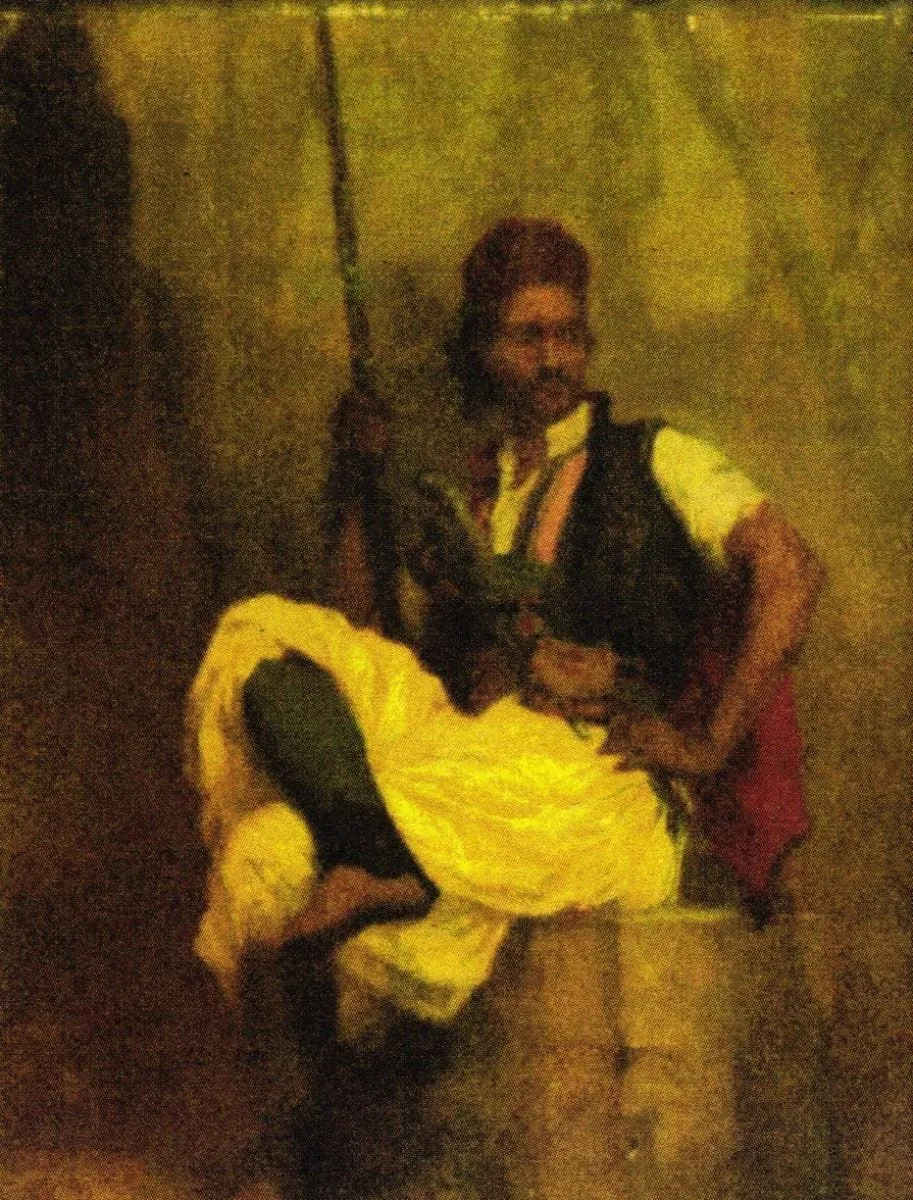
Portret de femeie is an unspecified painting by Eustațiu Stoenescu. It dates from 1947 and is held in the collection of the Botoșani County Museum.
About this work
Overview
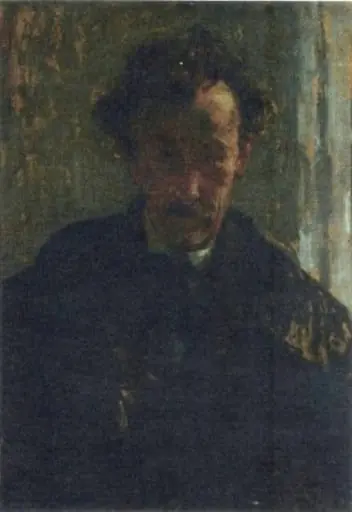
Painted in 1947 by Romanian artist Eustațiu Stoenescu, *Portret de femeie* is a portrait that departs from its title by depicting a man holding an infant. Though Stoenescu was known for formal portraiture, this work leans toward intimate domestic realism. The painting resides in the Museum of Ethnography’s collection, suggesting its cultural rather than purely aesthetic significance.
Subject & Meaning
The subject is a man, dressed in a dark vest over a light shirt, seated with a child swaddled in a vivid yellow blanket.
The subject is a man, dressed in a dark vest over a light shirt, seated with a child swaddled in a vivid yellow blanket. His expression is solemn, contrasting with the warmth of the infant’s presence. The absence of a woman, despite the title, invites questions about familial roles or possible mislabeling. The focus on caregiving, rendered without sentimentality, suggests a quiet celebration of paternal tenderness.
Technique & Style
Stoenescu employed thick, tactile brushwork—impasto—to define the blanket and fabric of the man’s vest, creating a tactile surface that draws the eye. The background is muted and indistinct, isolating the figures in soft, directional light that accentuates the baby’s face and the yellow cloth. The technique emphasizes texture over detail, grounding the scene in physical presence rather than idealized form.
History & Provenance
Born in Craiova in 1884 to a family with regional political connections and Breton maternal heritage, Stoenescu trained in Paris under Jean-Paul Laurens after relocating there in 1900. He exhibited regularly in both Paris and Romania. The painting entered the Museum of Ethnography’s holdings after its completion, likely reflecting institutional interest in documenting everyday Romanian life during the postwar period.
Context
Created in 1947, the work emerged during Romania’s transition into a socialist state, when art was increasingly directed toward social realism. Yet this portrait avoids ideological messaging, focusing instead on a private moment. Its retention in an ethnographic museum, rather than a fine arts institution, may indicate its perceived value as a document of domestic culture over artistic innovation.
Legacy
Though not widely reproduced, *Portret de femeie* remains a quiet example of Stoenescu’s later work, illustrating his shift from formal portraiture toward more personal, emotionally restrained compositions. Its placement in an ethnographic collection underscores how mid-century Romanian institutions valued art that reflected social norms, even when it diverged from official artistic directives.
Artist & collection
Artist
Eustațiu Stoenescu (Craiova, 1884-New York City, 1957) was a Romanian painter principally known for his portraiture.