Artwork
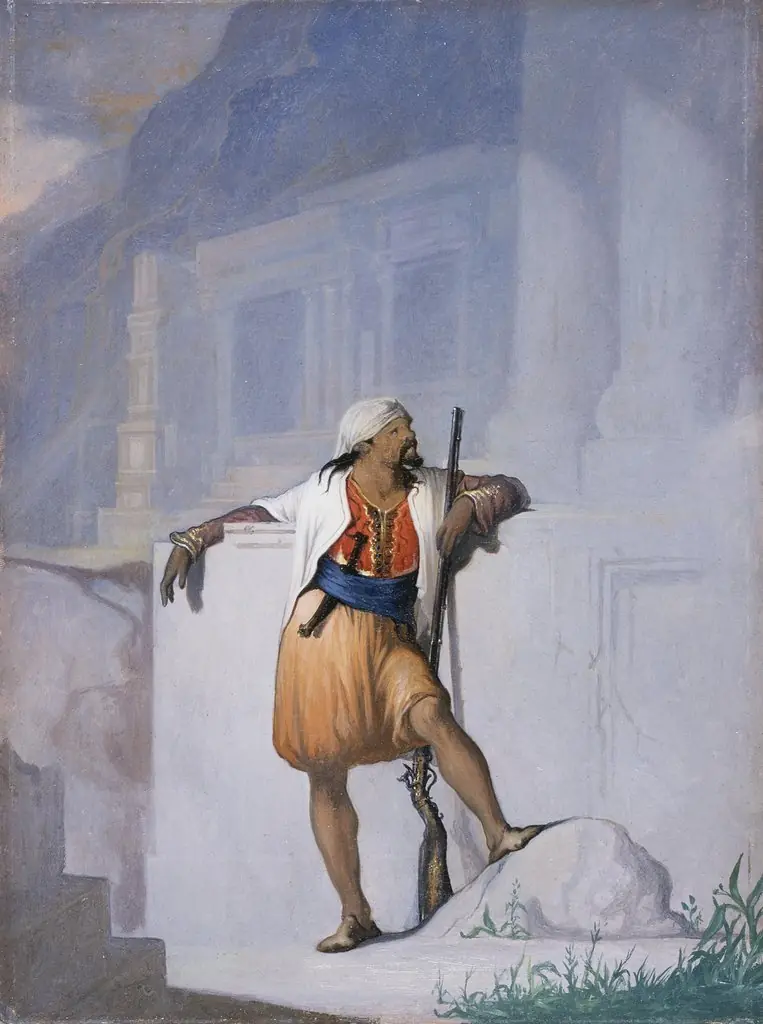
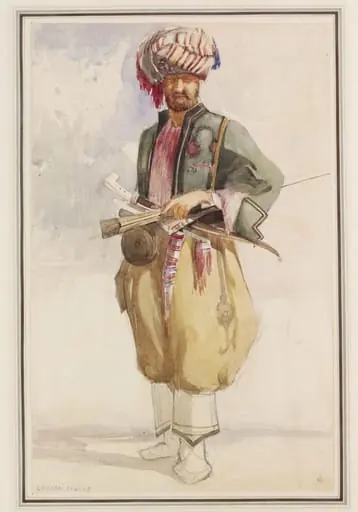
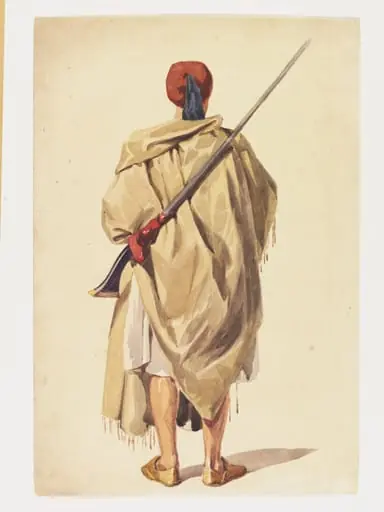
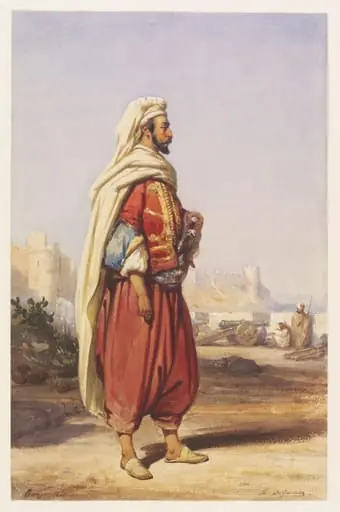
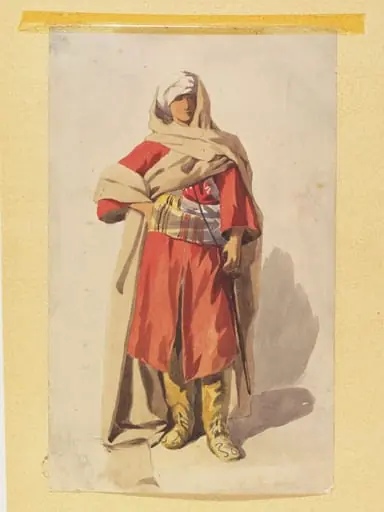
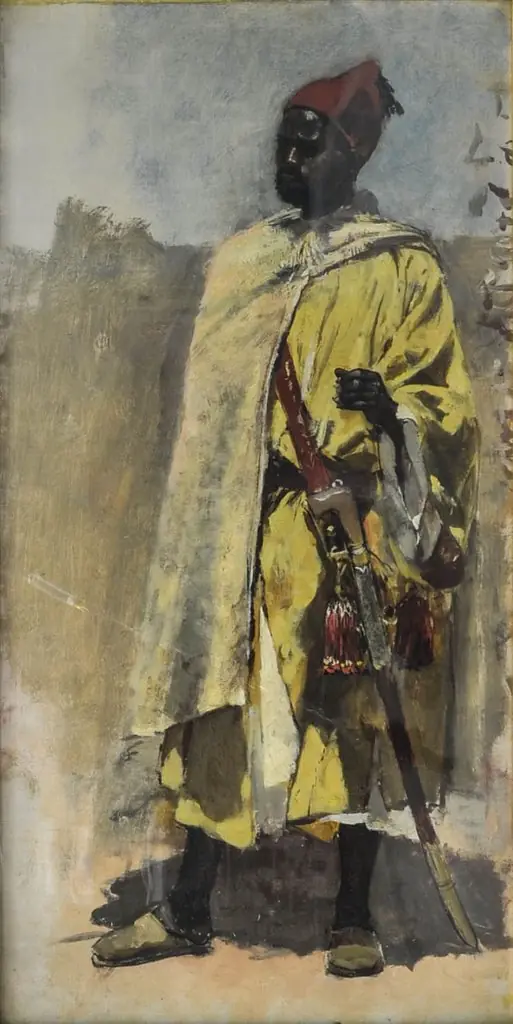
A Moorish Soldier before a Sunlit Wall
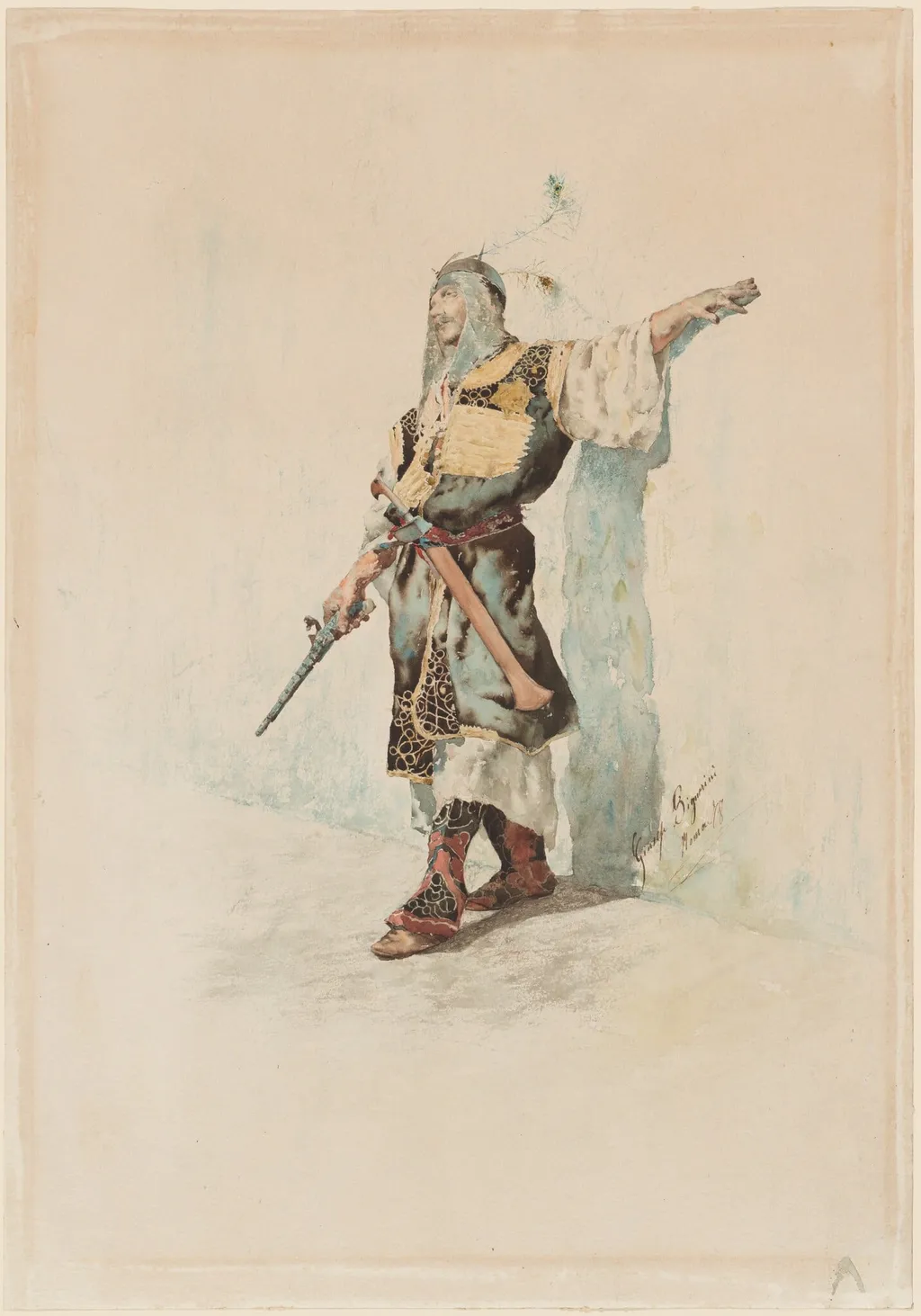
A Moorish Soldier before a Sunlit Wall is a graphite drawing by the Impressionist artist Giuseppe Signorini. It dates from 1878 and is held in the collection of the National Gallery of Art.
About this work
Overview
Created in 1878 by Giuseppe Signorini, this watercolor and graphite drawing depicts a solitary figure against a sunlit wall. Executed on wove paper, the work captures a moment of quiet stillness rather than narrative action. Its modest scale and spontaneous execution suggest it was made as a study, possibly during travel or as part of the artist’s exploration of Eastern dress and posture.
Subject & Meaning
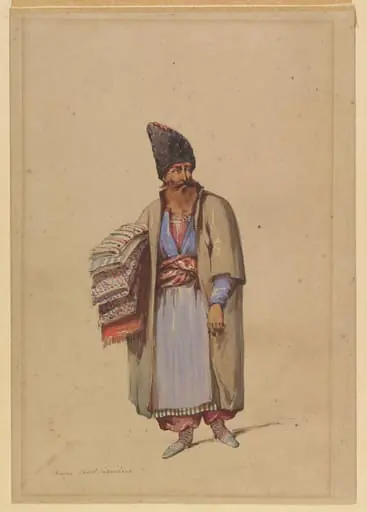
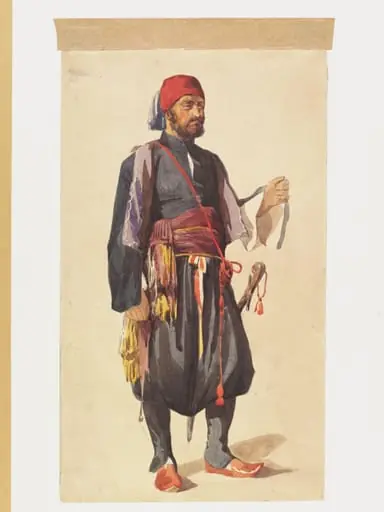
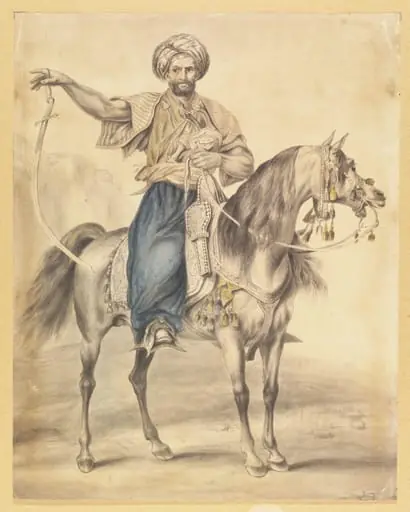
The figure, dressed in a loose robe and tall boots, wears a dark hat that casts a shadow over his face, emphasizing his solemn expression. He holds a staff and gestures outward, suggesting presence rather than action. The lack of contextual detail—no architecture, landscape, or companions—focuses attention on the individual’s demeanor, evoking anonymity and dignity without overt symbolism.
Technique & Style
Signorini employed loose, rapid watercolor washes over a light graphite underdrawing, allowing the paper’s texture to show through in places.
Signorini employed loose, rapid watercolor washes over a light graphite underdrawing, allowing the paper’s texture to show through in places. Color is applied thinly, with areas of near-transparency contrasting with bolder strokes that define the sash and boots. The pencil lines remain visible, reinforcing the sketchlike quality. The technique prioritizes immediacy over finish, capturing light and form with economy.
History & Provenance
The drawing was produced in 1878 during a period when European artists increasingly turned to North African and Middle Eastern subjects. Signorini, an Italian painter known for genre scenes, likely encountered such figures during travels or through cultural exposure in Italy. Its survival as a standalone work suggests it was valued for its observational quality rather than as a preparatory piece for a larger composition.
Context
In late 19th-century Europe, depictions of 'Moorish' figures were common in Orientalist art, often romanticized or exoticized. Signorini’s approach diverges by avoiding theatricality; the figure is rendered without props or setting that might reinforce stereotypes. The work reflects a shift toward intimate, observational studies over staged narratives, aligning with broader trends in sketch-based realism.
Legacy
Though not widely exhibited, the drawing exemplifies how watercolor could convey psychological presence with minimal means. Its unpolished quality influenced later artists interested in spontaneity and the expressive potential of unfinished forms. It remains a quiet testament to the artist’s interest in human presence beyond cultural clichés.
Artist & collection