Artwork
Ragusa
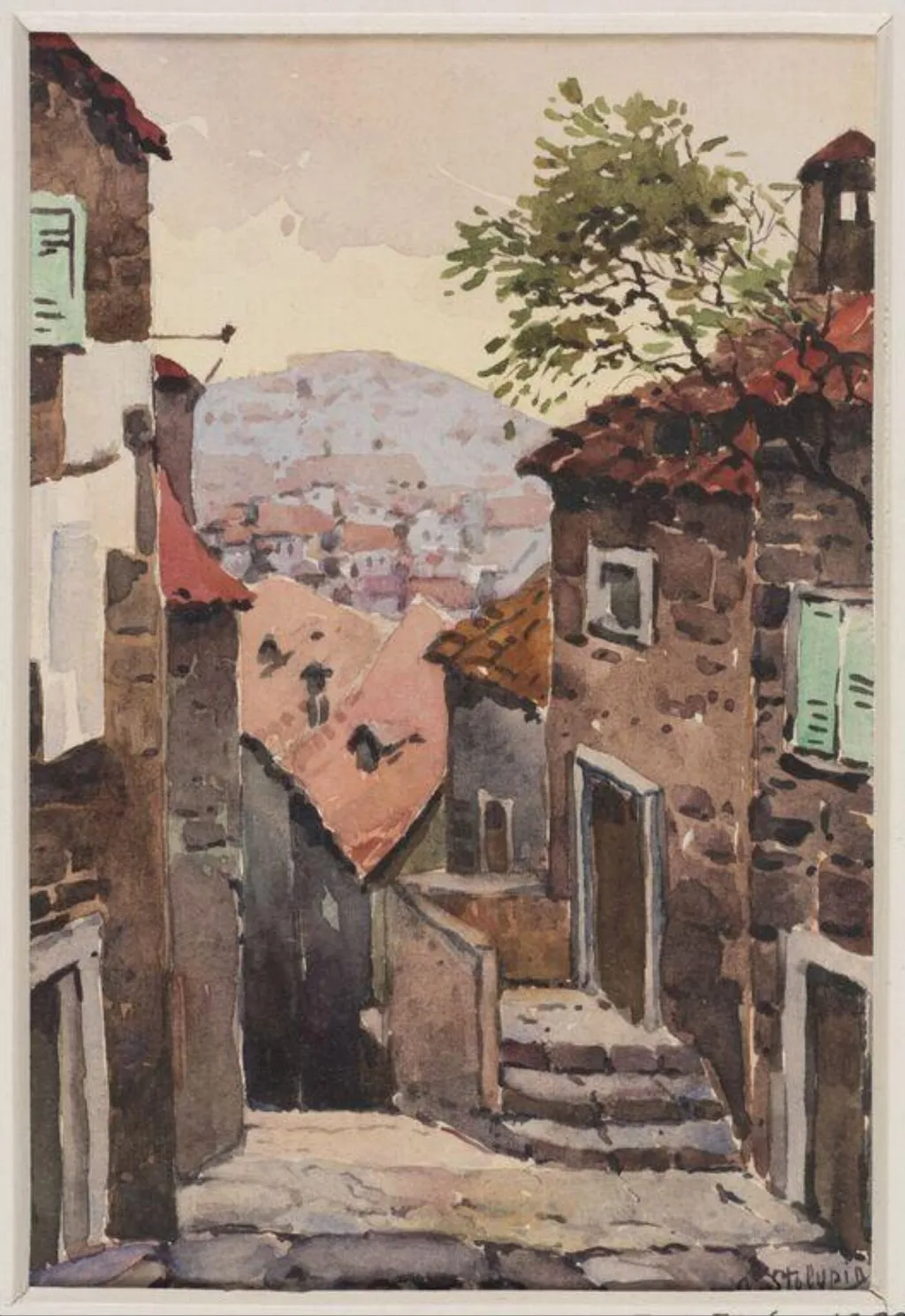
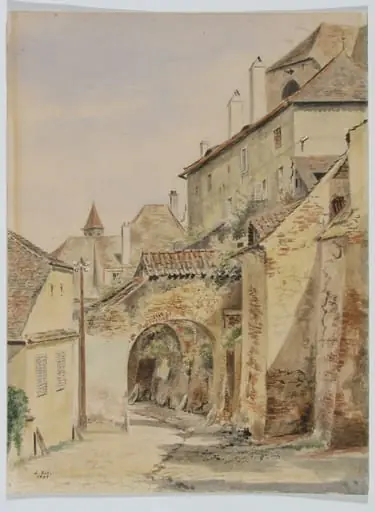
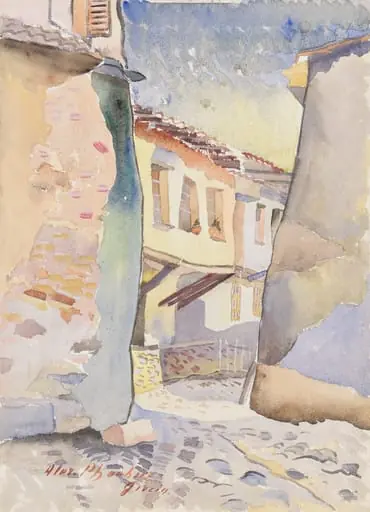
Ragusa is a watercolor work on paper by A. Stolypin. It dates from 1850 and is held in the collection of the Victoria and Albert Museum. Created around 1850 by A.
About this work
Overview
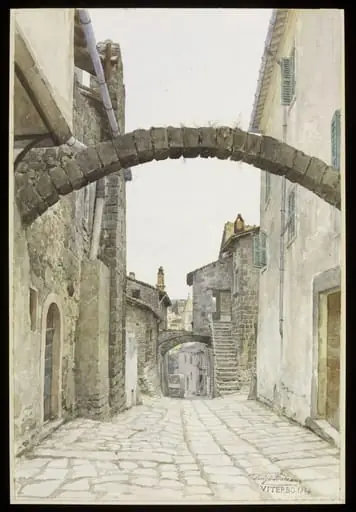
Created around 1850 by A. Stolypin, Ragusa is a watercolor depiction of a narrow urban passage, likely in the Adriatic city of the same name. The work is part of the Victoria and Albert Museum’s collection and exemplifies 19th-century topographical watercolor practice. Its modest scale and quiet composition reflect a focus on everyday architecture rather than grand monuments.
Subject & Meaning
The painting captures a secluded alleyway bounded by weathered stone buildings, with a partially open wooden door suggesting hidden interiors.
The painting captures a secluded alleyway bounded by weathered stone buildings, with a partially open wooden door suggesting hidden interiors. A tree growing from a rooftop introduces organic life into the confined space, subtly contrasting human structure with natural persistence. The scene conveys neither narrative nor symbolism, but rather an observational intimacy with ordinary urban environments.
Technique & Style
Stolypin employs loose, fluid brushwork to suggest texture over precision—rough walls, uneven steps, and faded plaster are rendered with minimal detail but clear tactile presence. Muted earth tones dominate, with soft grays and browns creating a subdued atmosphere. The watercolor medium allows for subtle washes and accidental bleeds, enhancing the sketchlike immediacy of the scene.
History & Provenance
The painting entered the Victoria and Albert Museum’s collection in the 19th century, likely through acquisition or donation tied to British interest in Mediterranean architecture. Its origin as a travel sketch is plausible, given the period’s popularity of topographical watercolors among amateur and professional artists documenting foreign locales.
Context
In mid-19th-century Britain, watercolor was widely used for documentary and amateur artistic purposes, particularly in recording foreign scenes during travel. Ragusa aligns with this trend, reflecting a broader cultural fascination with the architectural character of southern Europe, often viewed as both picturesque and historically layered.
Legacy
Though not widely exhibited or studied today, Ragusa remains a representative example of 19th-century watercolor practice focused on architectural observation. Its preservation in a major museum underscores its value as a record of visual documentation, offering insight into how artists of the time engaged with the textures of everyday urban life.
Own this work as a print
Artist & collection
Artist
A. Stolypin carried a small watercolor set everywhere, sketching seaside towns the way others might jot down grocery lists. He never left home without it, not even on that trip to Dubrovnik, where he captured Ragusa’s…