Artwork
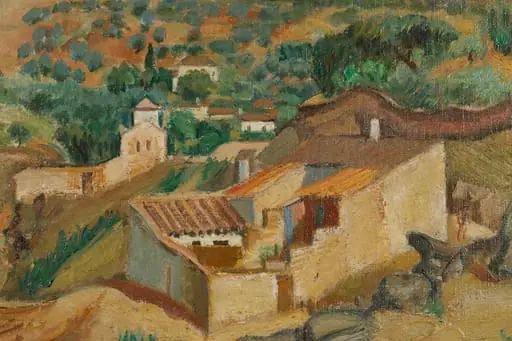
Peisaj din Baleare
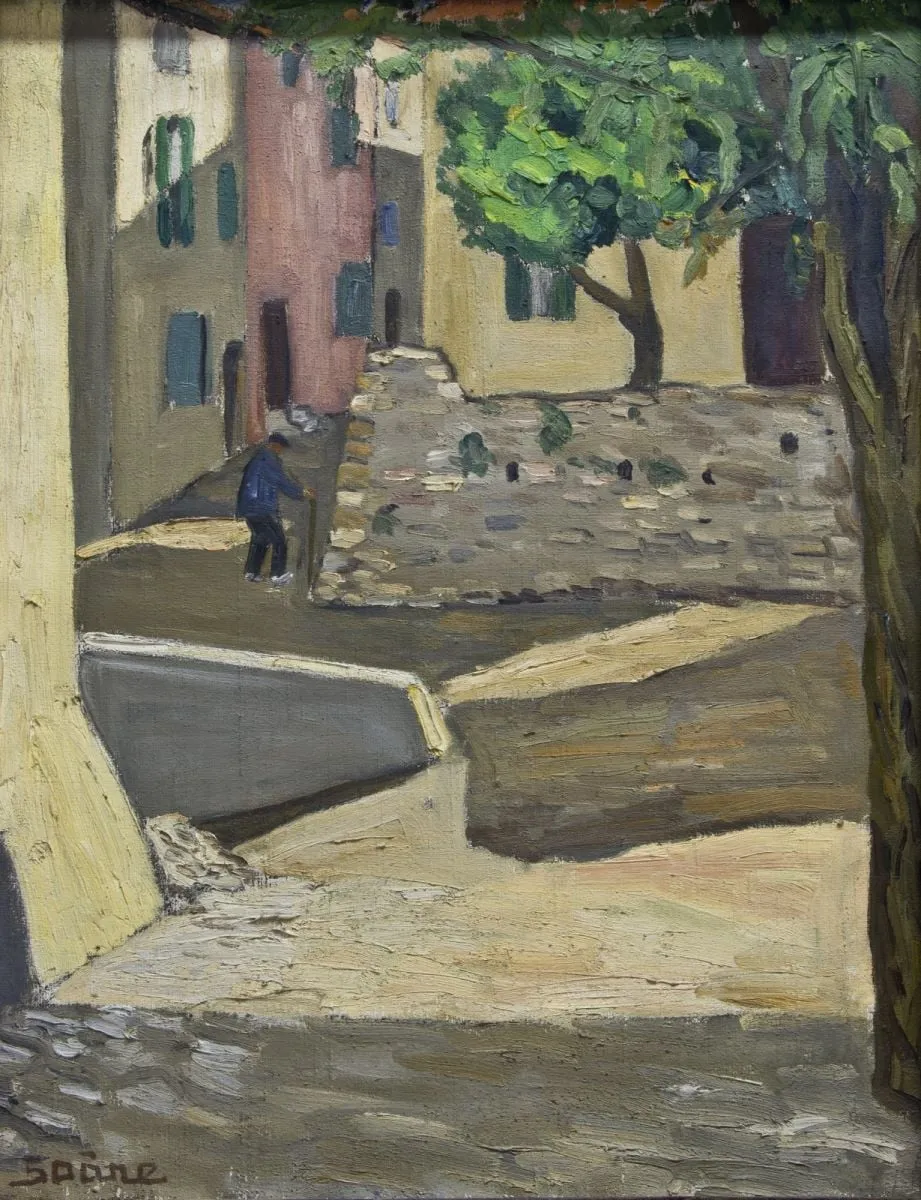
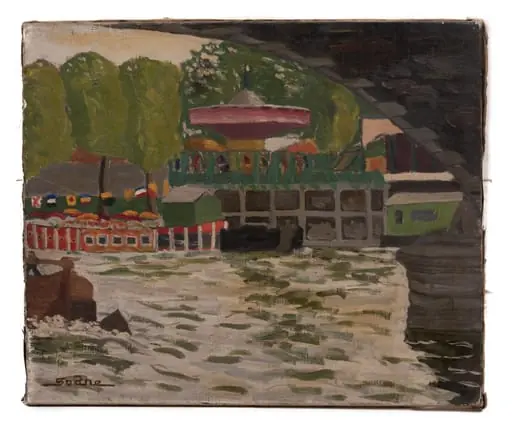
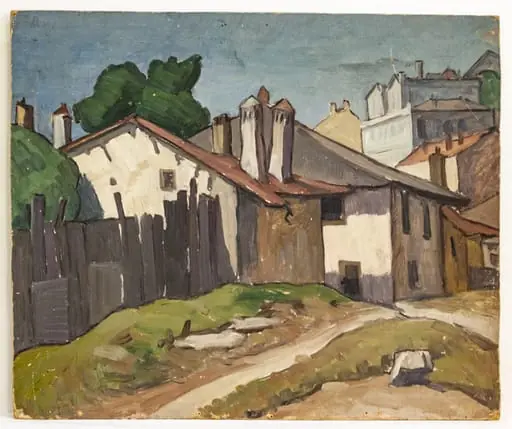
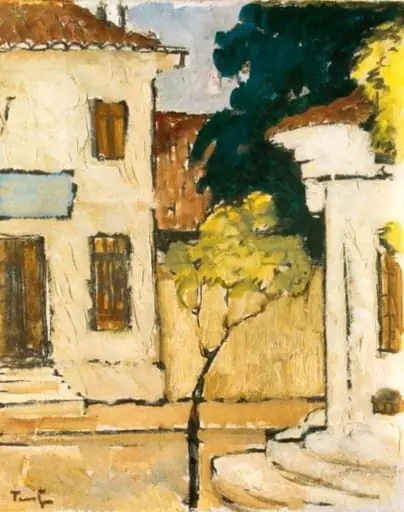
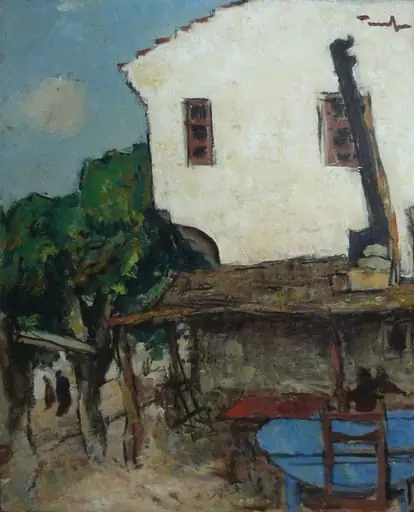
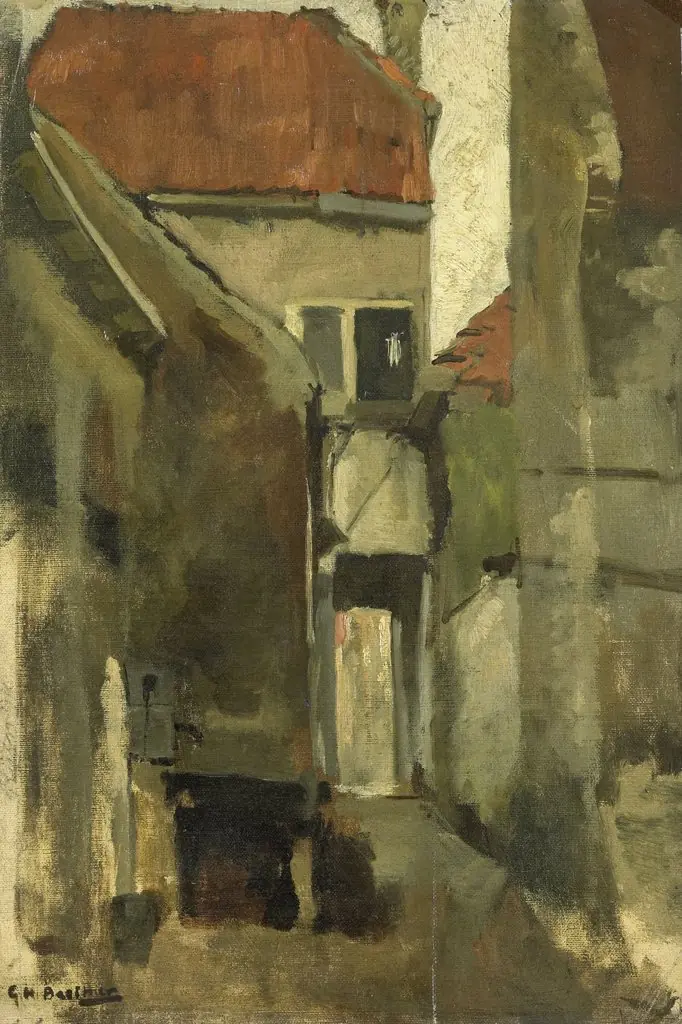
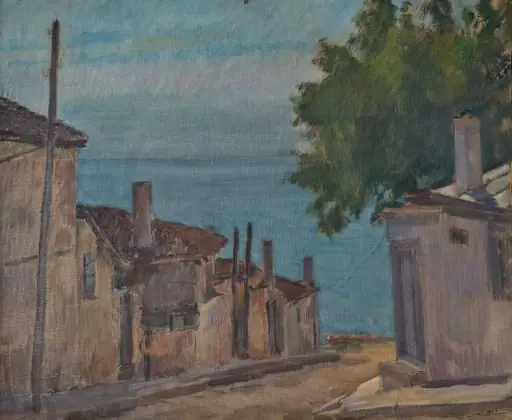
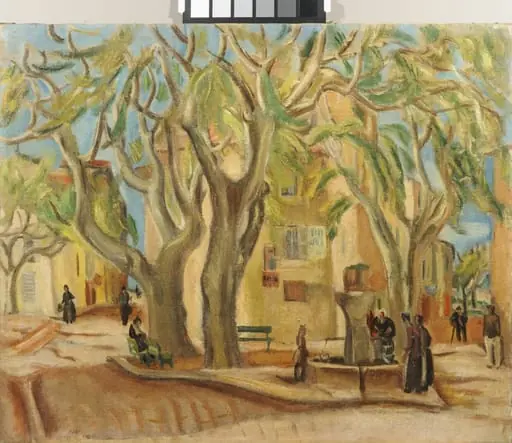
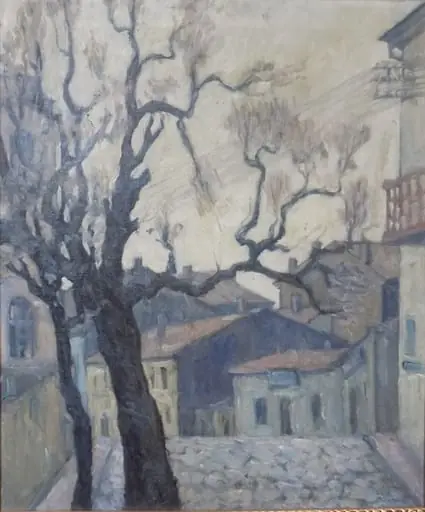
Peisaj din Baleare is a print by Soare Macedonski. It dates from 1927 and is held in the collection of the National Museum of Art of Romania.
About this work
Overview
The composition centers on modest stone structures nestled among sparse vegetation, with a solitary figure walking along a path.
Painted around 1927 by Soare Macedonski, this landscape depicts a quiet rural scene in the Balearic Islands. The composition centers on modest stone structures nestled among sparse vegetation, with a solitary figure walking along a path. Earth tones dominate the palette, softened by muted greens and ochres, conveying a sense of stillness and solitude. The work is held in the collection of the Museum of Ethnography.
Subject & Meaning
The scene presents an unidealized view of island life, focusing on everyday architecture and a lone pedestrian whose back is turned to the viewer. This anonymity invites contemplation rather than narrative, emphasizing the quiet rhythm of rural existence. The absence of dramatic action or human interaction reinforces a tone of introspective calm, suggesting a meditation on solitude and place.
Technique & Style
Macedonski employs a restrained brushwork and a limited earth-toned palette, favoring subtle gradations over bold contrasts. The stone wall in the foreground, crowned with sparse greenery, anchors the composition, while the buildings are rendered with simplified forms and soft edges. The handling of light and texture suggests an interest in atmospheric harmony rather than detailed realism.
History & Provenance
The painting entered the Museum of Ethnography’s collection following its creation in the late 1920s, likely through direct acquisition or donation. Its presence in an ethnographic context suggests it was valued for its documentation of regional life rather than its artistic innovation. No significant exhibition or ownership history beyond the museum is documented.
Context
Created during a period when Romanian artists increasingly turned to domestic and Mediterranean landscapes, this work reflects a broader interest in rural simplicity and regional identity. While not part of a major movement, it aligns with contemporaneous efforts to capture everyday environments with emotional restraint, away from urban or nationalist themes.
Legacy
The painting remains a quiet example of early 20th-century Romanian landscape painting, valued for its understated observation of place. It contributes to a lesser-known strand of work that prioritizes mood over spectacle. Though not widely reproduced or studied, it endures as a personal record of a specific time and setting.
Artist & collection
Artist
Soare Macedonski turned everyday Romanian scenes into soft, muted prints and paintings.