Artwork
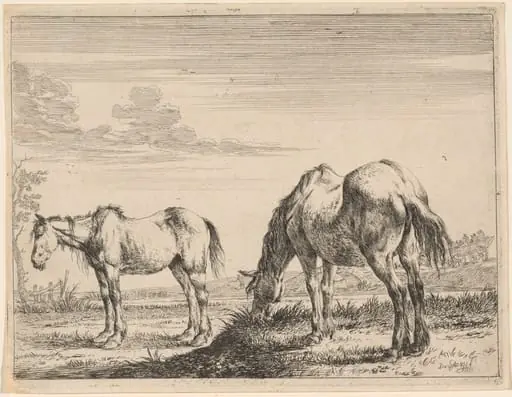
Two Plow Horses Standing in a Field
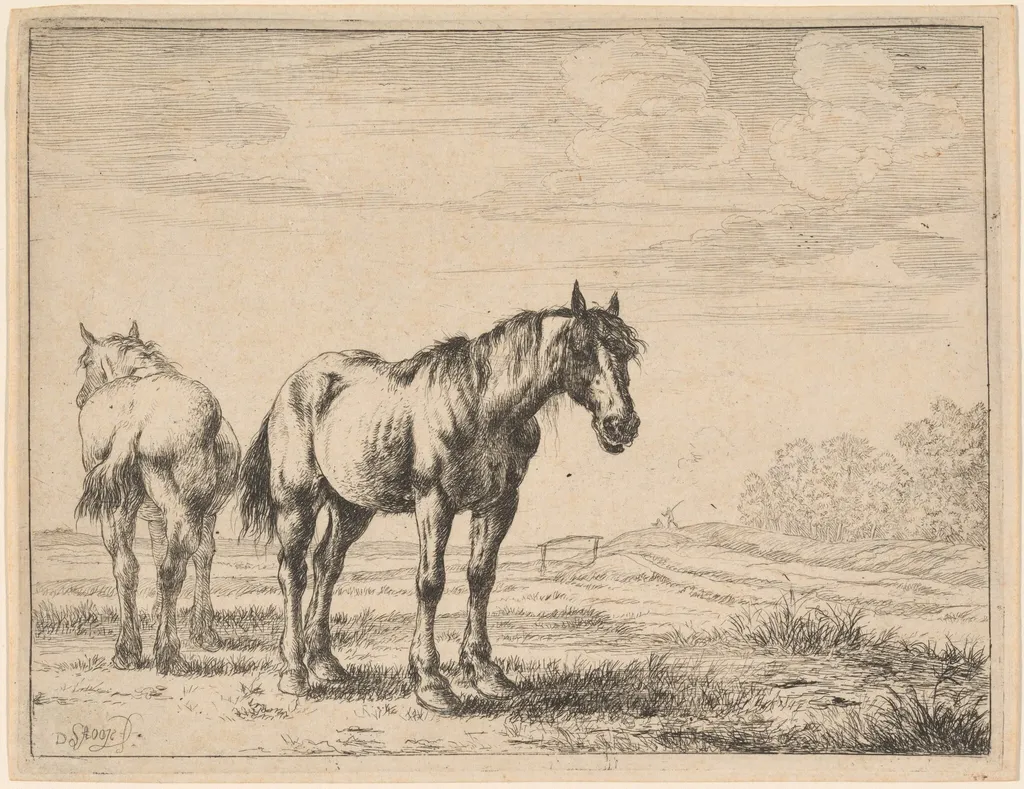
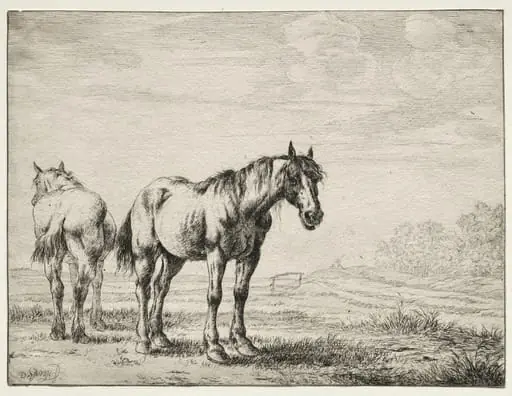
Two Plow Horses Standing in a Field is an ink print by the Baroque artist Dirck Stoop. It dates from 1651 and is held in the collection of the National Gallery of Art.
About this work
The image is an example of Baroque art, which is characterized by its use of dramatic lighting and intense emotions.
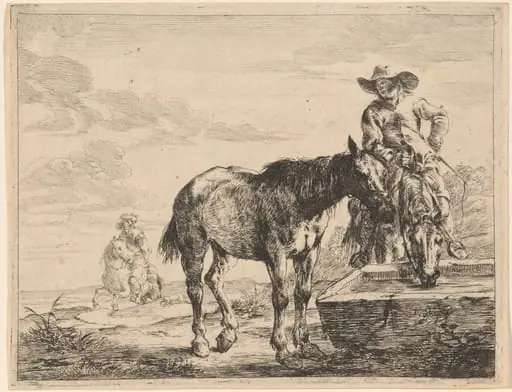
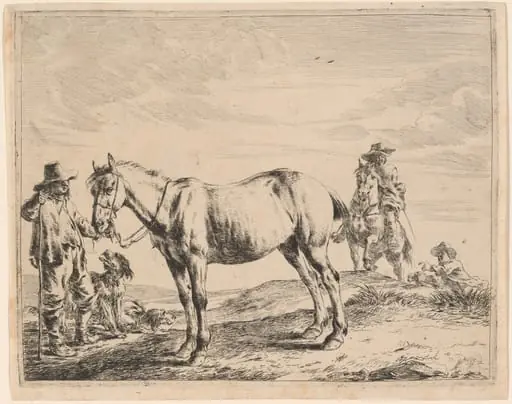
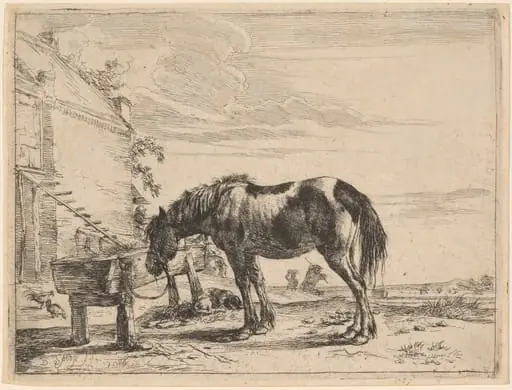
This image shows two horses standing in a field, facing right. The horses are shown from the side, with one horse slightly in front of the other. They are both looking to the right, and their heads are held high. The horses are standing in a grassy field, with a few trees visible in the background. The sky above is cloudy.
The horses are depicted in a realistic style, with attention to detail in their muscles and textures. The field and trees are also rendered in a realistic manner, giving the image a sense of depth and atmosphere.
The image is an example of Baroque art, which is characterized by its use of dramatic lighting and intense emotions. The artist, Dirck Stoop, was a Dutch painter who was active during the 17th century.
Overview
Dirck Stoop’s 1651 etching, titled Two Plow Horses Standing in a Field, presents a quiet rural scene rendered on laid paper. The print captures a pair of horses positioned side‑by‑side, both turned toward the right, set against a modestly detailed landscape of grass, distant trees, and a cloud‑filled sky.
Subject & Meaning
The composition focuses on the horses, rendered with careful attention to musculature and posture, suggesting strength and readiness. Their upright heads and forward gaze convey a sense of alertness, while the surrounding field and foliage provide a tranquil, agrarian backdrop that underscores the everyday labor of the Dutch countryside.
Technique & Style
Executed as an etching, Stoop employed fine line work to model the animals’ bodies and the texture of the grass, achieving a realistic effect typical of mid‑17th‑century Dutch printmaking. The use of tonal variation and subtle shading creates depth, while the overall handling reflects the Baroque interest in naturalistic detail and atmospheric perspective.
History & Provenance
Created in 1651, the print belongs to Stoop’s modest output of landscape and animal subjects. It survives in several collections of Dutch Baroque prints, though specific ownership records are limited. The work illustrates the artist’s engagement with the popular Dutch market for affordable, reproducible images of rural life.
Context
During the mid‑1600s, Dutch artists frequently depicted agricultural scenes as reflections of the Republic’s prosperity and connection to the land. Stoop’s etching aligns with this tradition, offering a realistic portrayal of working animals that would have resonated with contemporary viewers familiar with farming practices.
Own this work as a print
Artist & collection