Artwork
The Two Horses
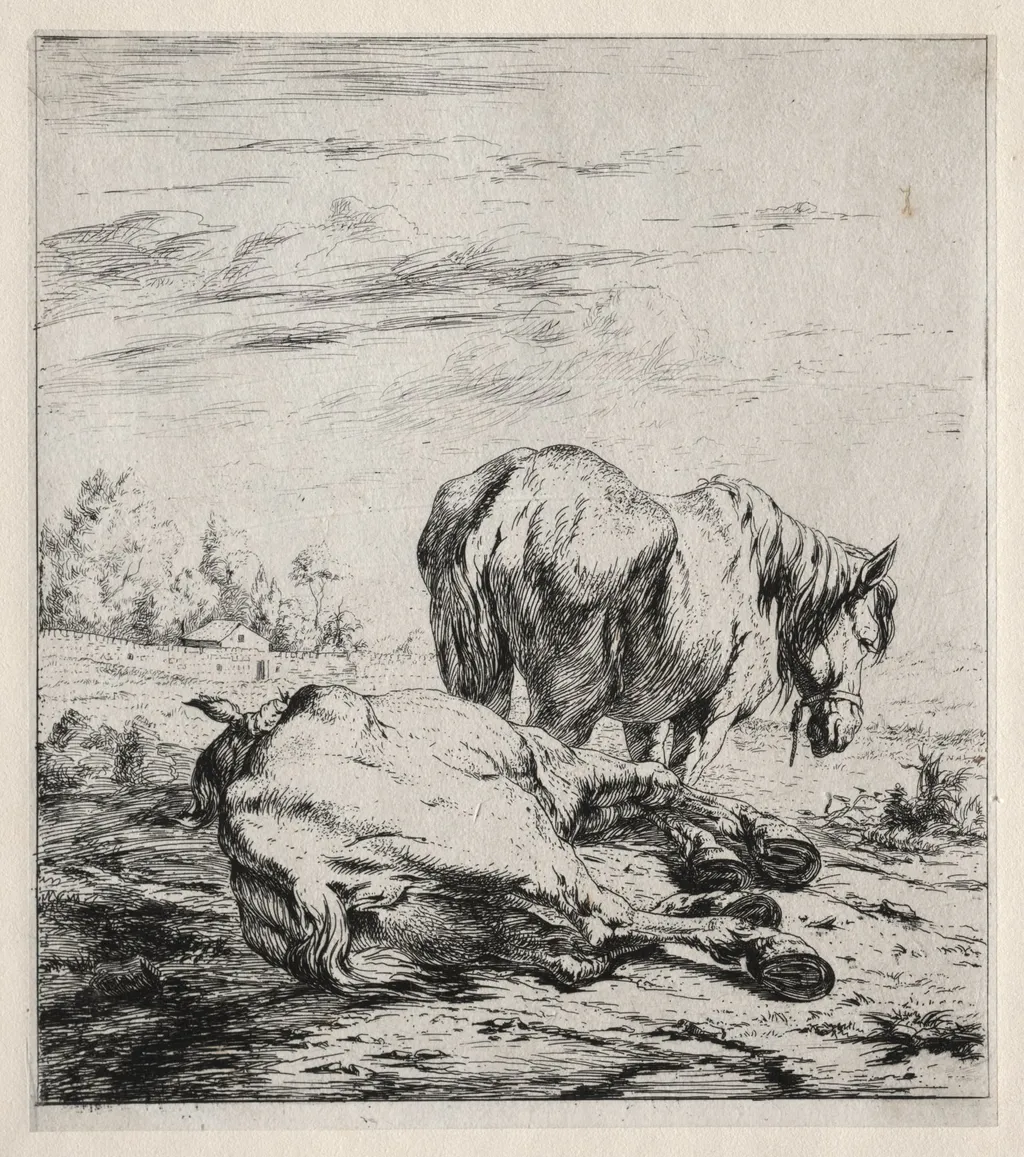
The Two Horses is a print by the Impressionist artist Charles Meryon. It dates from 1850 and is held in the collection of the Cleveland Museum of Art.
About this work
Overview
Created in 1850 by French artist Charles Meryon, *The Two Horses* is an etching that captures a quiet moment by a riverbank.
Created in 1850 by French artist Charles Meryon, *The Two Horses* is an etching that captures a quiet moment by a riverbank. Meryon, primarily known for his urban landscapes of Paris, turned here to a rural scene, demonstrating his versatility. His reliance on etching stemmed from a visual condition that limited his perception of color, leading him to master monochrome line work with exceptional precision.
Subject & Meaning
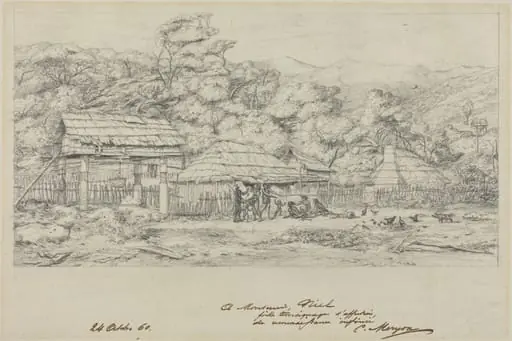
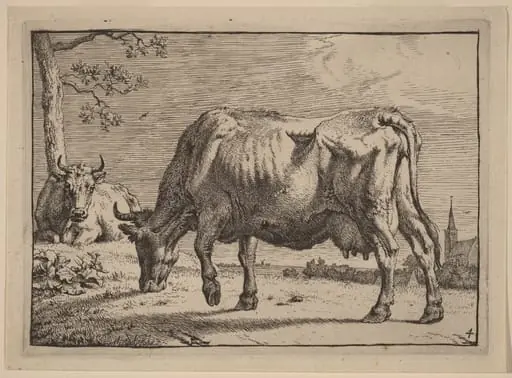
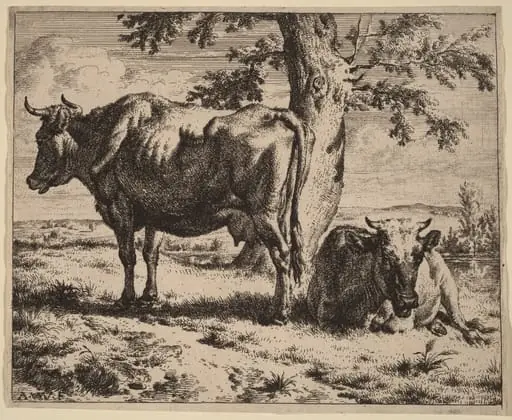
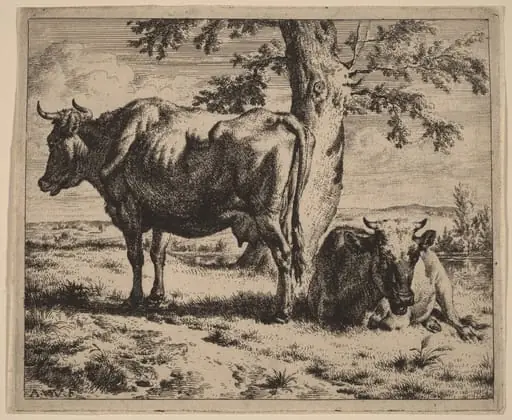
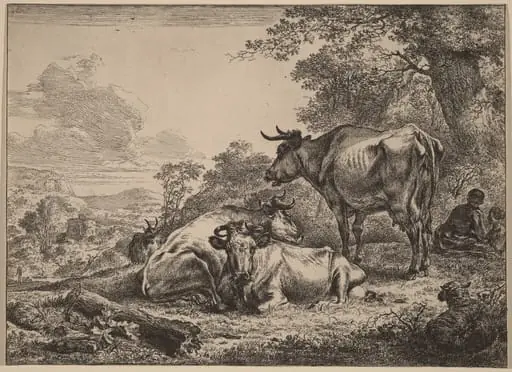
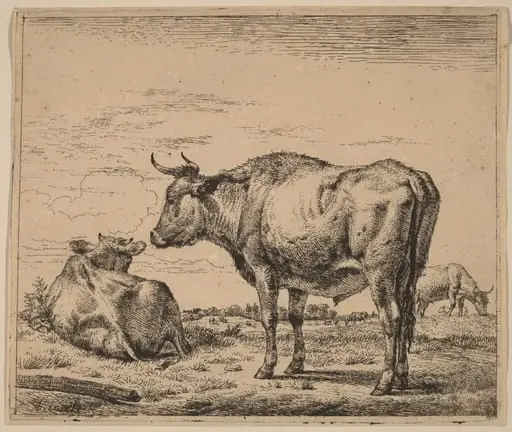
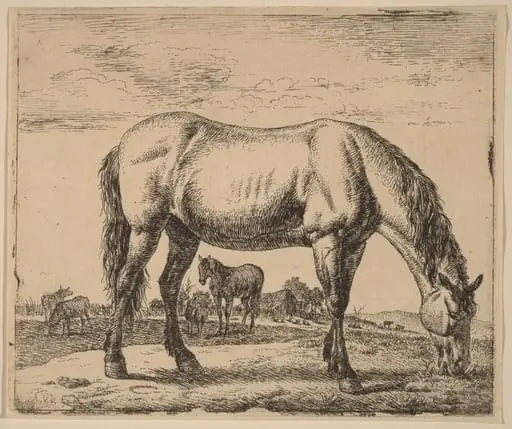
The composition depicts two horses at rest near water—one standing alert with its head turned, the other kneeling as it drinks. The scene avoids narrative drama, instead emphasizing natural behavior and stillness. The presence of a modest house and scattered trees suggests a humble, unidealized environment, reflecting Meryon’s interest in unadorned observation over romanticized imagery.
Technique & Style
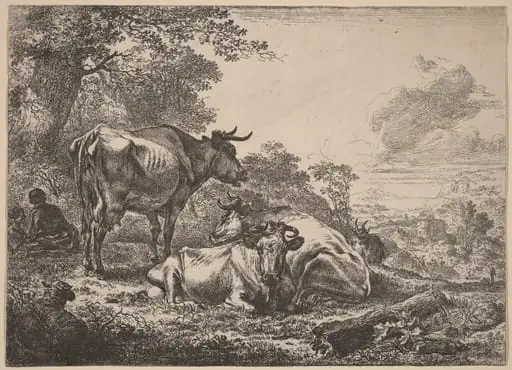
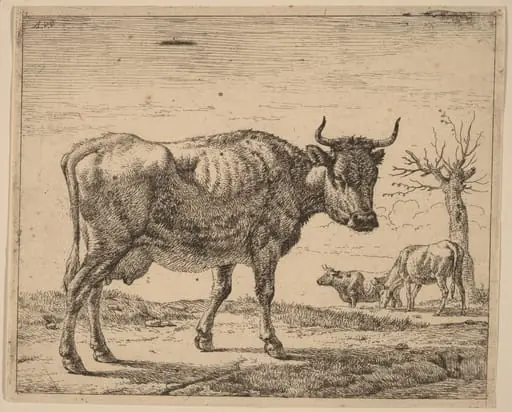
Meryon employed loose, uneven etching lines to convey texture and motion, avoiding polished finish in favor of immediacy. The horses’ forms are suggested through rhythmic, gestural strokes, while the background elements are rendered with minimal detail. This approach gives the image a sketchlike vitality, balancing control with spontaneity, and aligning with a broader 19th-century shift toward direct observation.
History & Provenance
The print entered the collection of the Cleveland Museum of Art as part of its broader holdings in 19th-century European prints. While Meryon’s Parisian etchings are more widely studied, *The Two Horses* remains a rare example of his rural subjects. Its preservation reflects early institutional recognition of his work beyond urban themes, though it has received less scholarly attention than his architectural views.
Context
In the mid-19th century, artists across Europe began turning from idealized subjects to everyday scenes. Meryon’s focus on animals in a modest landscape aligns with this trend, though his approach remained distinct—less concerned with social commentary than with formal qualities of form and movement. His work exists alongside, but apart from, the Realist movement, prioritizing atmospheric nuance over political or moral messaging.
Legacy
Though Meryon is chiefly remembered for his haunting depictions of Paris, *The Two Horses* illustrates his capacity to convey life through minimal means. His technique influenced later printmakers drawn to expressive line and tonal subtlety. The work stands as a quiet testament to his ability to find depth in simplicity, reinforcing his role as a pivotal figure in the revival of etching as a serious artistic medium.
Artist & collection
Artist
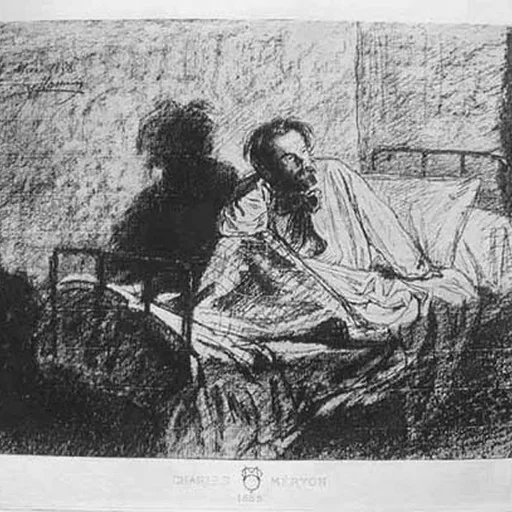
Charles Meryon (sometimes Méryon, 23 November 1821 – 14 February 1868) was a French artist who worked almost entirely in etching, as he had colour blindness.