Artwork
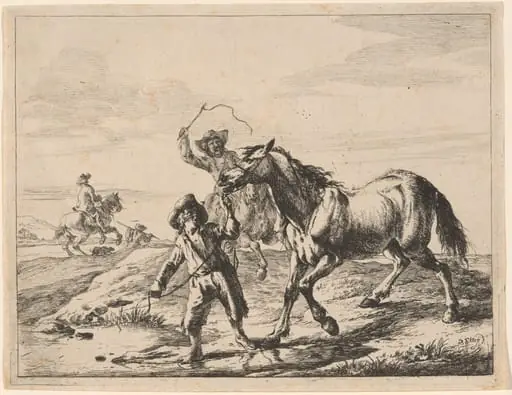
A Man Holding a Horse by His Bridle
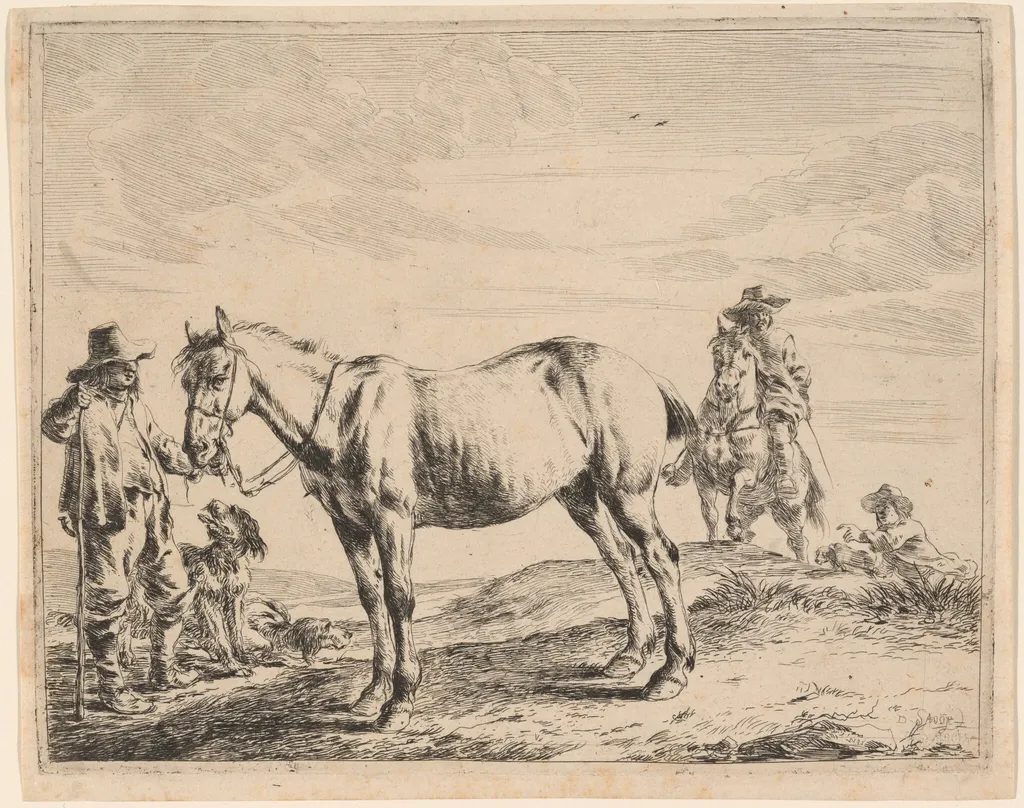
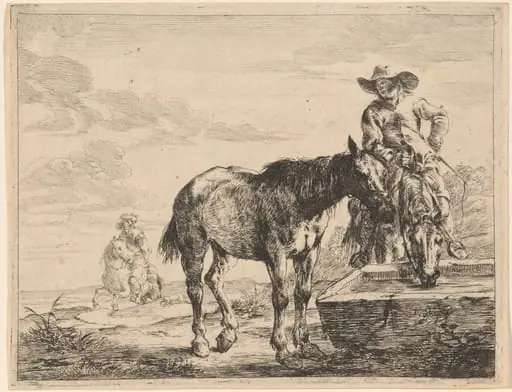
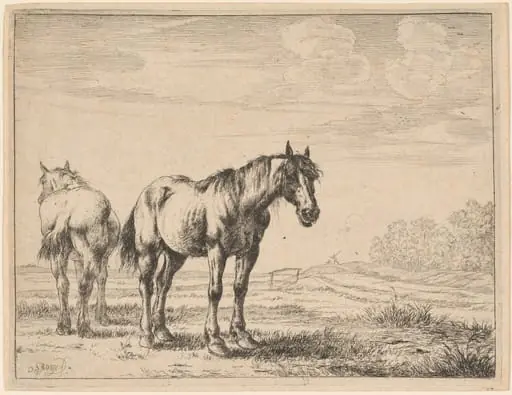
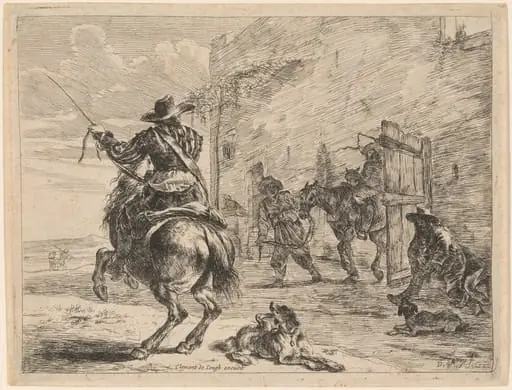
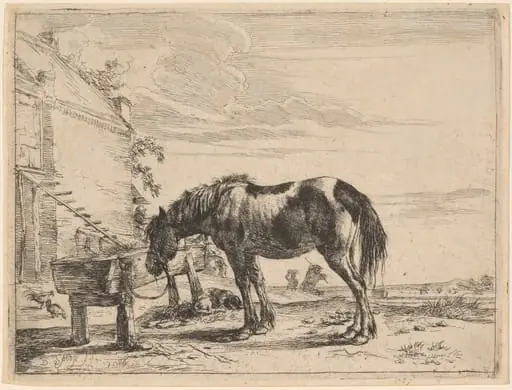
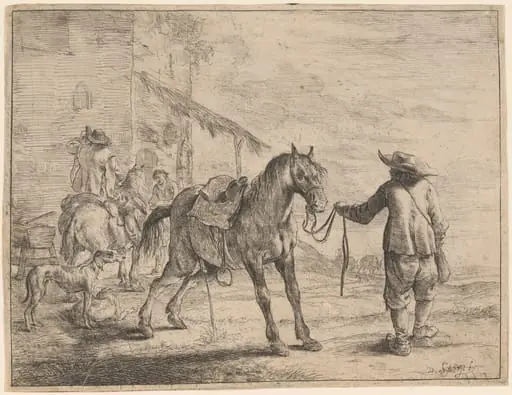
A Man Holding a Horse by His Bridle is an ink print by the Baroque artist Dirck Stoop. It dates from 1651 and is held in the collection of the National Gallery of Art.
About this work
Overview
The medium’s fine lines enhance the intimacy of the scene, inviting close attention to its details without theatrical flourish.
Created in 1651, this etching by Dirck Stoop depicts a rural scene centered on a man gripping a horse’s bridle. Rendered on laid paper, the work exemplifies the precision and tonal subtlety achievable in etching. The composition is quiet and observational, capturing a moment of stillness amid everyday equestrian activity. The medium’s fine lines enhance the intimacy of the scene, inviting close attention to its details without theatrical flourish.
Subject & Meaning
The figure, dressed in a hat and coat, holds the reins of a calm horse, suggesting control and familiarity. A dog rests nearby, while two distant figures—a rider and a seated person—frame the background, implying a broader rural environment. The scene lacks narrative drama, instead presenting a grounded, unembellished moment of human-animal interaction, possibly reflecting the quiet rhythms of 17th-century Dutch countryside life.
Technique & Style
Stoop employed etching to achieve fine gradations of tone and texture, particularly in the horse’s coat and the man’s woolen garments. The use of cross-hatching and delicate line work conveys surface detail without heavy shading. Laid paper’s subtle texture complements the soft contrasts of light and shadow, reinforcing the work’s restrained realism. The composition avoids dramatic perspective, favoring a level, intimate viewpoint.
History & Provenance
The print dates to 1651, during Stoop’s active period in the Dutch Republic. While specific early ownership records are sparse, the work aligns with the broader circulation of small-scale etchings among collectors of genre scenes. It was likely produced in limited numbers, typical of the period, and survives today as part of institutional print collections focused on Dutch Golden Age graphic art.
Context
Stoop worked alongside contemporaries like Rembrandt, contributing to a flourishing print culture that valued everyday subjects. His etchings often depicted rural laborers, animals, and quiet outdoor scenes, reflecting a broader Dutch interest in naturalism and domestic life. This print fits within a tradition of non-idealized imagery, where the dignity of ordinary moments was rendered with technical care rather than grandeur.
Legacy
Though not widely known today, Stoop’s etchings, including this one, remain valued for their quiet observation and technical restraint. They offer insight into the printmaking practices of mid-17th-century Holland and the cultural appetite for scenes of rural life. The work continues to be studied for its understated composition and the skillful use of etching to convey texture and atmosphere without embellishment.
Own this work as a print
Artist & collection