Artwork
Dejun pe iarbă
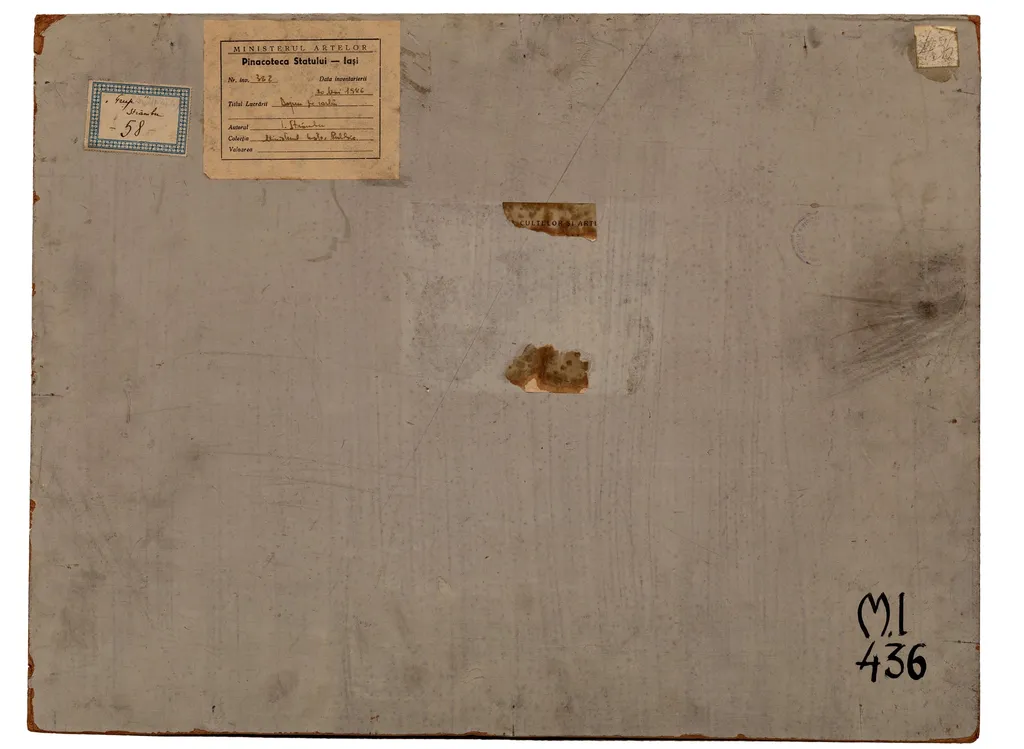
Dejun pe iarbă is an unspecified painting by Strâmbu Ipolit. It dates from 1927 and is held in the collection of the Moldova National Museum Complex.
About this work
Overview
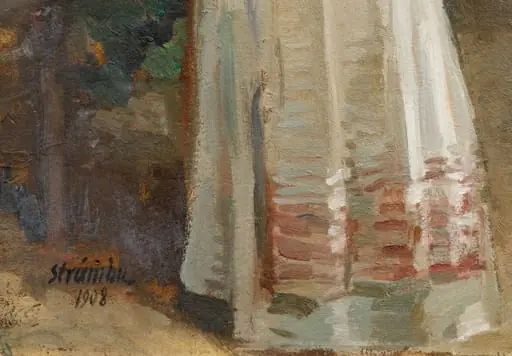
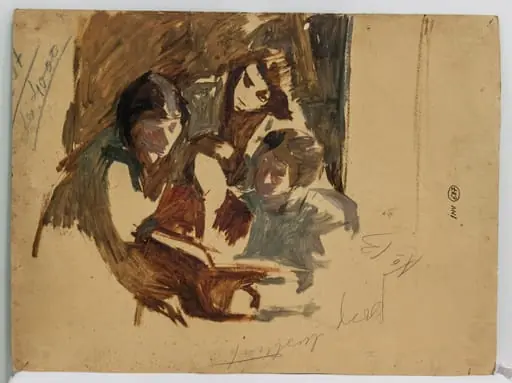
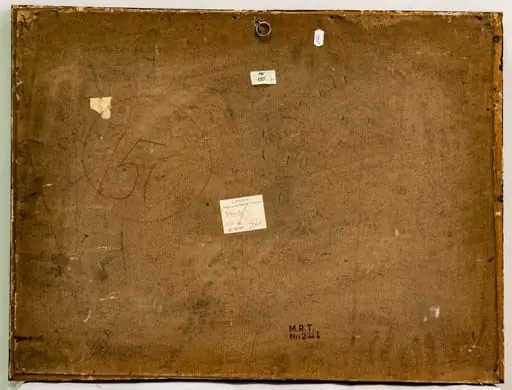
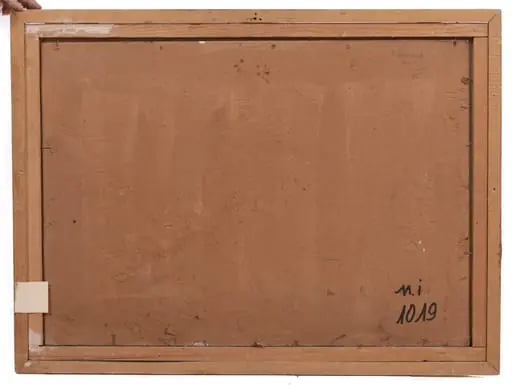
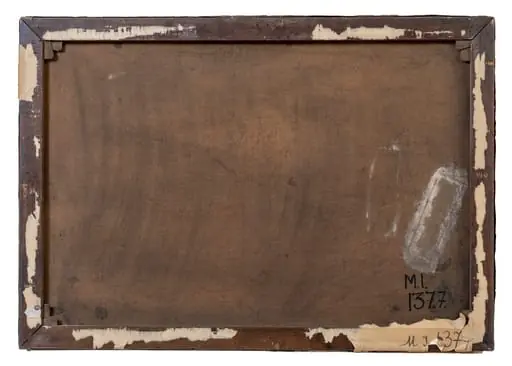
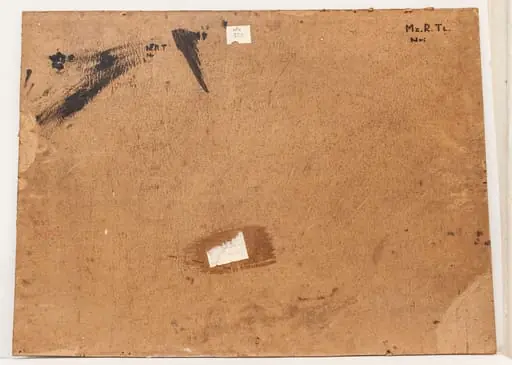
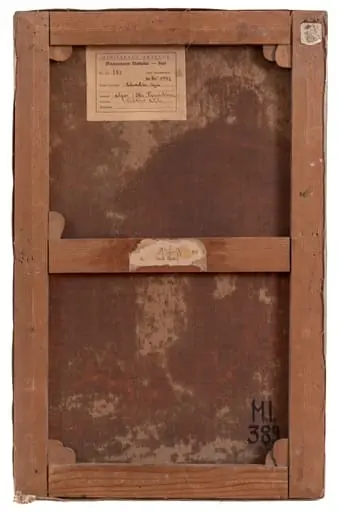
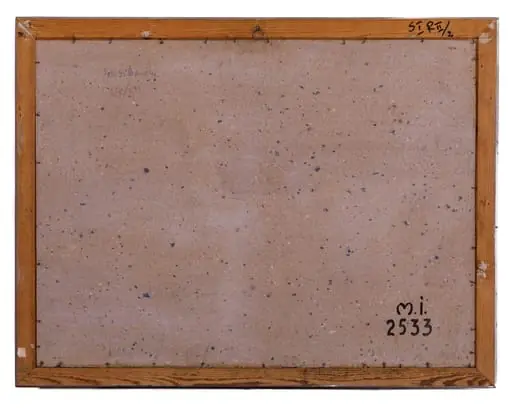
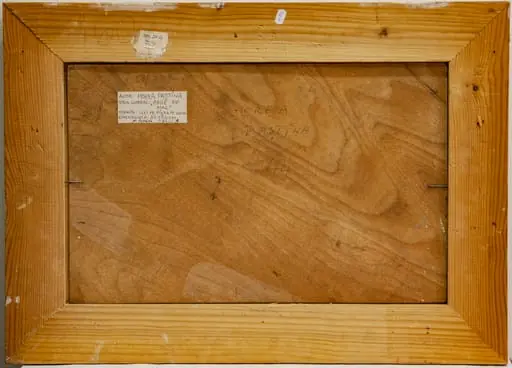
Dejun pe iarbă is a 1927 work by Romanian artist Strâmbu Ipolit, consisting of an empty canvas stretched on a wooden frame. The surface shows minimal pigment—faint brushwork and subtle discoloration near the center—suggesting partial execution or later erosion. Small institutional labels on the edges indicate it once belonged to a museum collection, though no imagery remains to fulfill its title.
Subject & Meaning
The title, meaning 'Lunch on Grass,' evokes a pastoral scene, possibly referencing Impressionist traditions of outdoor meals. Yet the canvas holds no visual representation of people, food, or landscape. The absence may reflect artistic experimentation, intentional erasure, or loss over time, leaving the work as a silent counterpoint to its named subject.
Technique & Style
The work employs a minimalist material approach: a stretched canvas with traces of diluted pigment and uneven aging. No clear compositional structure or brushstroke pattern emerges, suggesting either incomplete execution or deliberate reduction. The lack of defined form aligns with early 20th-century inquiries into the boundaries of painting and representation.
History & Provenance
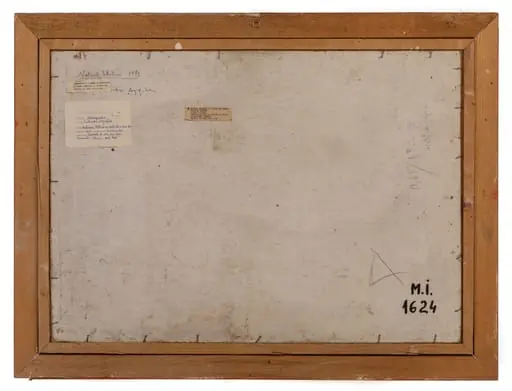
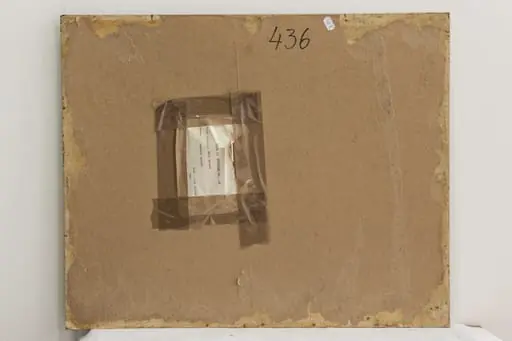
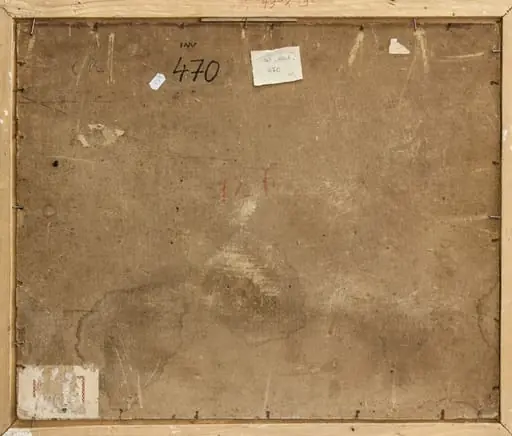
Faint museum stamps and adhesive labels on the frame’s top and bottom confirm the work was once cataloged and displayed, likely within a Romanian institution. Its current state—barely bearing traces of its original intent—raises questions about its journey: was it abandoned, damaged, or reinterpreted by its custodians? No public records detail its exhibition history.
Context
Created in 1927, the piece emerges during a period of artistic experimentation in Eastern Europe, where artists questioned traditional representation. While contemporaries explored abstraction or folk motifs, Strâmbu Ipolit’s work may reflect a parallel interest in the materiality of the canvas itself—prioritizing the object over the image.
Legacy
Dejun pe iarbă endures as a quiet artifact of artistic uncertainty. Its emptiness invites reflection on loss, intention, and the fragility of cultural memory. Though not widely documented, it stands as a rare example of a work whose meaning resides not in what is shown, but in what has vanished.
Artist & collection
Artist
Romanian printmaker Strâmbu Ipolit made delicate etchings that feel like quiet snapshots from daily life.