Artwork
Portretul domnișoarei Rogaveski
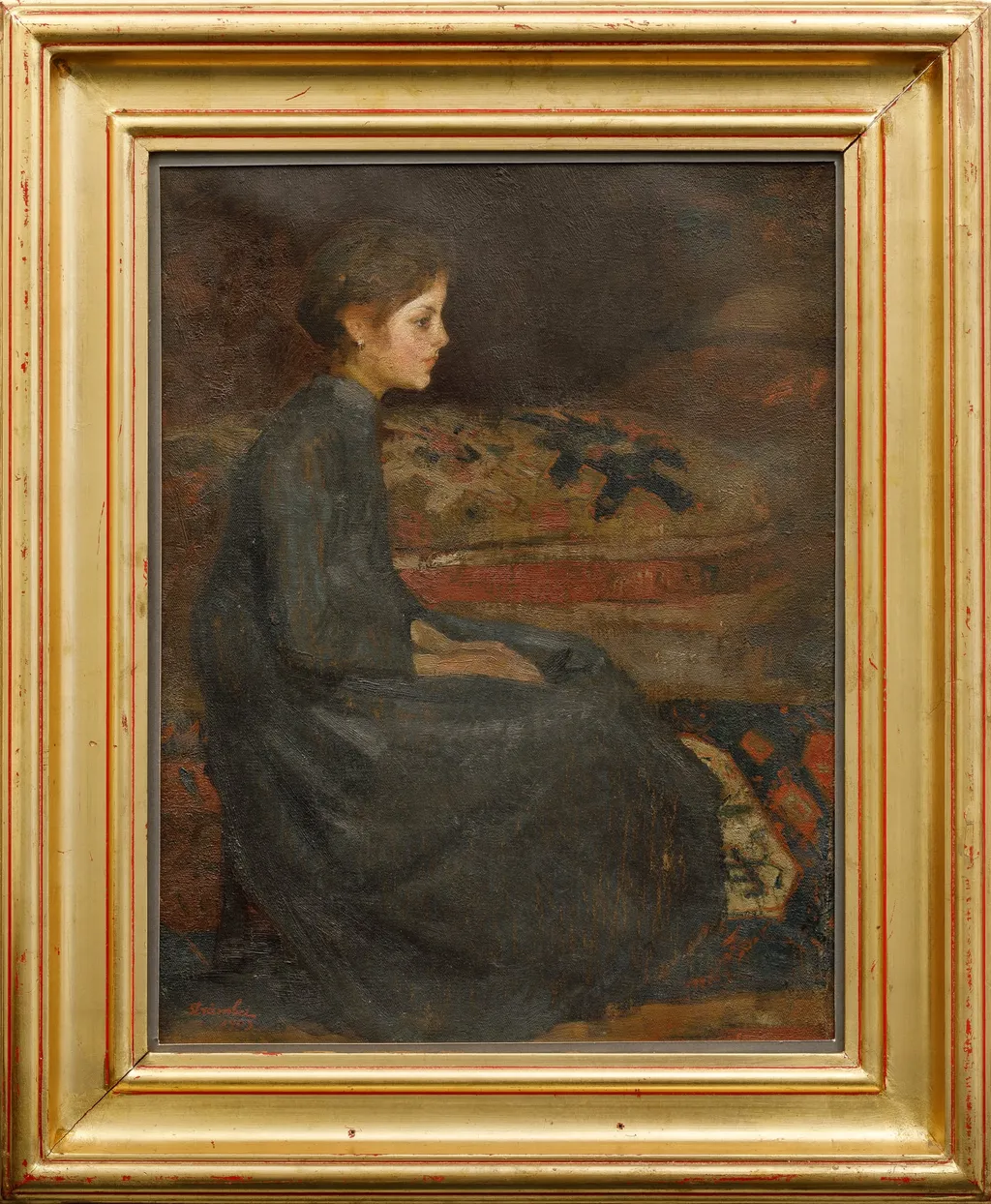
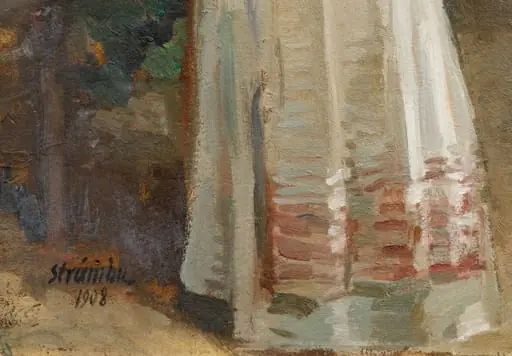
Portretul domnișoarei Rogaveski is a print by Strâmbu Ipolit. It dates from 1850 and is held in the collection of the National Museum of Art of Romania.
About this work
Overview
Painted around 1850 by Strâmbu Ipolit, this portrait depicts a woman in a quiet, interior setting. The composition emphasizes her presence through restrained detail and a muted palette, with the background softened to focus attention on the figure. The work reflects a transitional moment in Romanian portraiture, blending academic tradition with emerging expressive techniques.
Subject & Meaning
The sitter, identified as Miss Rogaveski, is shown in a contemplative pose, her gaze averted from the viewer.
The sitter, identified as Miss Rogaveski, is shown in a contemplative pose, her gaze averted from the viewer. Her attire—a dark dress paired with a patterned shawl—suggests modesty and social standing. The lack of overt symbolism or narrative context invites interpretation centered on individual presence rather than status or role, reflecting a shift toward psychological intimacy in 19th-century portraiture.
Technique & Style
Strâmbu Ipolit employed thick, textured brushwork known as impasto, applying paint with palpable density to convey form and light. The visible strokes create a tactile surface, especially in the shawl and the sitter’s garments. Background elements are rendered loosely, with blurred edges that enhance the sense of depth without distracting from the figure’s stillness.
History & Provenance
The painting’s early ownership is undocumented, but it has been associated with Romanian private collections since the late 19th century. It entered public institutional care in the mid-20th century, likely through state acquisition efforts aimed at preserving national artistic heritage. Its attribution to Strâmbu Ipolit is supported by stylistic comparisons with his other known works.
Context
Created during a period of cultural awakening in Romanian art, the portrait aligns with broader trends in Eastern Europe where artists began moving beyond formal portraiture toward more personal, emotionally resonant depictions. Strâmbu Ipolit’s use of impasto reflects exposure to Western European techniques, adapted to local sensibilities and available materials.
Legacy
Though not widely exhibited, the portrait remains a significant example of mid-19th-century Romanian painting for its technical experimentation and restrained emotional tone. It contributes to the understanding of how regional artists negotiated international styles while cultivating a distinct visual language rooted in domestic observation.
Artist & collection
Artist
Romanian printmaker Strâmbu Ipolit made delicate etchings that feel like quiet snapshots from daily life.

 Pădureancă
 Girl Reading at a Window
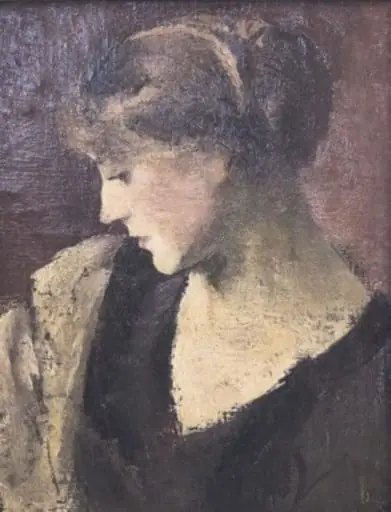 Soția artistului
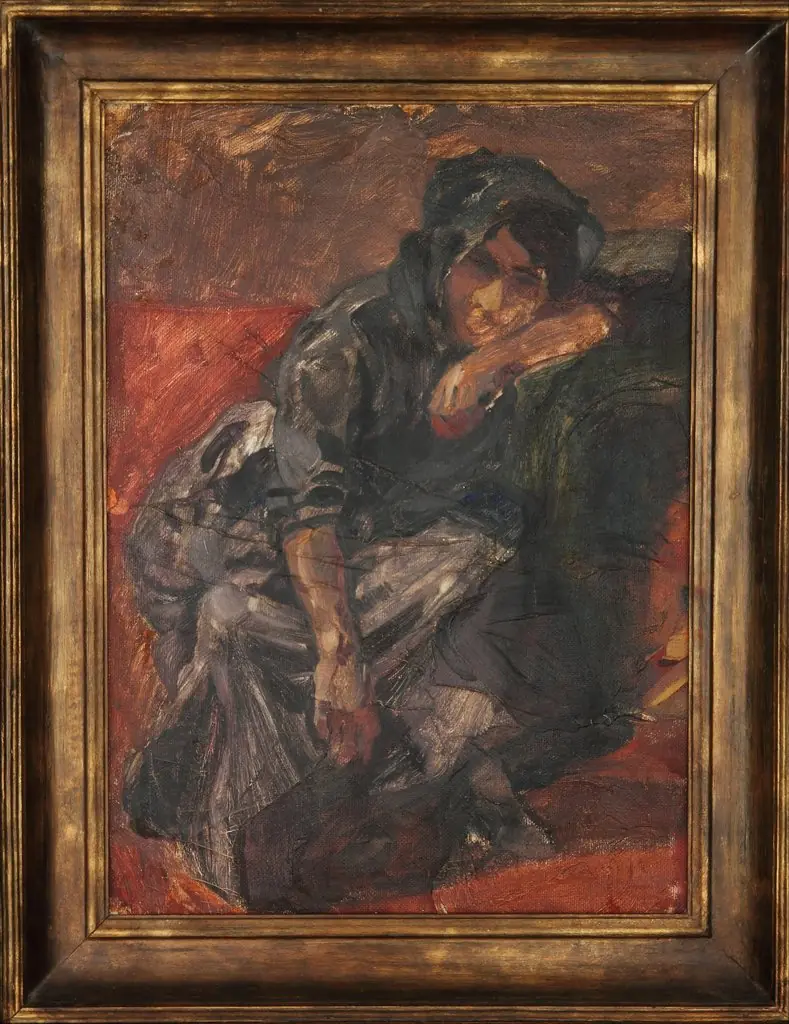 Estudio de mujer ó Retorno al hogar
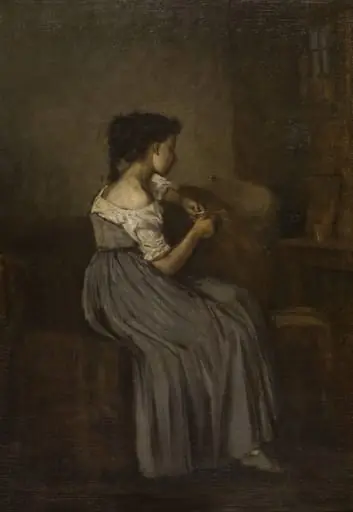 Study of a Seated Girl
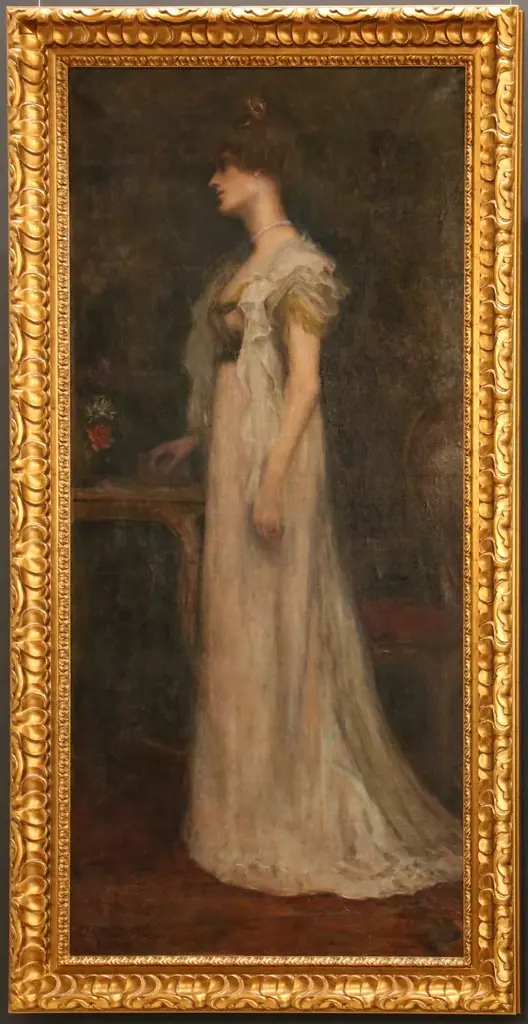 Countess Markievicz, artist and revolutionary
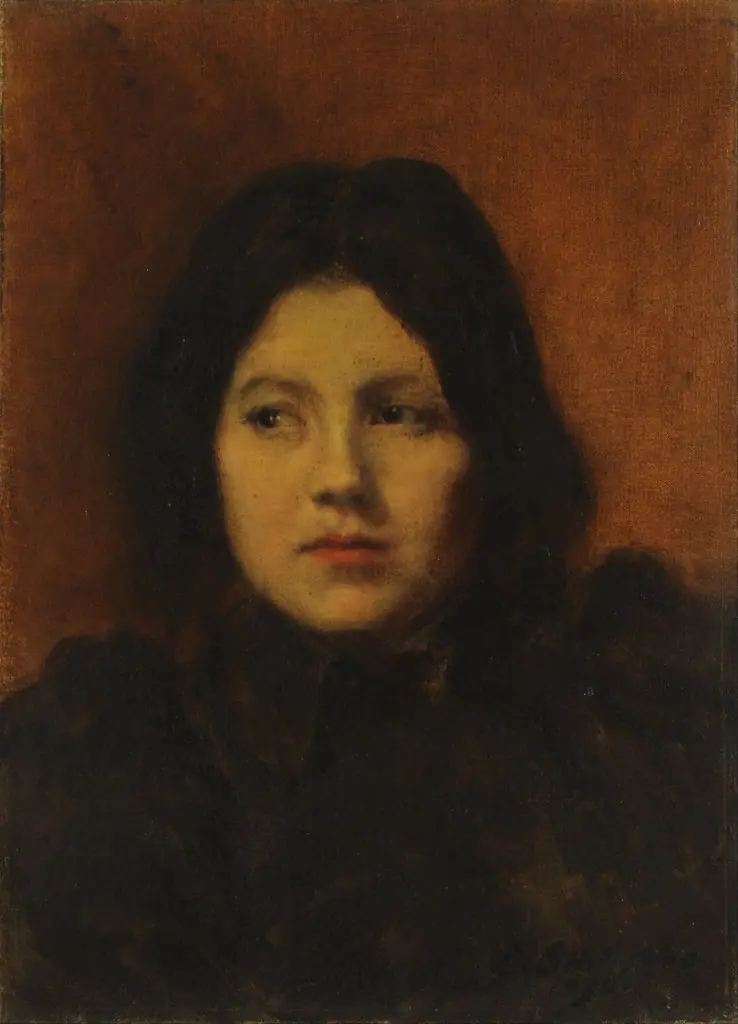 Margot
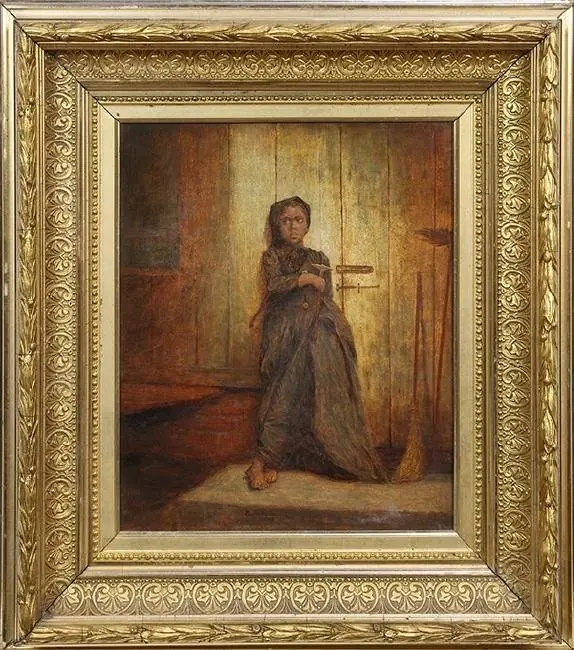 The Young Sweep
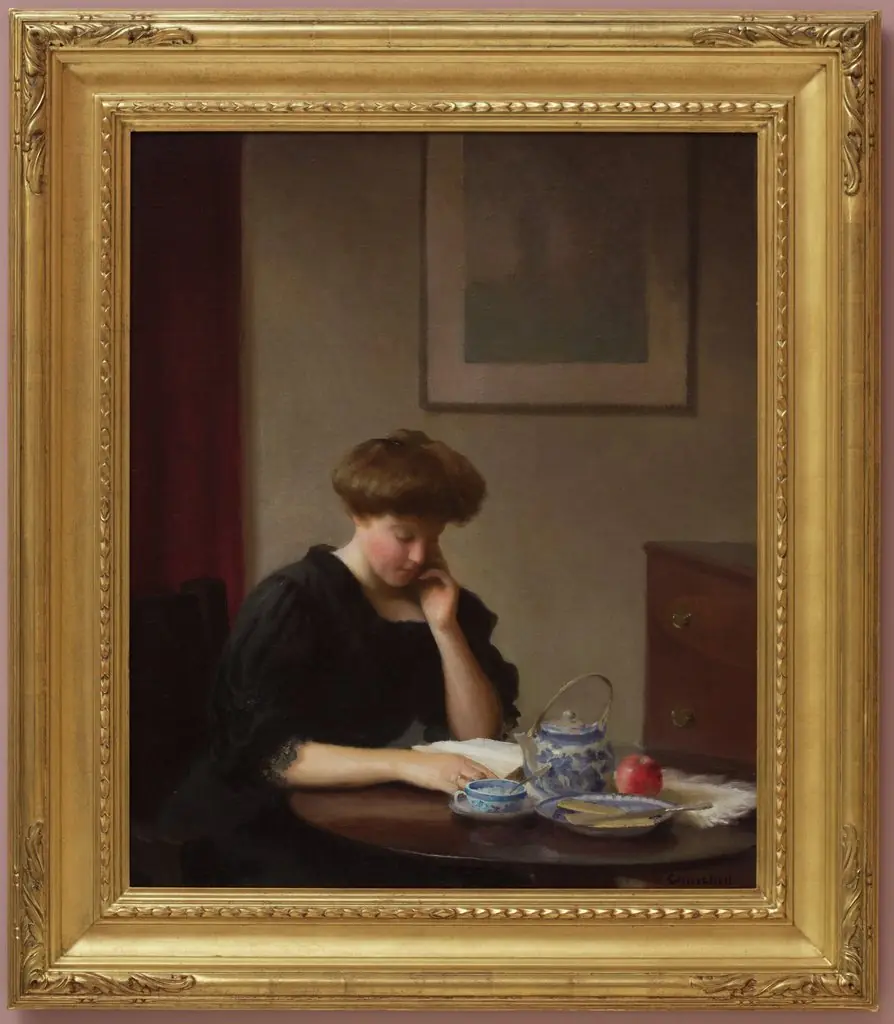 The Letter
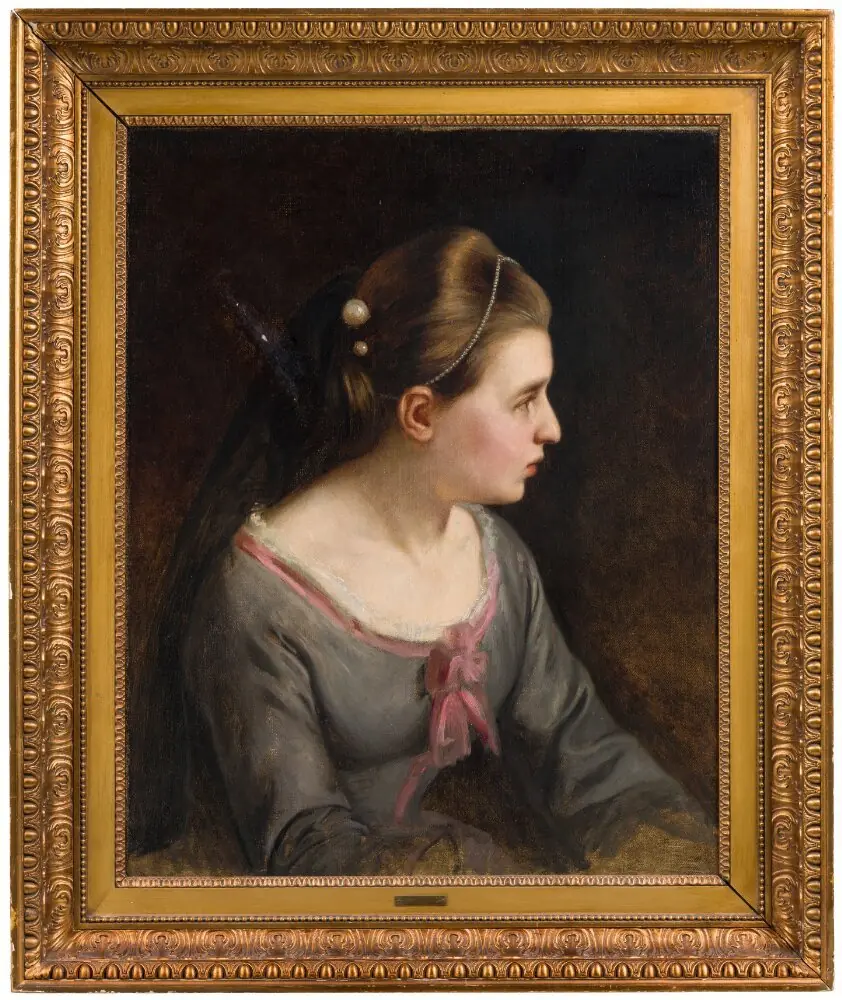 Helena Roed, Acting as Leonora in Ludvig Holberg’s Det lykkelige skibbrud (The Fortunate Shipwreck)
 Femeie în oglindă
 Portret de fată în roz