Artwork
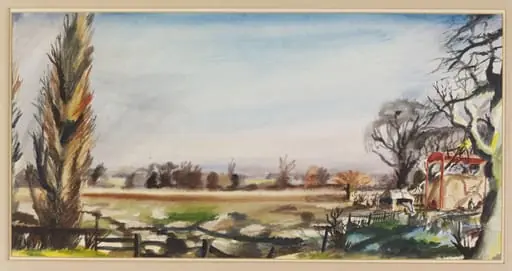
Farm at Bulmer Tye
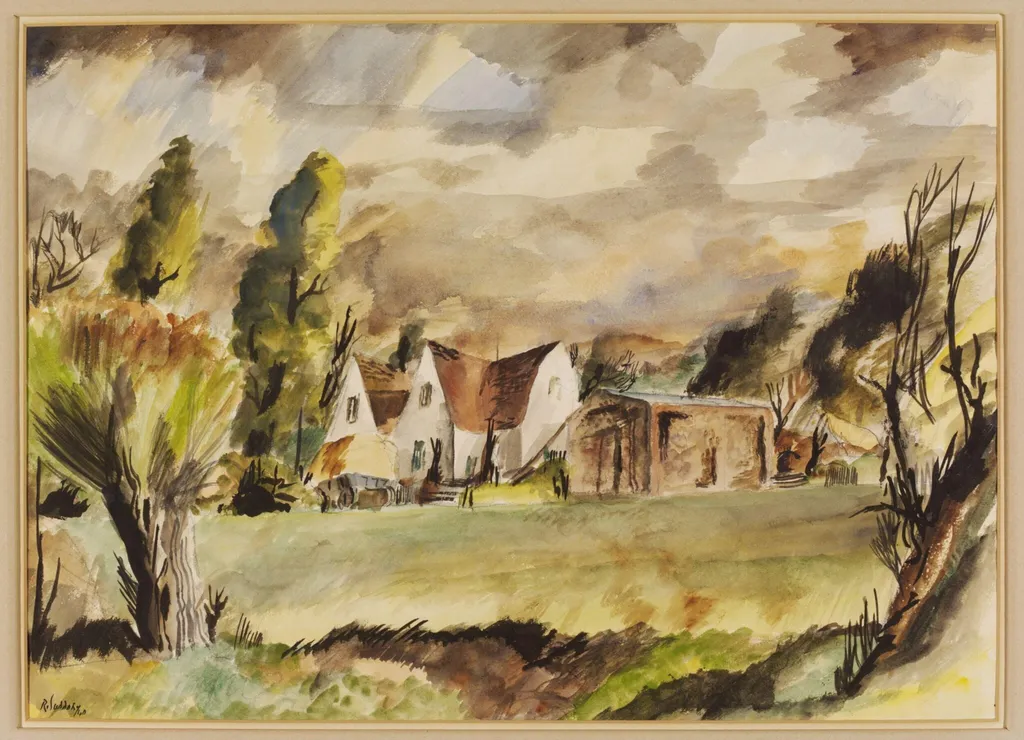
Farm at Bulmer Tye is a watercolor work on paper by Suddaby. It dates from 1940 and is held in the collection of the Victoria and Albert Museum.
About this work
Overview
Rowland Suddaby’s 1940 watercolour, titled “Farm at Bulmer Tye,” records a rural scene in Essex. The picture presents a white, gabled farmhouse with an adjoining barn, set against an open, green field. A hay wagon loaded with straw rests in front of the house, while a cloudy sky hovers above, giving the composition a quiet, balanced atmosphere.
Subject & Meaning
The work captures a moment of everyday agricultural life, emphasizing the modest architecture and the surrounding landscape. By focusing on the farmhouse and its immediate environment, Suddaby highlights the continuity of rural labor and the visual character of the English countryside during a period of national upheaval.
Technique & Style
Executed in watercolour, the painting employs a restrained palette of muted greens, whites, and earth tones. Suddaby’s handling of the medium yields soft edges and a slightly diffused quality, especially in the sky, creating a gentle sense of depth and a tranquil mood without overt detail.
History & Provenance
The piece was created as part of the Recording Britain project, a wartime initiative launched in 1940 by the Committee for the Employment of Artists in Wartime. Funded by the Pilgrim Trust and overseen by Sir Kenneth Clark, the scheme aimed to document landscapes and buildings thought to be at risk of loss during the Second World War.
Context
During the early 1940s, Britain faced extensive social and physical change, prompting efforts to preserve visual records of its rural heritage. Suddaby’s contribution reflects the broader governmental concern for cultural memory, situating the farm within a national narrative of preservation amid conflict.
Artist & collection
Artist
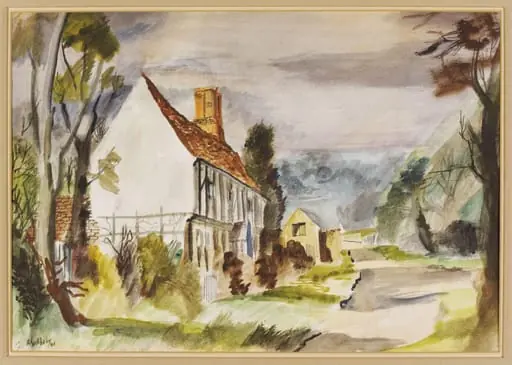
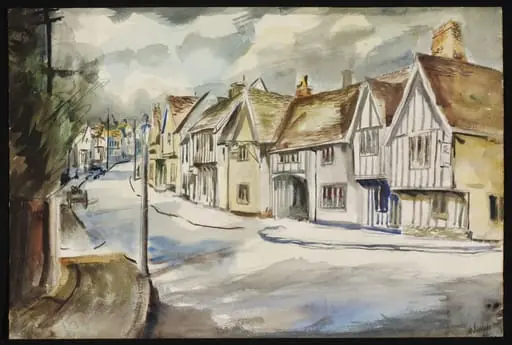
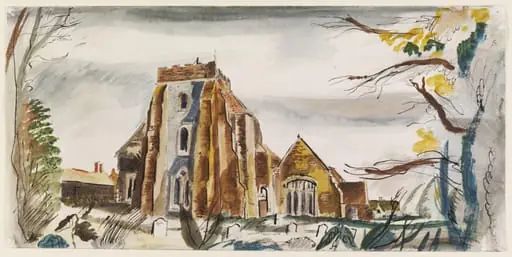
A British watercolor artist from the mid-20th century, Suddaby painted quiet, detailed scenes of East Anglia’s streets and churches in the 1940s.

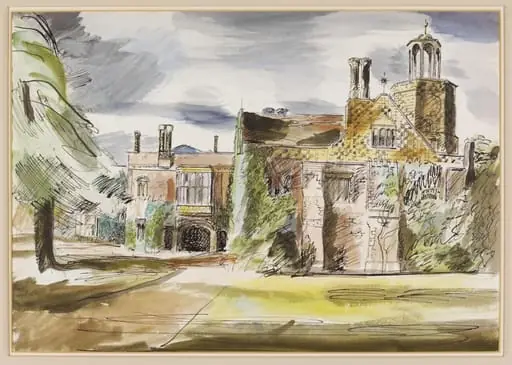
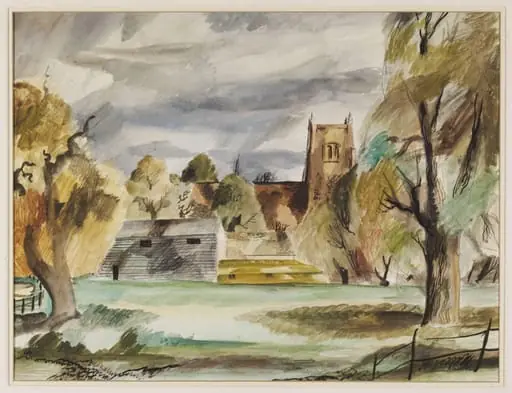 Wickham St. Paul's Church
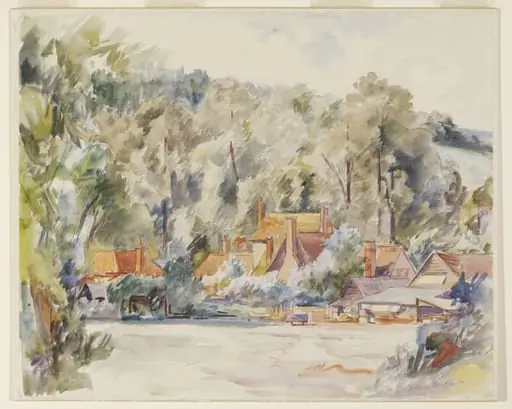 The Chequers Inn, Fingest
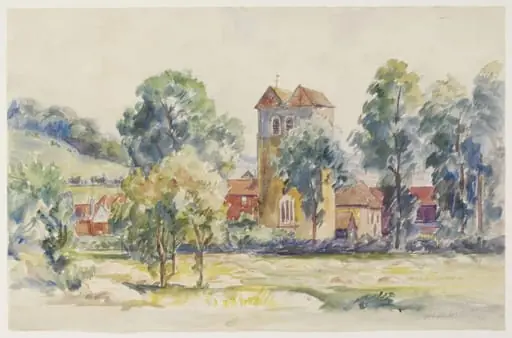 St. Bartholomew's Church, Fingest
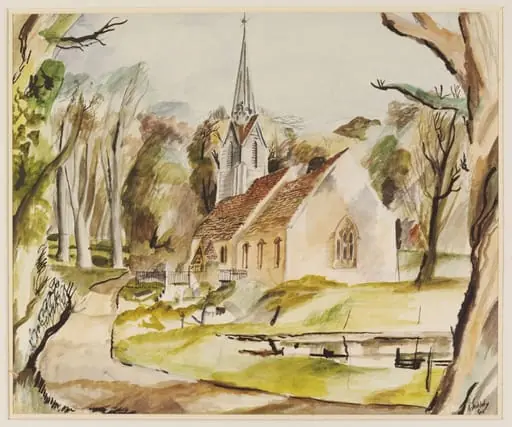 Middleton Church
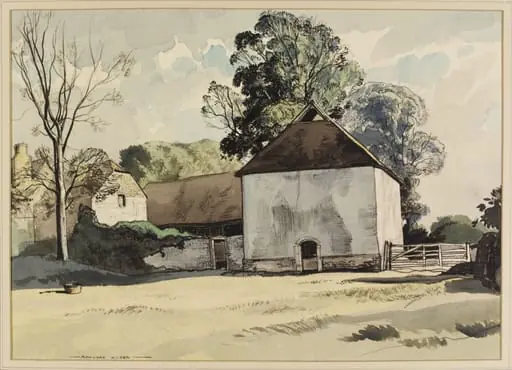 Saxon Dovecote, Lullington, near Alfriston, Cuckmere Valley
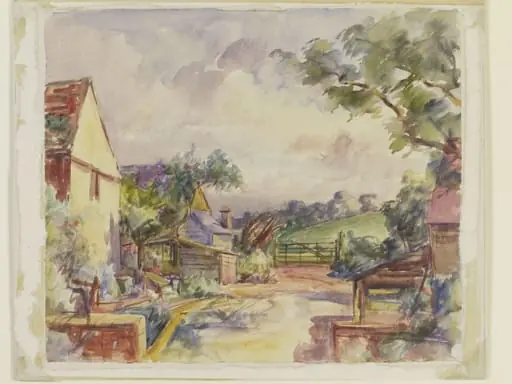 Glebe Farm, Fingest
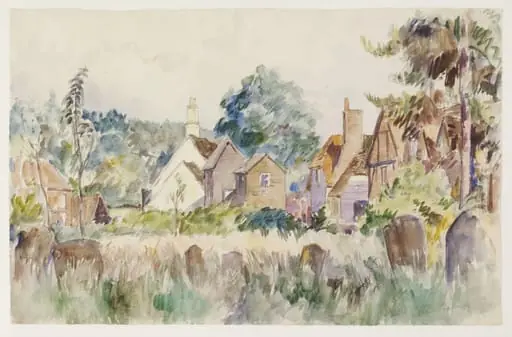 Princes Farm, Fingest
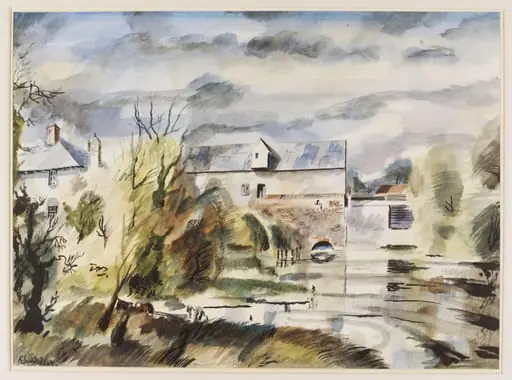 Henning Mill on the Stour
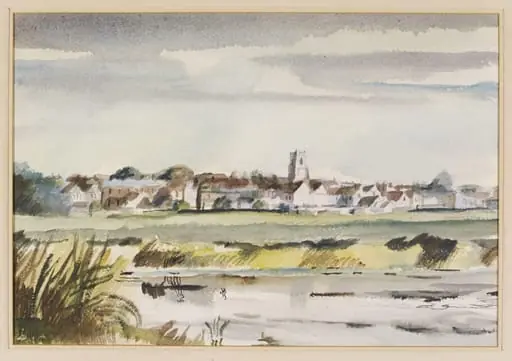 Evening View of Sudbury from the South-west
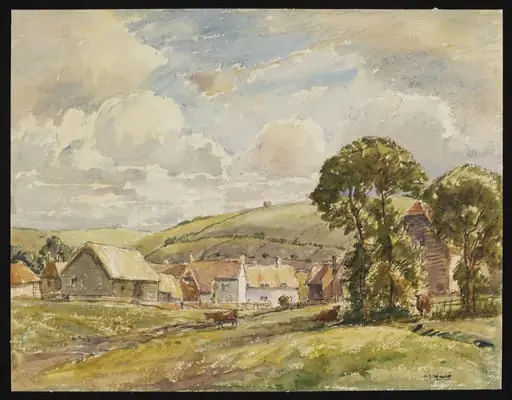 Wishford, Wylye Valley
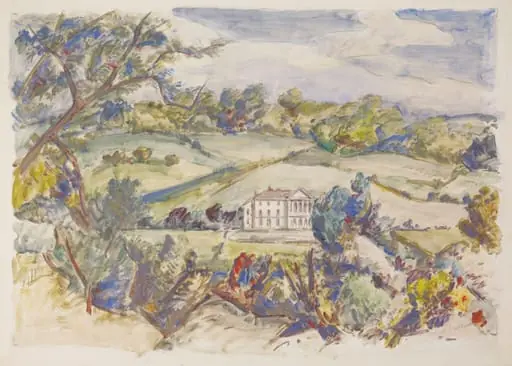 Dashwood House from West Wycombe Hill