Artwork
Partie du Cabinet d’Aubin/Part of Aubin’s Cabinet
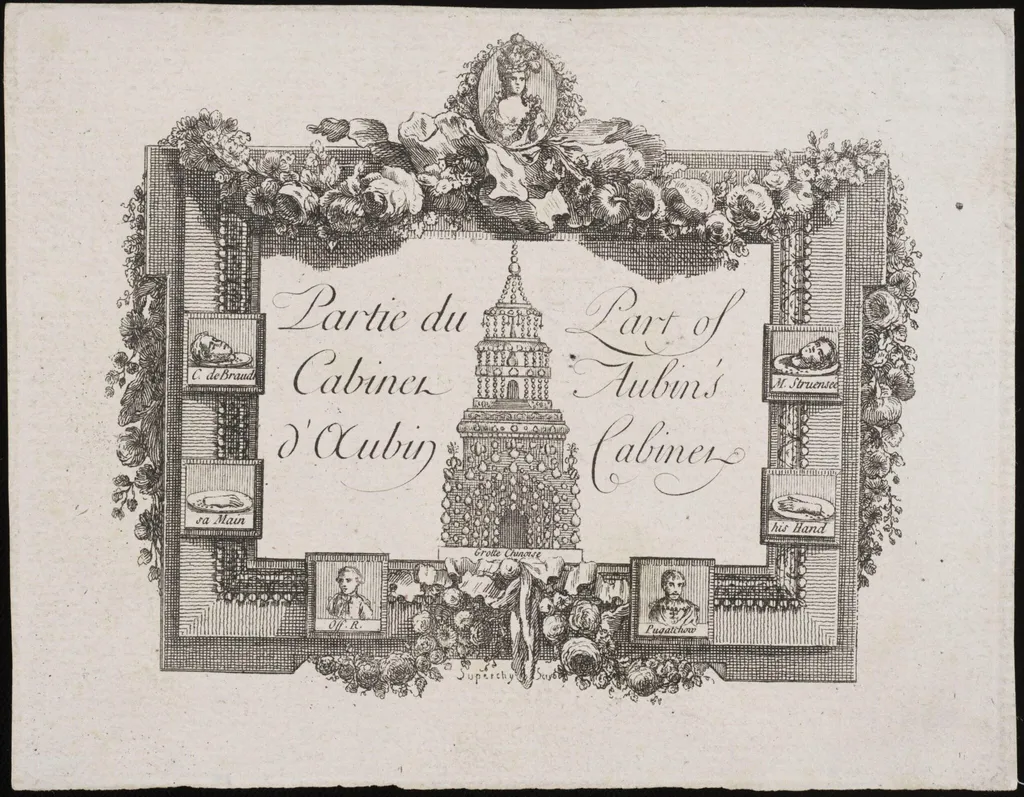
Partie du Cabinet d’Aubin/Part of Aubin’s Cabinet is a print by the Romanticist artist Stefano Superchi. It dates from 1780 and is held in the collection of the Victoria and Albert Museum.
About this work
Overview
This etching on paper functioned as a collector’s label for Aubin’s Cabinet des Figures de Cire, a Parisian exhibition of wax figures active in the 1780s.
This etching on paper functioned as a collector’s label for Aubin’s Cabinet des Figures de Cire, a Parisian exhibition of wax figures active in the 1780s. Designed as a decorative print, it presents a stylized cabinet interior filled with small portraits and artifacts, suggesting its use as both an advertisement and a keepsake. The inclusion of French and English text indicates an audience that included British tourists, aligning with the gallery’s appeal to international visitors seeking souvenirs of its curiosities.
Subject & Meaning
The print portrays a fictionalized cabinet housing wax portraits of notable figures, including historical and political personalities like C. de Braud and M. Struensee. Above, a female figure in the clouds holds a scroll, possibly symbolizing fame or memory. The central structure labeled 'Grande Chambre' references the gallery’s main exhibition space. The arrangement blends reverence and spectacle, framing human likenesses as both artistic objects and relics of public interest, reflecting Enlightenment-era fascination with identity and mortality.
Technique & Style
Executed in fine etching by Stefano Superchi, the print employs delicate lines to render ornate borders of roses, ribbons, and scrolling foliage. The interior shelves are densely packed with miniature portraits, each labeled with names, creating a visual catalog. The composition mimics architectural framing, with perspective cues suggesting depth within a flat surface. The style is decorative yet precise, typical of commercial printmaking of the period, prioritizing clarity and ornamental appeal over expressive brushwork.
History & Provenance
Created in the late 1780s, the print was produced by Stefano Superchi, an Italian-born engraver active in Paris, known for reproductive and commercial prints. It was likely issued in limited numbers as a memento for visitors to Aubin’s gallery, which specialized in wax effigies of celebrities and historical figures. The bilingual text and subject matter suggest it was distributed to English-speaking patrons, possibly during a period of heightened Anglo-French cultural exchange before the Revolution.
Context
Aubin’s gallery stood among several Parisian wax exhibitions that emerged in the late 18th century, capitalizing on public interest in portraiture, science, and the macabre. These spaces blurred lines between entertainment, education, and memorialization. The print’s inclusion of exotic elements like the Chinese grotto reflects broader European fascination with the 'Orient.' Its design as a framed cabinet aligns with contemporary practices of collecting and displaying personal curiosities, mirroring the era’s cult of the private cabinet.
Legacy
Though Aubin’s gallery no longer exists, this print survives as a rare artifact documenting the material culture of popular exhibitions in pre-Revolutionary Paris. It offers insight into how wax figures were marketed and consumed, not merely as oddities but as collectible symbols of status and curiosity. Similar prints by Superchi and others remain in museum collections, serving as primary sources for understanding the intersection of commerce, portraiture, and public spectacle in the late Enlightenment.
Artist & collection
Artist
Stefano Superchi made prints in the late 1700s. His work “Partie du Cabinet d’Aubin” shows a room packed with books, shells, coins, and art tools on shelves—think of it as a 1780s Instagram of a collector’s study. The…

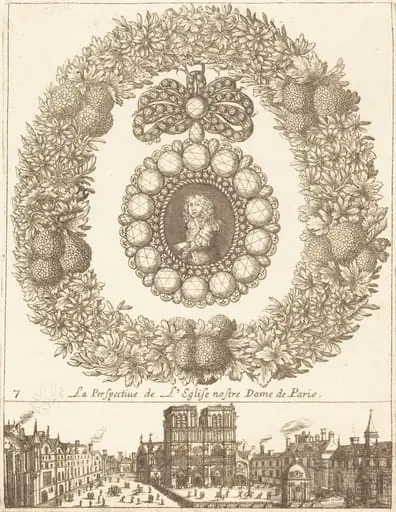 La perspective de l'englise Nostre Dame de Paris
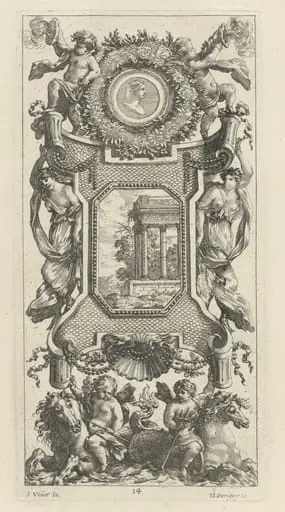 Ornamental Panel Surmounted by a Bust of a Woman and Two Putti with Flaming Trumpets
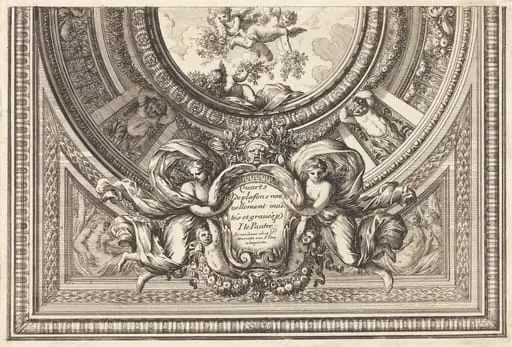 Title Page
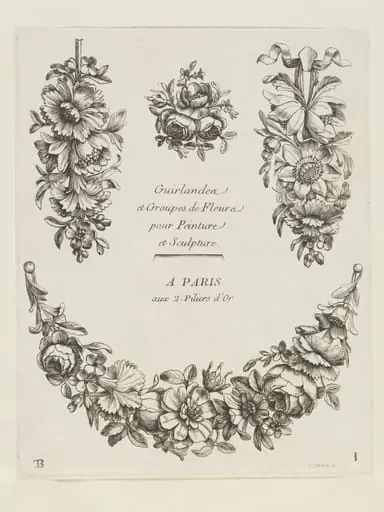 Guirlandes et Groupes de Fleurs pour Peinture et Sculpture
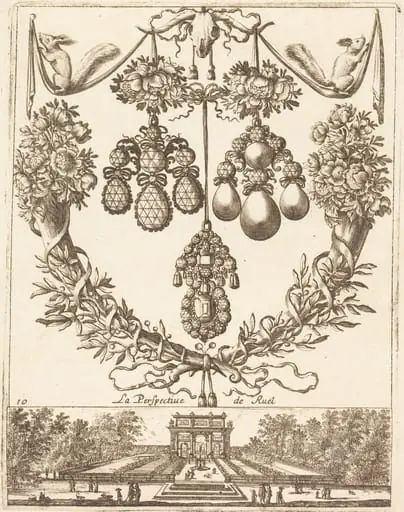 Perspective de Ruel
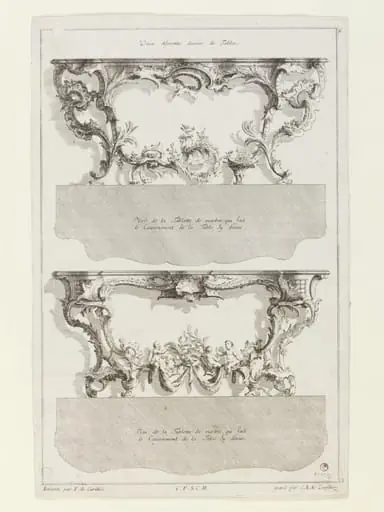 Ornament print showing a pair of console tables
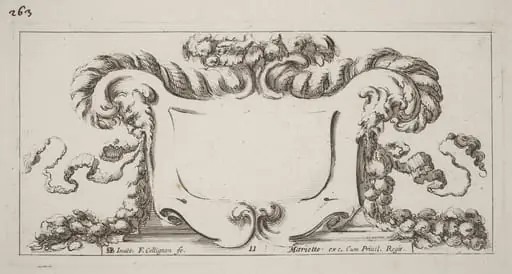 Cartouche
 Fireplaces and Other Interior Decorations
 The Prima Macchina for the Chinea of 1771: The Temple of Asclepius
 Ornamental Panel Surmounted by a Medallion with a Sacrifice
 Ornamental Panel Surmounted by a Naiad and a River God
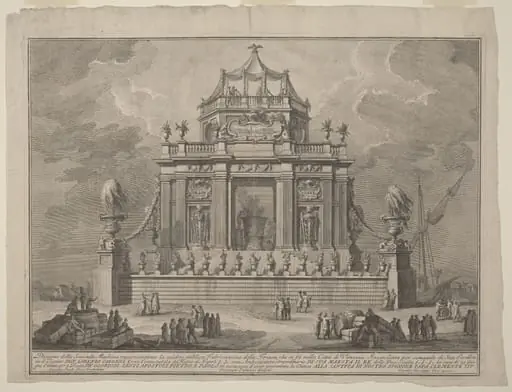 The Seconda Macchina for the Chinea of 1773: The Preparation of Theriac in Venice