Artwork
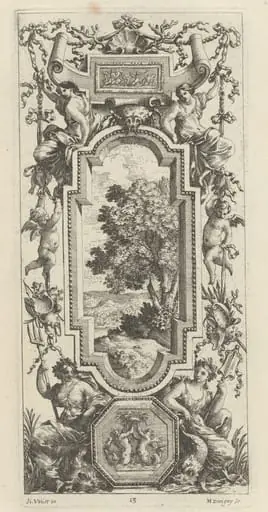
Ornamental Panel Surmounted by a Naiad and a River God
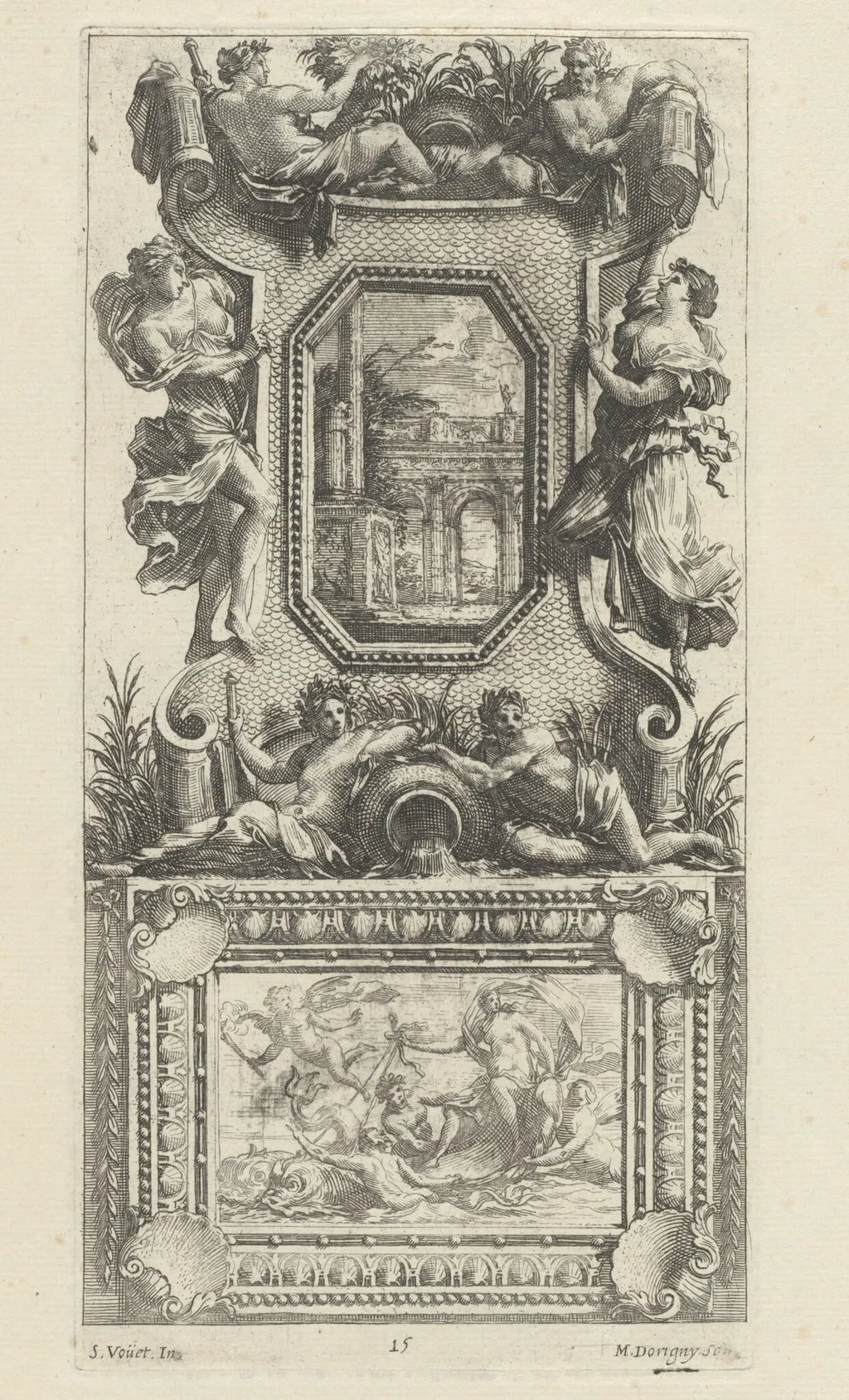
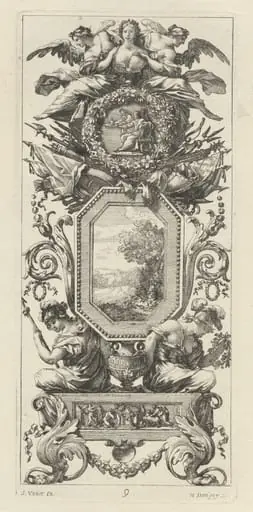
Ornamental Panel Surmounted by a Naiad and a River God is an ink print by the Baroque artist Michel Dorigny. It dates from 1647 and is held in the collection of the National Gallery of Art.
About this work
Overview
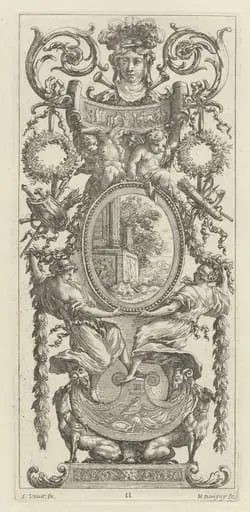
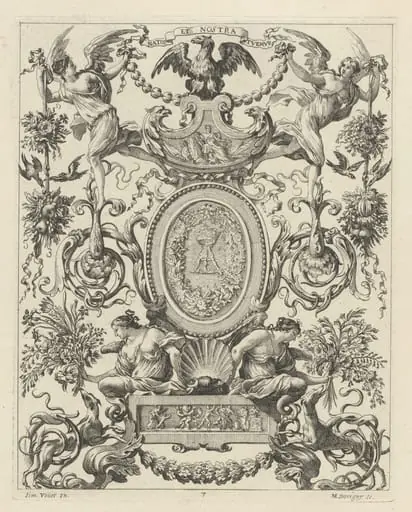
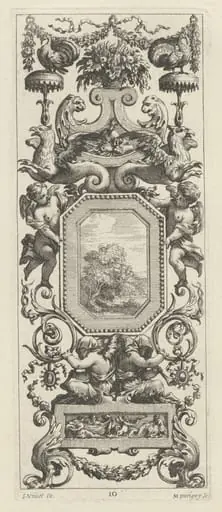
Ornamental Panel Surmounted by a Naiad and a River God is a 1647 print by Michel Dorigny, combining etching and engraving techniques on laid paper. The work features a complex composition centered around mythological figures within an ornate frame.
Subject & Meaning
The print depicts a naiad (river nymph) and a river god in dynamic interaction, with attributes including a fish and a trident. Classical motifs and symbols of water (e.g., wavy lines, shell) dominate the scene, reflecting Baroque interpretations of ancient themes.
Technique & Style
Dorigny employed a dual technique of etching and engraving to achieve detailed, intricate designs. The piece exemplifies Baroque printmaking, characterized by elaborate ornamentation, classical influences, and expressive figural poses.
History & Provenance
Created in 1647, specific provenance details are not provided in available information. The work is attributed to Michel Dorigny, a figure associated with the Baroque movement in 17th-century European art.
Context
This print sits within the broader context of 17th-century Baroque art, which often revived and reinterpreted classical mythology. The use of naiads and river gods reflects a common Baroque theme of engaging with water and nature through mythological subjects.
Legacy
While specific legacy details of this panel are not provided, it contributes to the understanding of Baroque printmaking techniques and the period's fascination with classical mythology. For deeper insight into this style, examining Dorigny's broader oeuvre is suggested.
Artist & collection


 Ornamental Panel Surmounted by a Bust of a Woman and Two Putti with Flaming Trumpets
 Pan and Syrinx
 Ornamental Panel Surmounted by a Winged Harpy
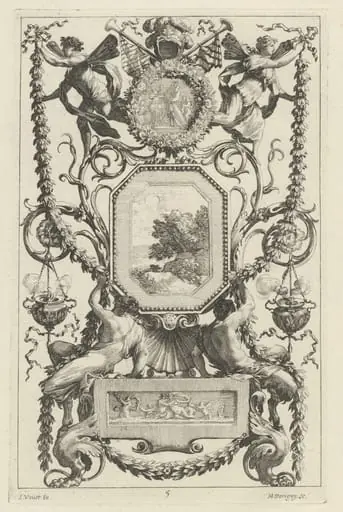 Ornamental Panel Surmounted by a Medallion with a Sacrifice
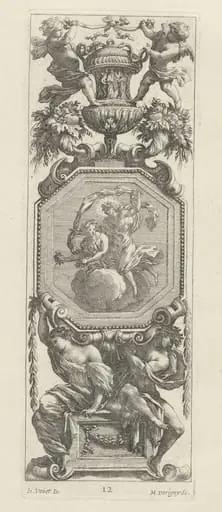 Ornamental Panel Surmounted by Two Putti and a Vase
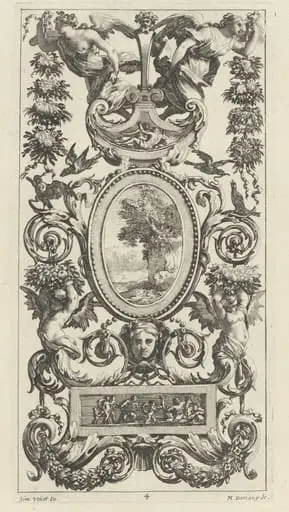 Ornamental Panel with Pan and Two Garland-Bearing Women
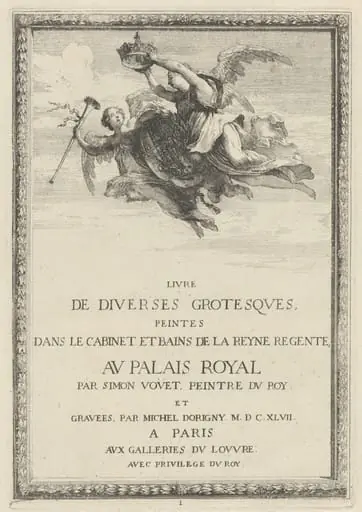 Title Page
 Ornamental Panel Surmounted with Two Figures Leaning on the Bust of a Woman