Artwork
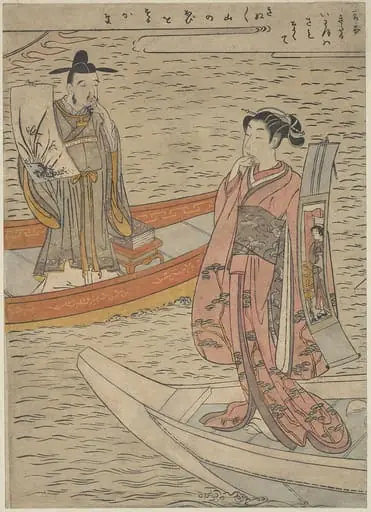
Sumidagawa no rakugan|風俗江戸八景 隅田川落雁|Wild Geese Flying Down the Sumida River
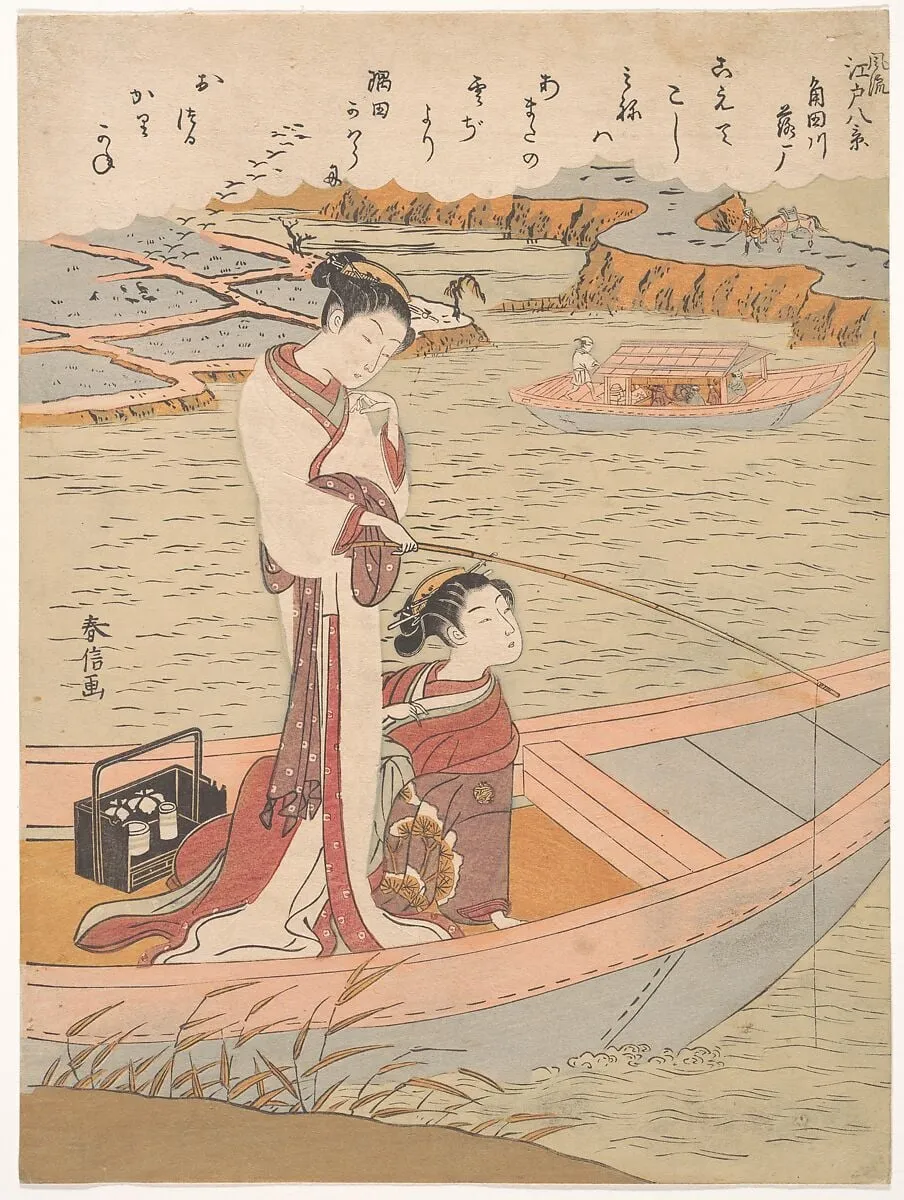
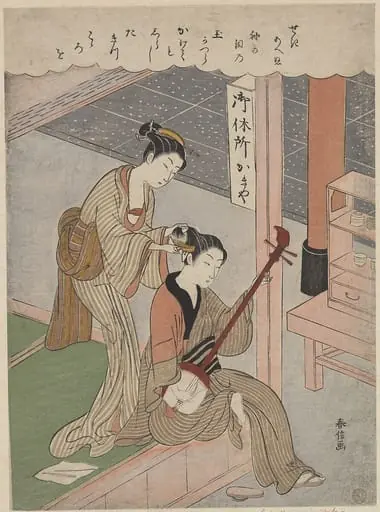
Sumidagawa no rakugan|風俗江戸八景 隅田川落雁|Wild Geese Flying Down the Sumida River is an ink print by the Romanticist artist Suzuki Harunobu. It dates from 1769 and is held in the collection of the Metropolitan Museum of Art.
About this work
Overview
Suzuki Harunobu’s woodblock print, dated around 1769, presents a tranquil evening on the Sumida River. A woman in a blue kimono leans on a railing, observing geese that glide low over the water as the sky takes on a soft pink hue. Below, small boats drift and a fisherman works his pole from a skiff on the far bank.
Subject & Meaning
The scene captures a moment of quiet contemplation, linking human presence with the natural rhythm of migratory geese. The woman’s gaze suggests a fleeting appreciation of the seasonal passage, while the fisherman’s activity grounds the composition in everyday river life.
Technique & Style
Executed in ink and color on paper, Harunabu’s print employs delicate line work and subtle shading to convey atmosphere. The composition balances foreground figures with the expansive river and sky, using muted tones that enhance the evening’s calm.
History & Provenance
The image is one of eight prints forming a popular Edo‑period poem cycle, each pairing a well‑known river view with a poetic line. In this case, the verse describes wild geese descending onto the river. A small red seal in the lower corner identifies the poet rather than the artist.
Context
During the mid‑eighteenth century, prints that combined poetry and landscape were widely circulated in Edo, reflecting a cultural fascination with seasonal motifs and the pleasures of river scenery. Harunobu’s work exemplifies this blend of literary and visual art.
Artist & collection