Artwork
Angora Sheep
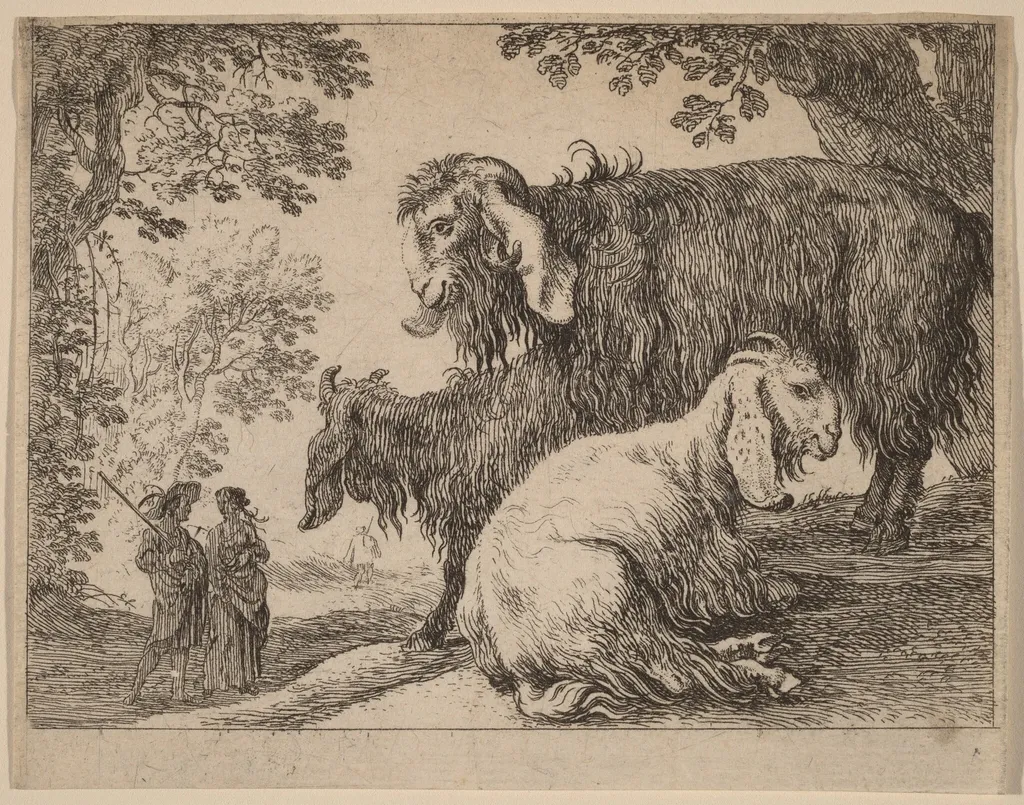
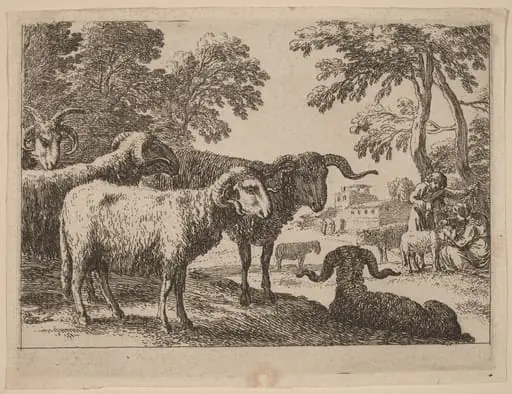
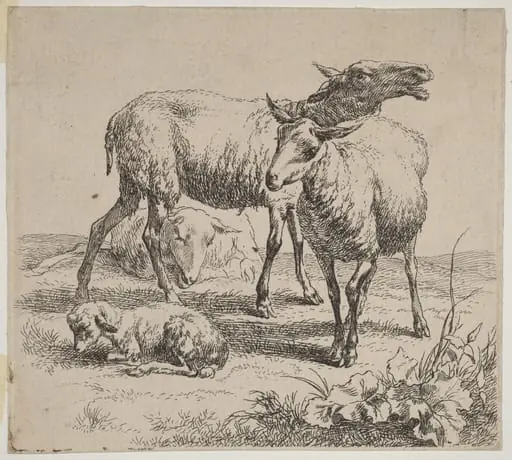
Angora Sheep is an ink print by the Baroque artist Herman van Swanevelt. It dates from 1628 and is held in the collection of the National Gallery of Art.
About this work
Overview
Created in 1628 by the Dutch printmaker Herman van Swanevelt, Angora Sheep is an etched print that captures a tranquil countryside scene. The composition features two figures standing beside a path, while a large, shaggy animal with a thick, curled coat rests nearby. Sparse trees line the background, contributing to the work’s quiet, rural atmosphere.
Subject & Meaning
The central figure is an Angora goat, recognizable by its abundant, curly fleece and elongated beard, suggesting a focus on pastoral life and the value of wool-producing animals. The presence of the two human figures, modestly dressed, implies a simple, everyday interaction between people and livestock within a pastoral setting.
Technique & Style
Van Swanevelt employed the etching process, incising fine lines into a copper plate to render intricate textures. The animal’s fur and the clothing of the figures are delineated with precise, sharp strokes, a hallmark of early‑17th‑century etching that emphasizes detail and surface variation without relying on heavy shading.
History & Provenance
The print was produced during a period when Dutch artists increasingly explored rural themes and the natural world. While specific ownership records are scarce, the work is catalogued among van Swanevelt’s early prints, illustrating his engagement with landscape and genre subjects that were popular in the Dutch Republic at the time.
Context
In the early 1600s, the Netherlands experienced a flourishing print market, and etchings served both artistic and documentary purposes. Van Swanevelt’s Angora Sheep reflects contemporary interest in agrarian life, as well as the technical advancements that allowed artists to reproduce detailed images for a growing audience of collectors and scholars.
Own this work as a print
Artist & collection