Artwork
Shepherd on Horseback
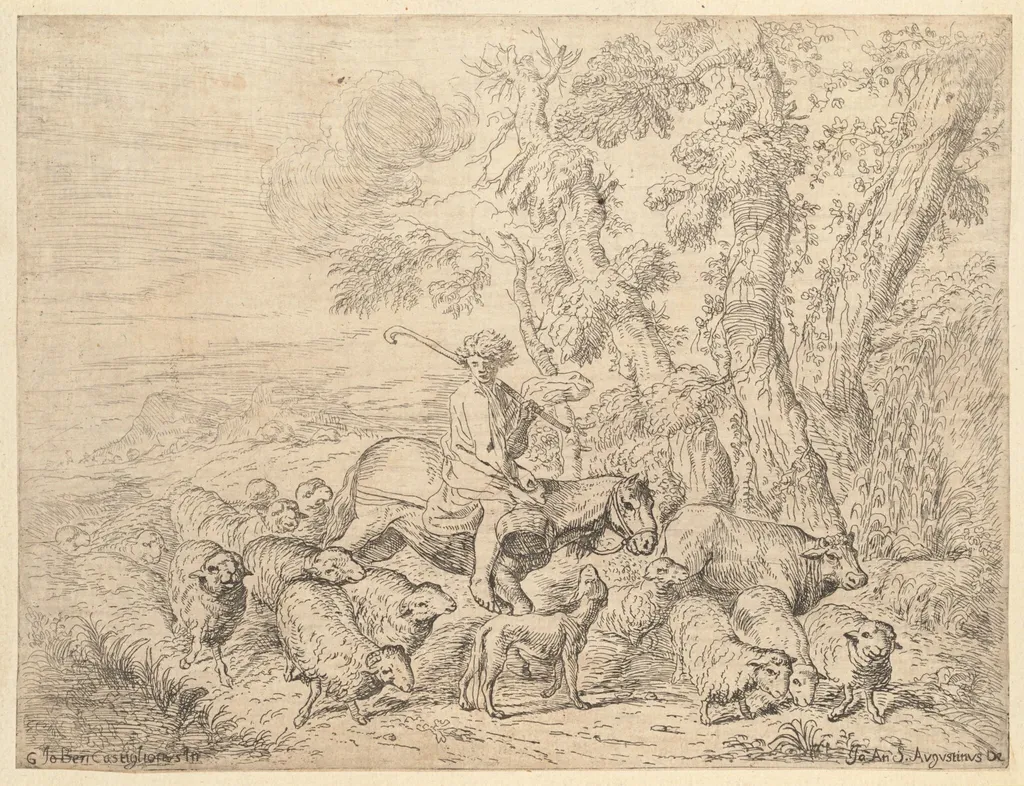
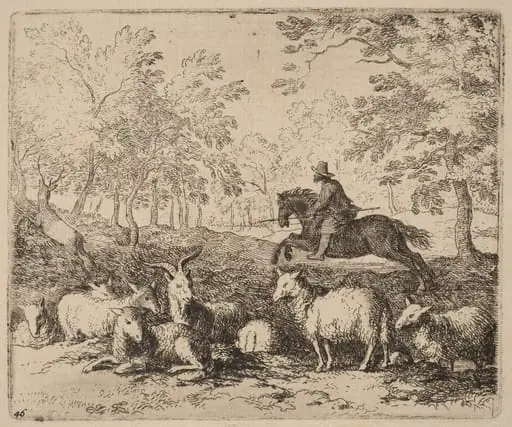
Shepherd on Horseback is an ink print by the Baroque artist Italian 17th Century. It is held in the collection of the National Gallery of Art.
About this work
Overview
This etching depicts a young shepherd on horseback guiding a flock of sheep through a wooded landscape.
This etching depicts a young shepherd on horseback guiding a flock of sheep through a wooded landscape. Executed on laid paper, the work captures a fleeting moment with loose, energetic lines. The composition emphasizes motion, as the animals move in unison behind the rider. The background is minimally suggested, with gentle hills and an open sky, allowing the focus to remain on the figures and their interaction with the environment.
Subject & Meaning
The scene portrays an everyday rural activity—shepherding—without idealization or narrative embellishment. The shepherd, young and unadorned, is shown in the act of duty, surrounded by his flock. The absence of human drama or symbolic elements suggests an interest in quiet observation rather than moral or allegorical storytelling. The work reflects a grounded, unembellished view of pastoral life.
Technique & Style
The artist employed etching to achieve fluid, spontaneous marks, allowing ink to bleed slightly and create soft tonal gradations. Lines are loose and uneven, mimicking the texture of foliage and the movement of wool. The lack of rigid detail and the emphasis on atmospheric effects convey immediacy, as if the image were drawn on the spot. This approach prioritizes sensation over precision, aligning with sketch-like immediacy.
History & Provenance
The work’s origin is undocumented, with no known record of its creation date or early ownership. It appears to be a standalone print, not part of a known series or published portfolio. Its survival suggests it was likely kept in private collections or artist’s studios, valued for its informal quality rather than as a finished commercial product.
Context
This print aligns with 17th- and 18th-century European traditions of pastoral imagery, where rural labor was often depicted with quiet dignity. Unlike grand historical scenes, such works focused on ordinary moments, reflecting a growing interest in everyday life. The technique echoes the sketching practices of artists who valued direct observation over studio refinement.
Legacy
Though unsigned and unattributed, the etching exemplifies a broader trend in printmaking toward spontaneity and naturalism. Its informal style influenced later artists who sought to capture movement and atmosphere with minimal means. It remains a quiet testament to the value placed on transient, unposed moments in the visual record of rural life.
Artist & collection

Artist
This Italian artist worked in the 17th century, making engravings, ink drawings, and oil paintings.

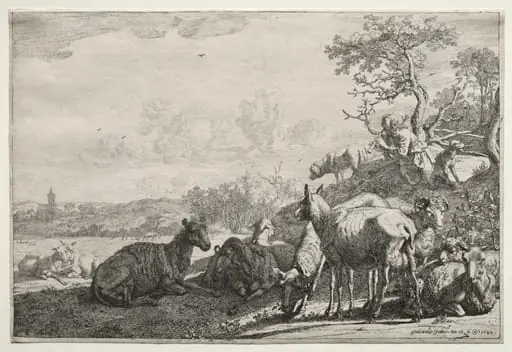 The Shepherd
 The Horse Forced to Pursue the Stag
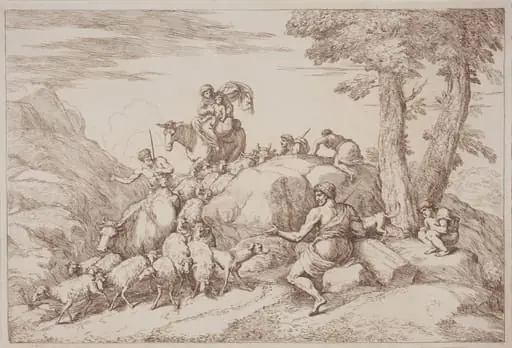 A Pastoral Journey with a Mother and Child on Horesback and an Elderly Shepherd Seated
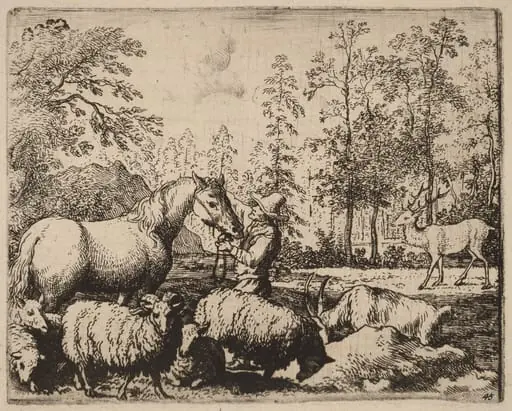 The Horse and the Stag
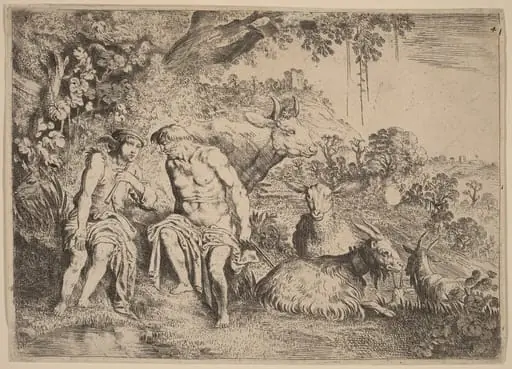 Mercury Lulling Argus to Sleep
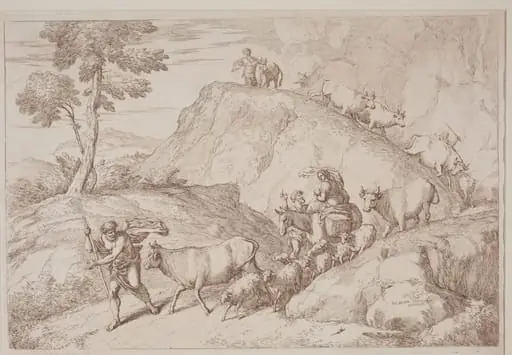 An Elderly Shepherd Leading the Flock
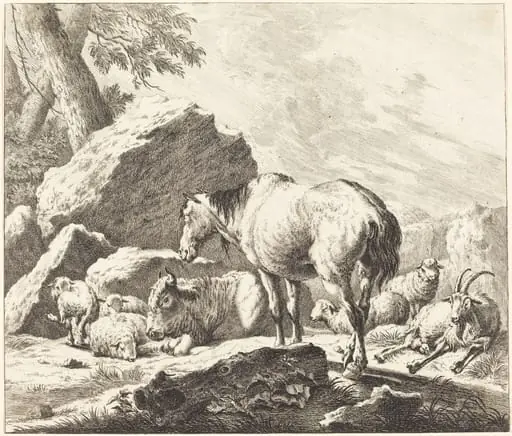 A Horse, Buffalo, Sheep, and Goat in an Italian Landscape
 The Ram Blesses Reynard
 A Pastoral Journey with a Boy Playing His Flute by a Tree
 Boy on a Donkey Watching over a Group of Animals
 Two Riders Passing Near a Herd of Animals
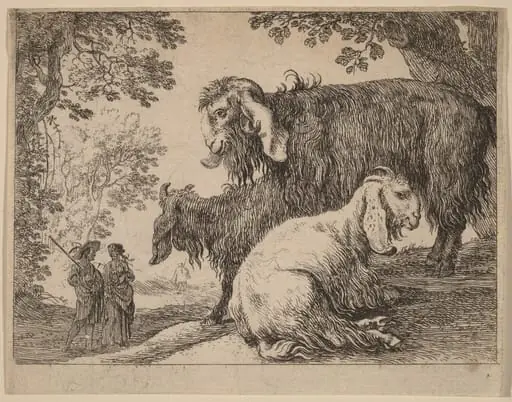 Angora Sheep