Artwork
Death of Adonis
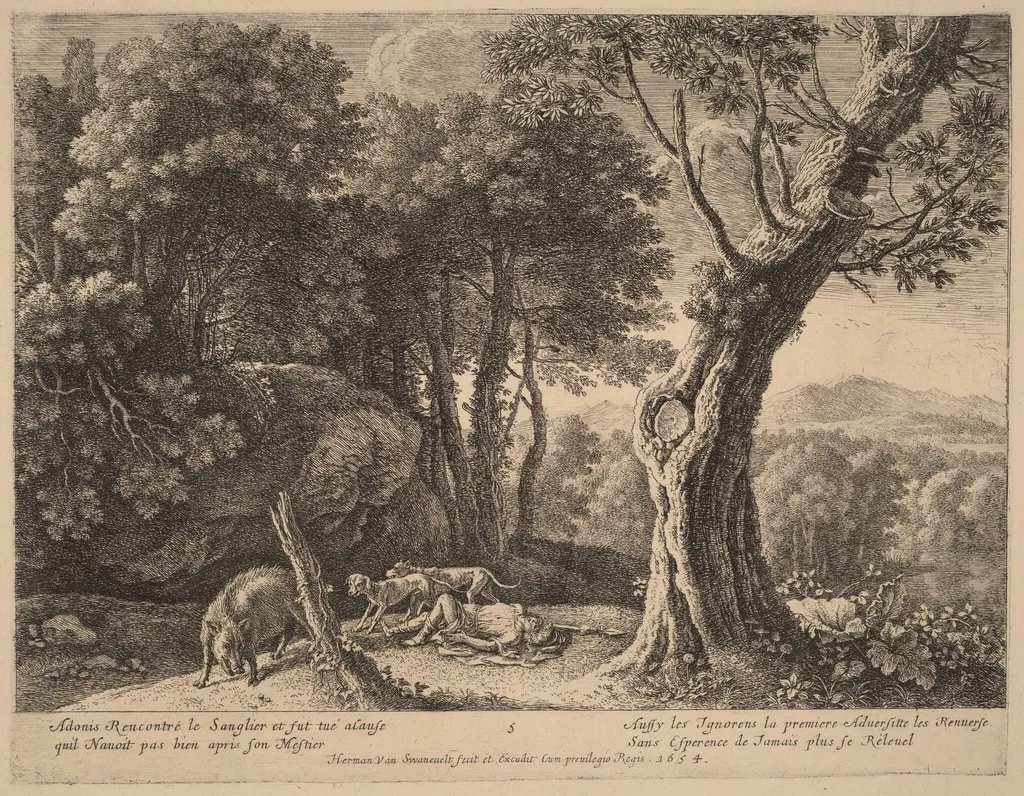
Death of Adonis is an ink print by the Baroque artist Herman van Swanevelt. It dates from 1628 and is held in the collection of the National Gallery of Art.
About this work
Overview
Herman van Swanevelt created this etching in 1628, depicting the moment of Adonis’s death as described in classical myth.
Herman van Swanevelt created this etching in 1628, depicting the moment of Adonis’s death as described in classical myth. The scene is composed with quiet solemnity, focusing on the fallen hunter surrounded by nature. The composition avoids dramatic action, instead emphasizing stillness and the quiet aftermath of violence. Fine, controlled lines define the figures and landscape, characteristic of the etching technique.
Subject & Meaning
The image illustrates the myth of Adonis, a beautiful youth killed by a wild boar during a hunt, a story often interpreted as a symbol of fleeting life and the inevitability of death. The boar, barely active, sniffs the fallen figure, while a loyal dog remains close. The absence of other figures heightens the sense of isolation, reinforcing the myth’s themes of loss and the indifference of nature to human fate.
Technique & Style
Van Swanevelt employed fine, incised lines to build tone and texture, using etching to achieve subtle gradations of light and shadow. The forest is rendered with delicate hatching, while the figures are defined with precision. Sunlight filters through the canopy in soft pools, contrasting with the deeper shadows beneath the trees. The distant mountain is suggested with minimal strokes, enhancing the sense of spatial depth without clutter.
History & Provenance
Created in 1628, the print likely circulated among collectors of Northern European prints during the early 17th century. Van Swanevelt, active in Rome and influenced by Italian landscape traditions, produced this work during a period when mythological subjects were popular among printmakers. Its survival in institutional collections suggests it was valued for its technical refinement and poetic mood.
Context
This etching emerged during a time when Northern artists increasingly engaged with classical mythology, often through the lens of naturalism. Van Swanevelt, trained in the Netherlands but working in Italy, blended Dutch attention to detail with Italianate landscape composition. The quiet, contemplative tone reflects a broader trend away from theatricality toward introspective storytelling in printmaking of the period.
Legacy
Though not widely reproduced in popular culture, the etching remains a quiet example of early Baroque printmaking’s capacity for emotional restraint. It influenced later artists interested in mythological scenes rendered with naturalism rather than grandeur. Its preservation in museum collections underscores its role as a refined specimen of 17th-century graphic art, valued for its compositional harmony and technical discipline.
Own this work as a print
Artist & collection

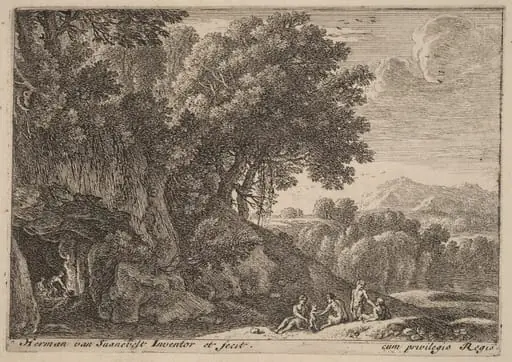 Satyrs around a Fire
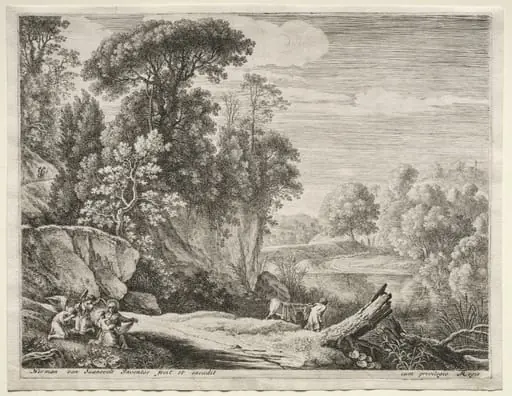 The Flight into Egypt: The Donkey Led to the River
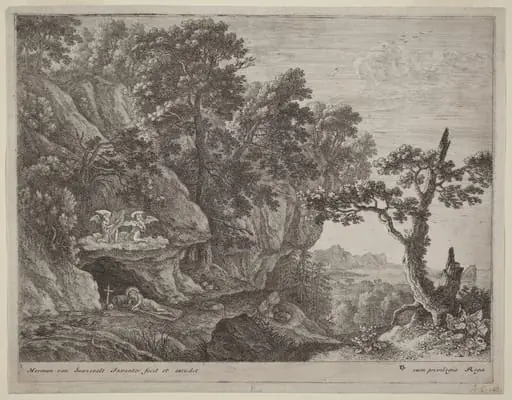 The Repentant Magdalene in a Landscape
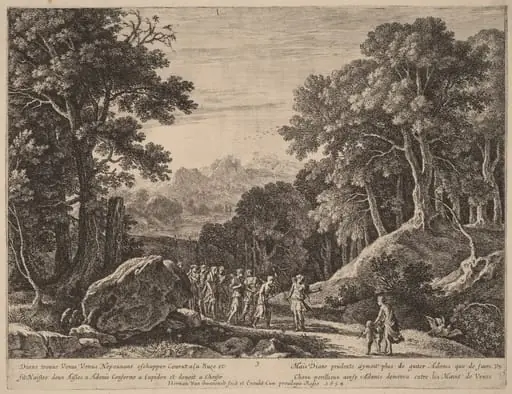 Venus Offering Diana a Choice between Cupid and Adonis
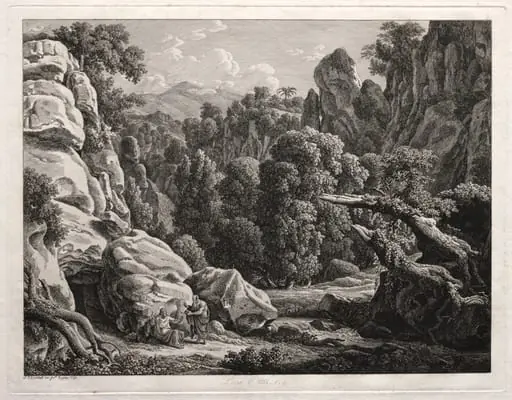 Heroic Landscape: Landscape with the Temptation of Christ
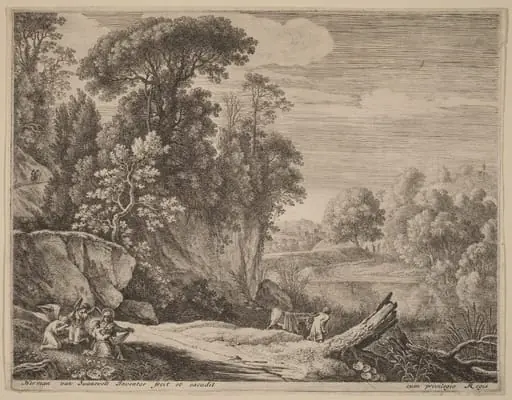 The Donkey Led to the River
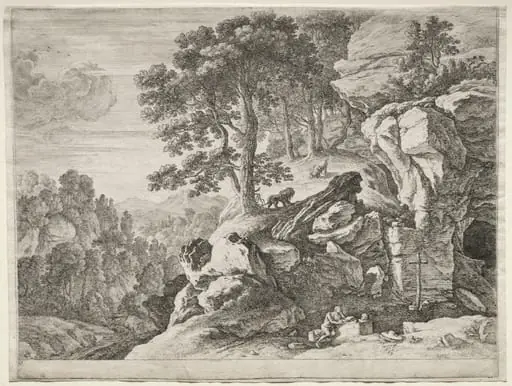 The Penitents: St. Jerome in the Desert
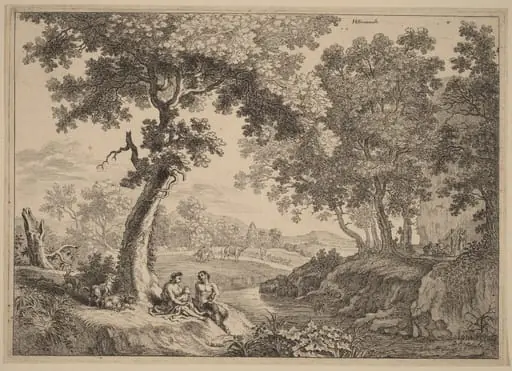 Satyr Family Seated under a Tree
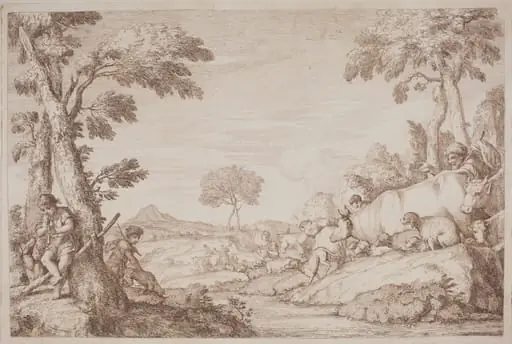 A Pastoral Journey with a Boy Playing His Flute by a Tree
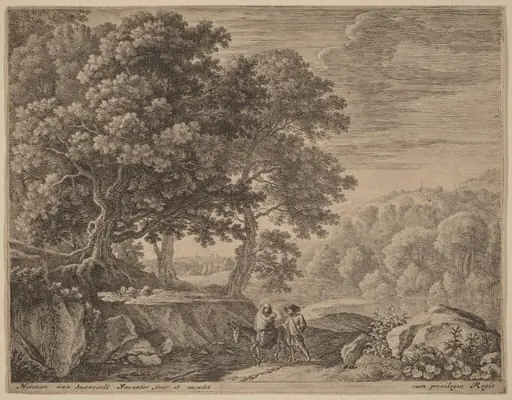 The Little Angels on the Hill
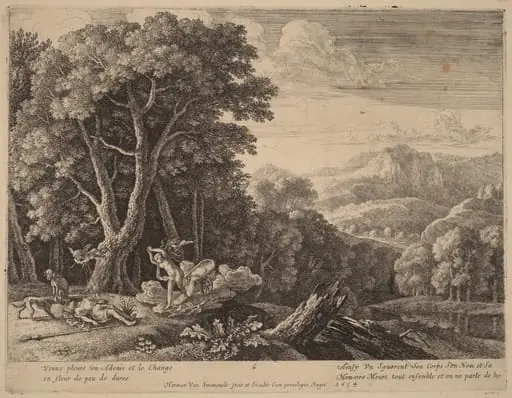 Venus Lamenting over Adonis' Death
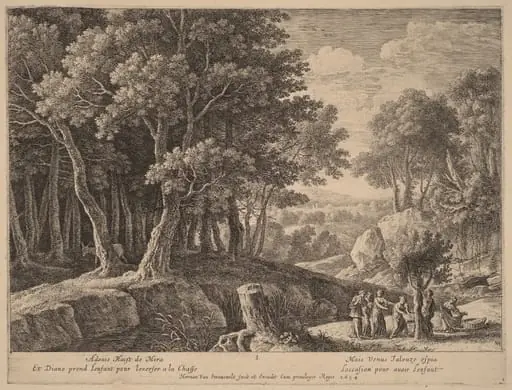 Birth of Adonis