Artwork
Path to Left of a Large Tree and a Stump
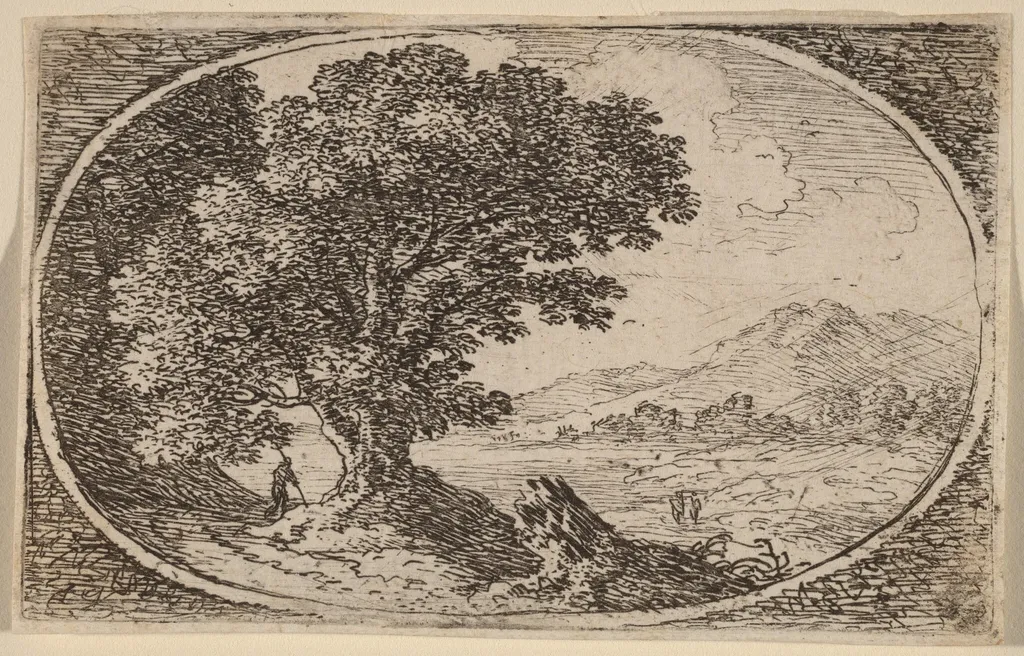
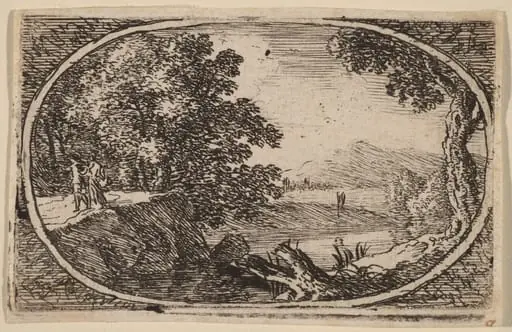
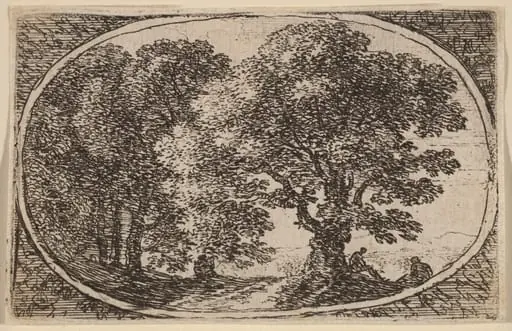
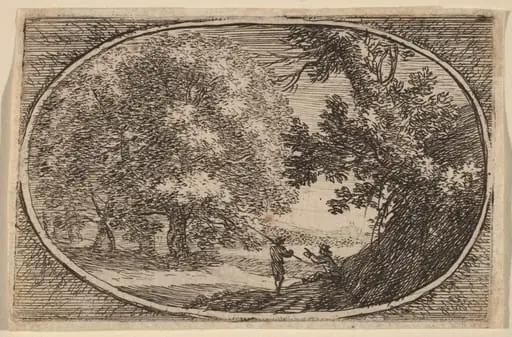
Path to Left of a Large Tree and a Stump is an ink print by the Baroque artist Herman van Swanevelt. It dates from 1628 and is held in the collection of the National Gallery of Art.
About this work
Overview
The scene is rendered in monochrome, with a hand-drawn quality and an uneven paper edge, suggesting a direct, unpolished approach to the plate.
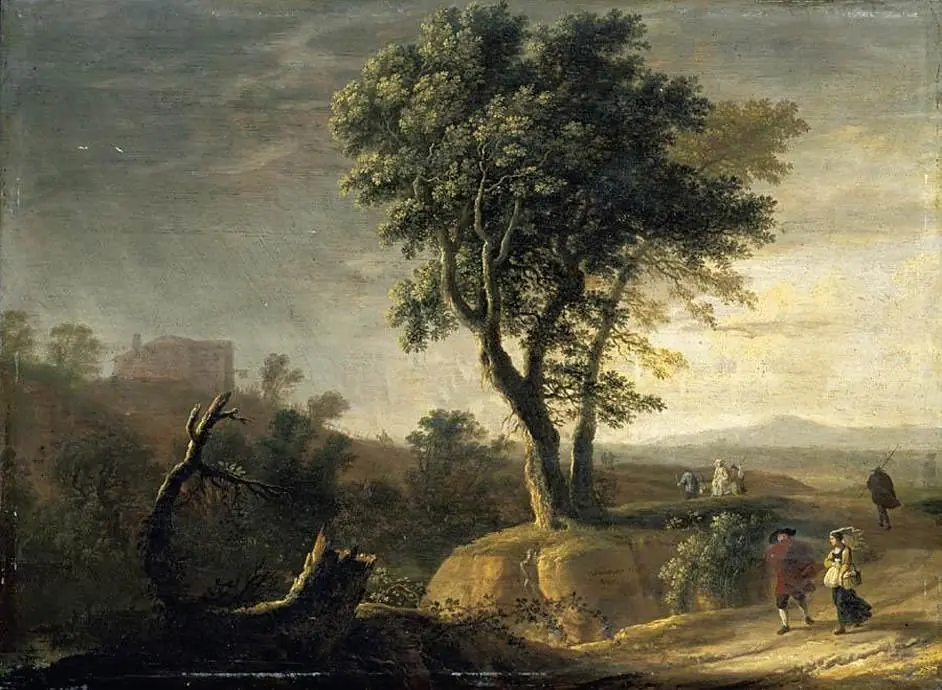
Created in 1628, this etching by Herman van Swanevelt depicts a quiet rural path winding beside a massive, gnarled tree and a weathered stump. The composition is dominated by the tree’s dense, irregular branches, which cast a shadowed presence over the narrow trail below. The scene is rendered in monochrome, with a hand-drawn quality and an uneven paper edge, suggesting a direct, unpolished approach to the plate.
Subject & Meaning
The image presents a solitary, unremarkable stretch of countryside, devoid of human figures or dramatic events. The tree and stump suggest decay and endurance, while the path implies passage without destination. There is no overt narrative, but the stillness and simplicity evoke a contemplative mood, characteristic of early 17th-century landscape studies that valued observation over symbolism.
Technique & Style
Van Swanevelt employed etching, a method in which lines are incised into a metal plate with acid, then inked and pressed onto paper. The resulting texture is grainy and irregular, with varying line weights that mimic the natural roughness of bark and stone. The rough border of the print indicates the plate’s edge was left visible, reinforcing the work’s intimate, workshop-made character.
History & Provenance
This print dates from van Swanevelt’s early career, shortly after his move to Rome, where he absorbed Italian landscape traditions. While few records of its early ownership exist, it aligns with a broader trend among Northern European artists in Italy who produced small-scale, atmospheric prints for private collectors rather than public display.
Context
In the 1620s, etching was gaining favor among artists seeking alternatives to painting for capturing natural scenes. Van Swanevelt’s work reflects a shift toward intimate, observational landscapes, influenced by Dutch and Italian precedents. Unlike grand historical compositions, this print values quietude and texture, mirroring a growing interest in the everyday natural world.
Legacy
Though not widely reproduced or exhibited today, this etching exemplifies the quiet precision of early Baroque printmaking. It contributes to an understudied body of work by van Swanevelt that helped bridge Northern European draftsmanship with Italianate landscape sensibilities, influencing later generations of printmakers focused on natural detail.
Artist & collection