Artwork
The Stump near the River
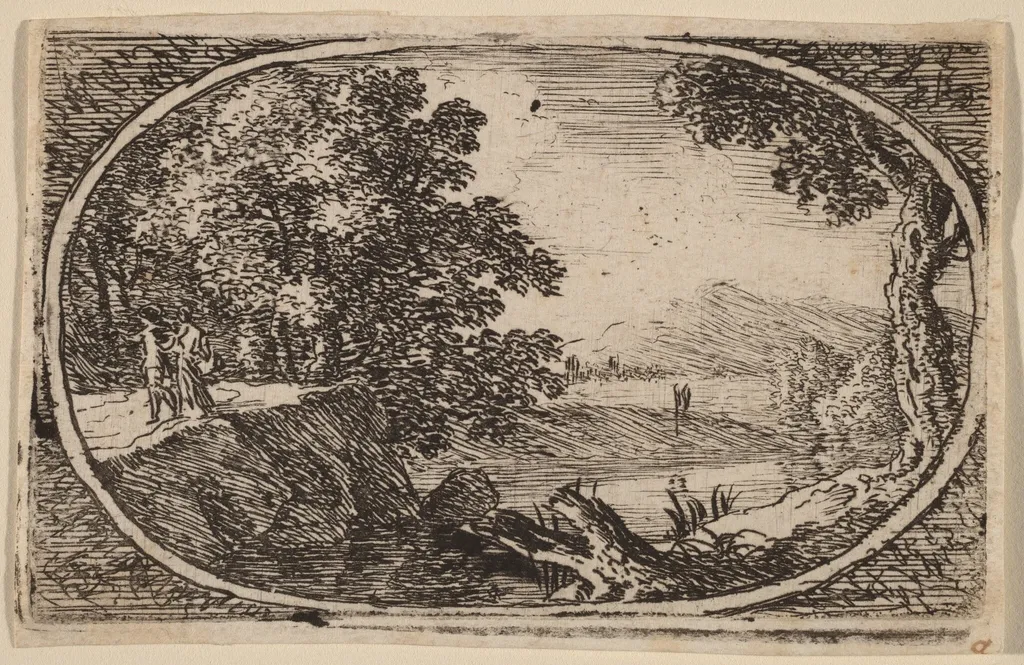
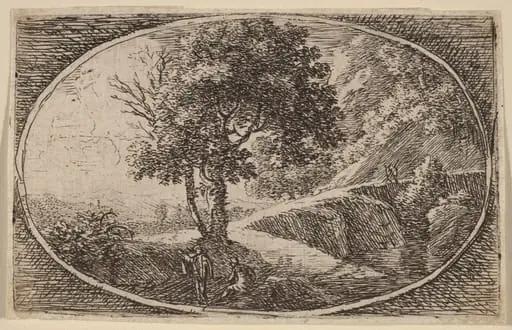
The Stump near the River is an ink print by the Baroque artist Herman van Swanevelt. It dates from 1628 and is held in the collection of the National Gallery of Art.
About this work
Overview
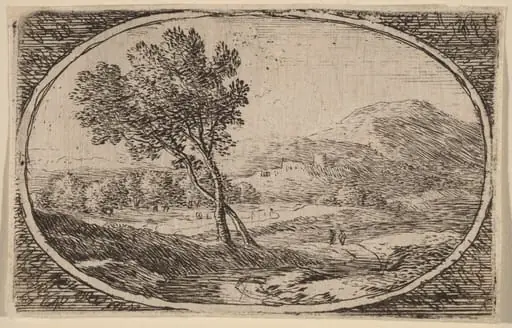
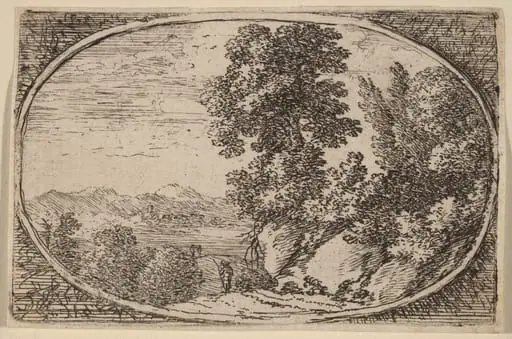
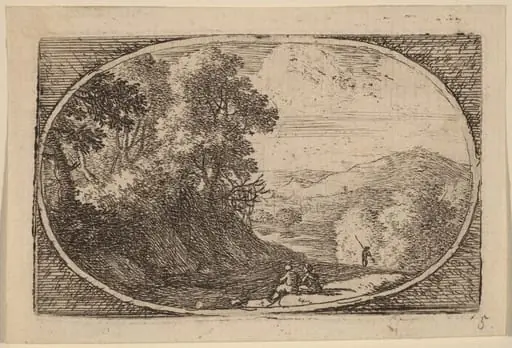
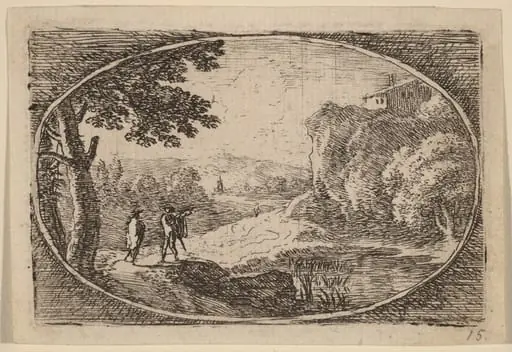
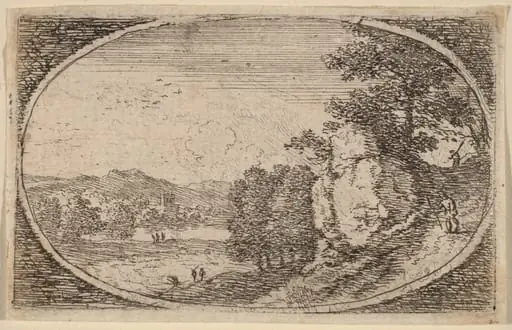
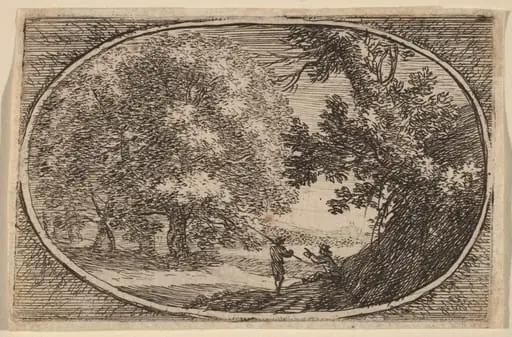
Herman van Swanevelt’s 1628 etching titled *The Stump near the River* presents a tranquil countryside scene. A solitary tree stump dominates the foreground, positioned beside a gently flowing river that winds toward a horizon framed by soft, undulating hills. The composition balances natural elements with a calm, reflective atmosphere, inviting quiet observation.
Subject & Meaning
The work centers on a weathered stump, a symbol of time’s passage, set within a placid riverine landscape. By isolating the stump against a serene backdrop, the image suggests contemplation of nature’s cycles and the quiet resilience of the environment, encouraging the viewer to pause and consider the subtle interplay between growth and decay.
Technique & Style
Swanevelt employs the etching medium to render fine, delicate lines that delineate the bark’s texture and the river’s surface. Through careful manipulation of tonal gradations, the artist creates depth, allowing light to fall across the hills and water. The subtle shading and precise incisions give the scene a luminous, atmospheric quality typical of early 17th‑century Dutch printmaking.
History & Provenance
Created in 1628, the etching is among the early prints attributed to Swanevelt, a Dutch artist known for his landscape studies. While specific ownership records are limited, the piece has been catalogued in several collections of Dutch baroque prints, reflecting its continued relevance within the study of 17th‑century European print art.
Artist & collection