Artwork
Saints Paul and Anthony by the Entrance to a Cave
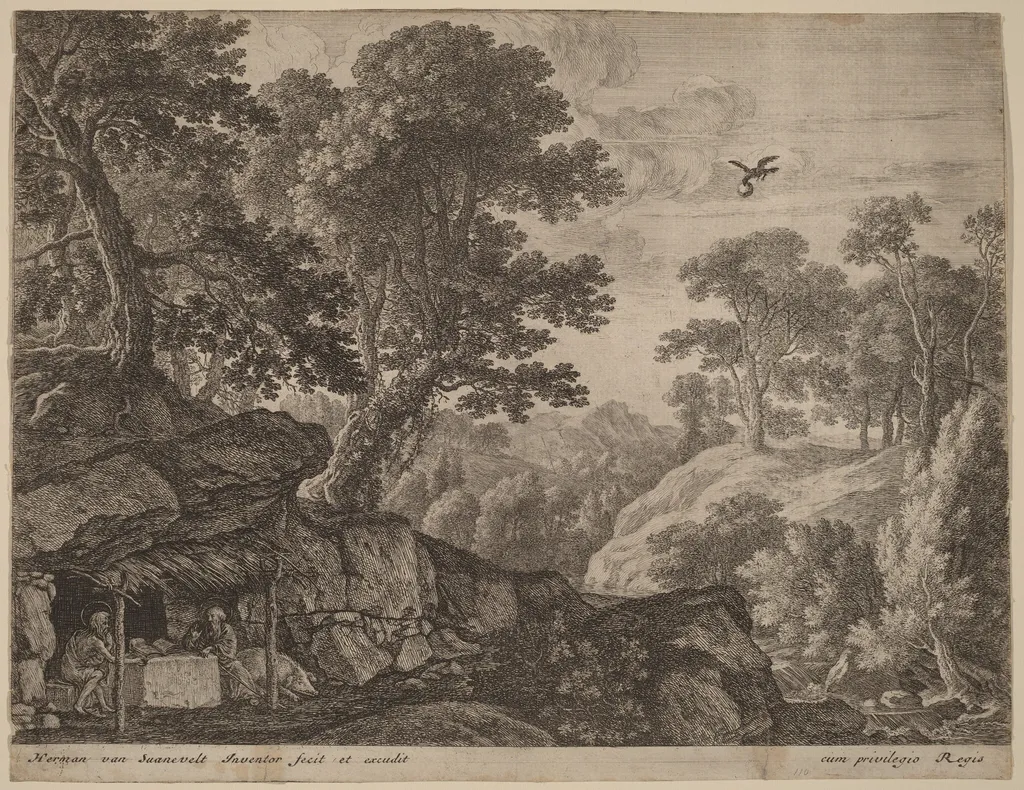
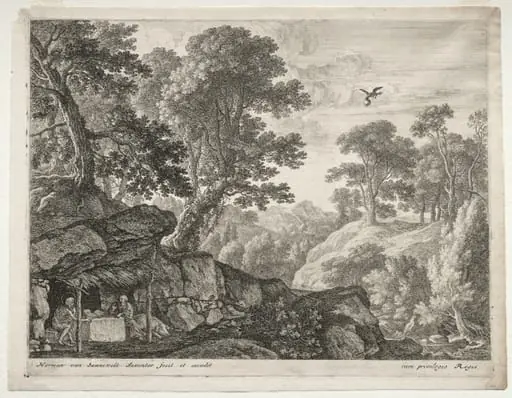
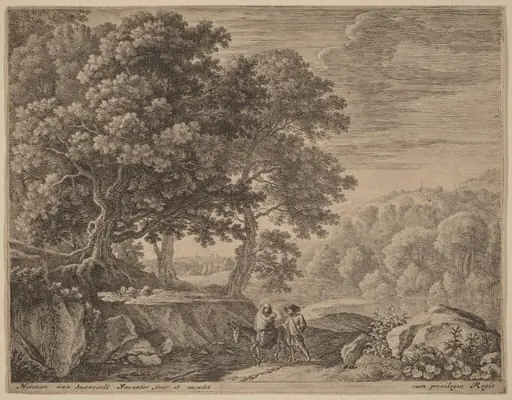
Saints Paul and Anthony by the Entrance to a Cave is an ink print by the Baroque artist Herman van Swanevelt. It dates from 1628 and is held in the collection of the National Gallery of Art.
About this work
Overview
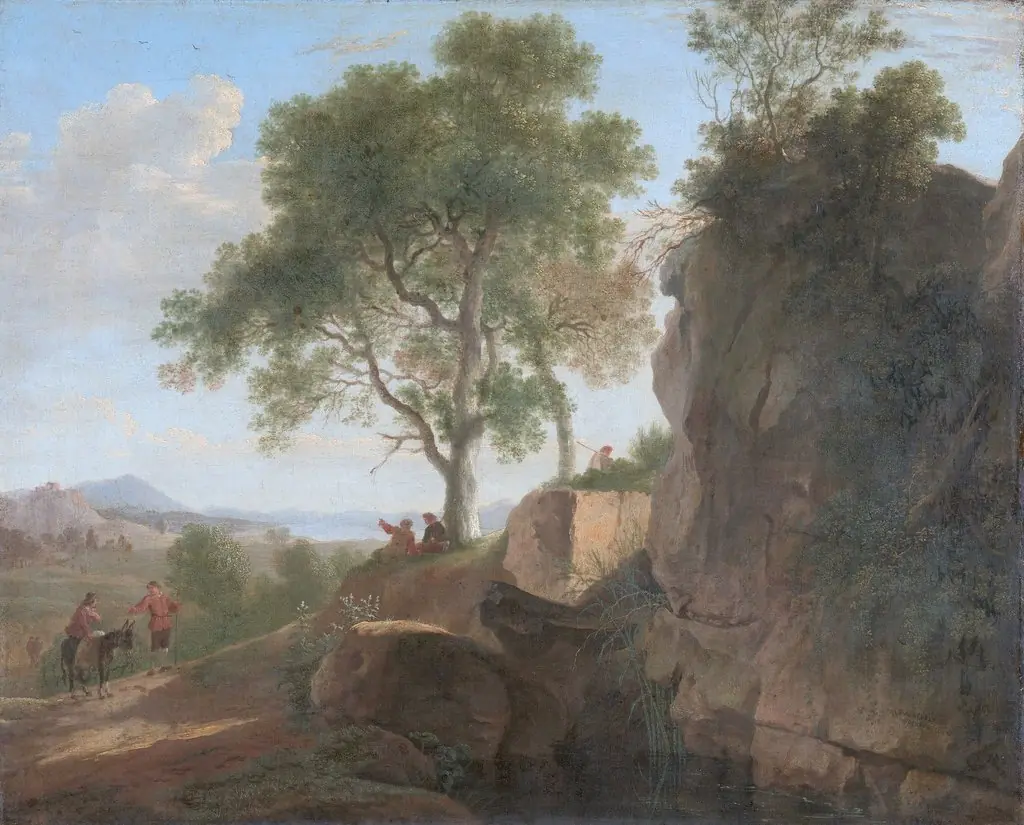
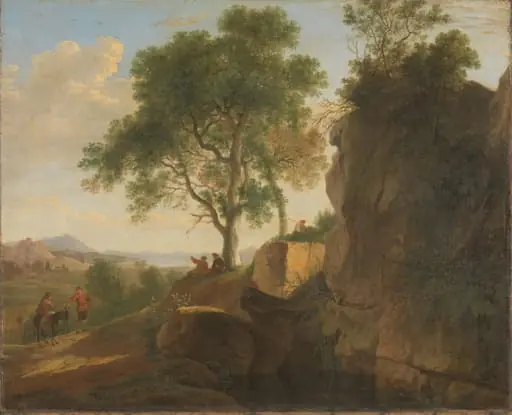
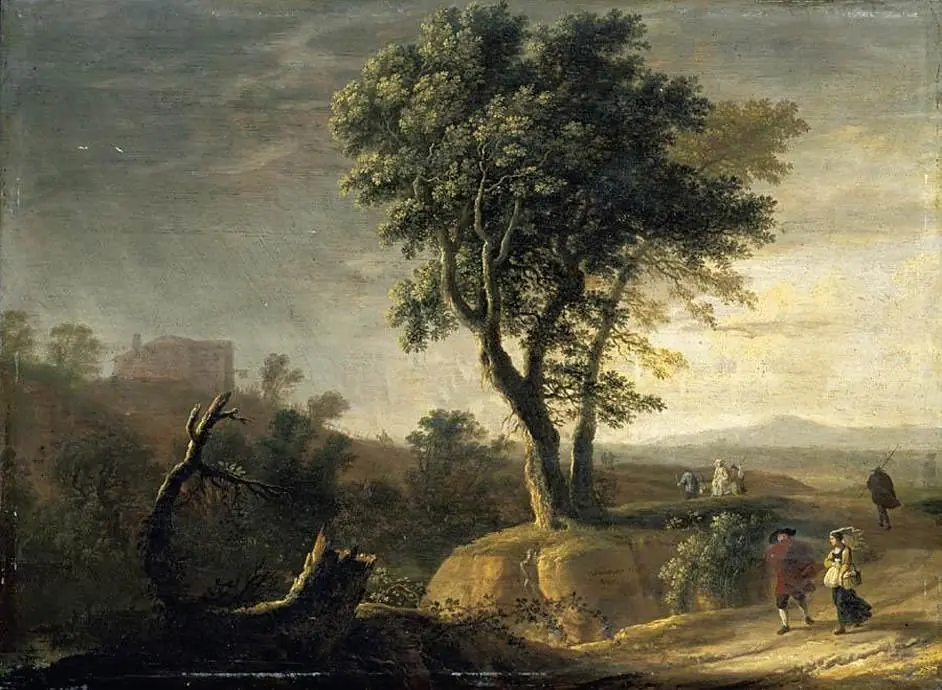
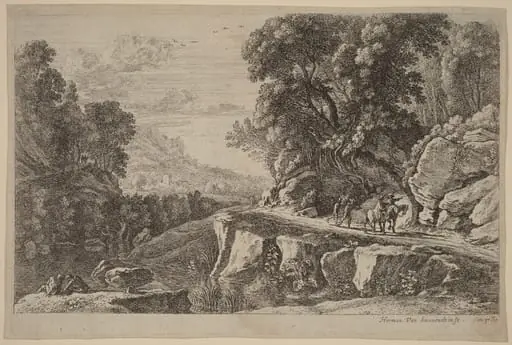
Herman van Swanevelt’s 1628 etching titled *Saints Paul and Anthony by the Entrance to a Cave* presents a tranquil, nocturnal landscape. Two figures sit within the mouth of a rocky cavern, framed by dense foliage and rolling hills. A solitary bird hovers above the treetops while a storm‑laden sky looms overhead, lending the composition a subdued, contemplative atmosphere.
Subject & Meaning
The work depicts the saints Paul and Anthony in a moment of quiet devotion: one saint is absorbed in a book, the other rests his head on his hand, suggesting meditation or prayer. The surrounding wilderness and the cave’s shelter evoke themes of hermitage and spiritual retreat, aligning the saints with the tradition of ascetic contemplation in nature.
Technique & Style
The rendering of the rough stone, tangled branches, and atmospheric sky relies on cross‑hatching and stippling, creating depth and a sense of tactile realism.
Swanevelt employed the etching process, incising fine lines into a copper plate to achieve delicate gradations of shadow and texture. The rendering of the rough stone, tangled branches, and atmospheric sky relies on cross‑hatching and stippling, creating depth and a sense of tactile realism. The careful line work highlights the interplay of light and darkness characteristic of early 17th‑century Dutch printmaking.
History & Provenance
Created in 1628, the print belongs to Swanevelt’s early oeuvre, a period when he was establishing his reputation in the Dutch Republic. While specific ownership records are scarce, the etching has appeared in several 19th‑century catalogues of Dutch prints and is held in the collections of major European museums specializing in graphic arts.
Context
The image reflects the broader 17th‑century interest in combining religious narrative with naturalistic landscape. Swanevelt, known for his idyllic scenes, integrates a sacred subject into a detailed environment, mirroring contemporary trends that emphasized the harmony between divine contemplation and the surrounding world.
Artist & collection