Artwork
Odysseus and Teiresias
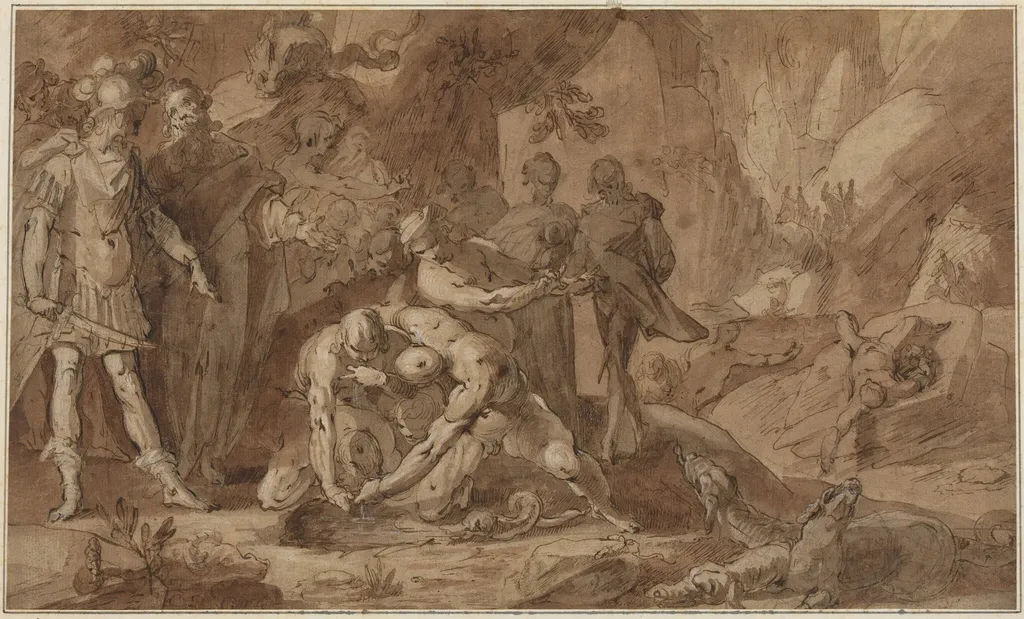
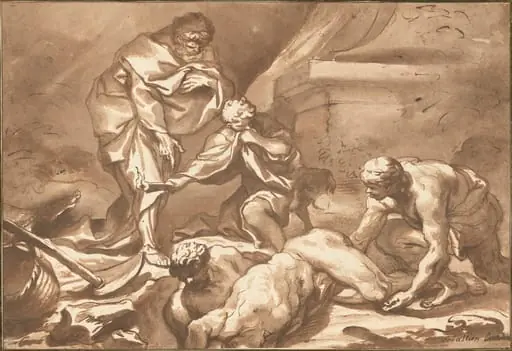
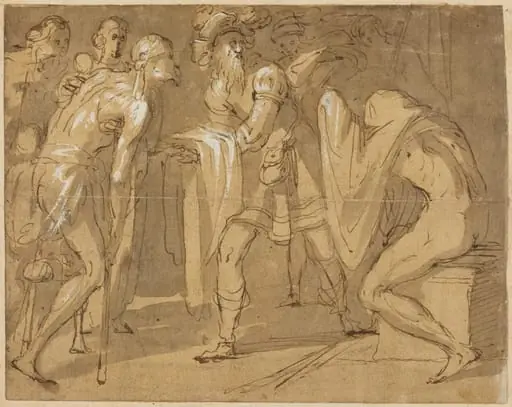
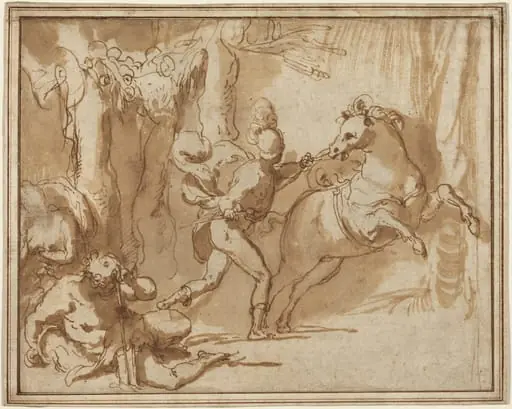
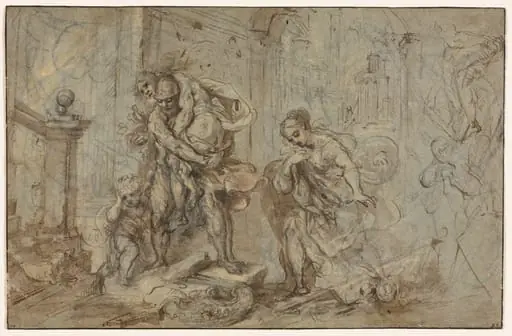
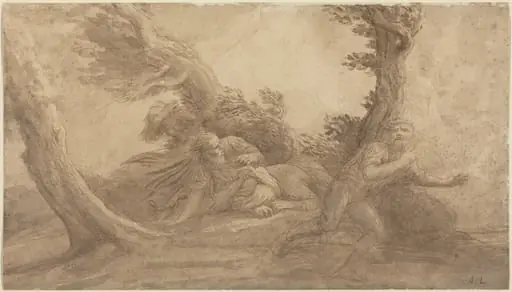
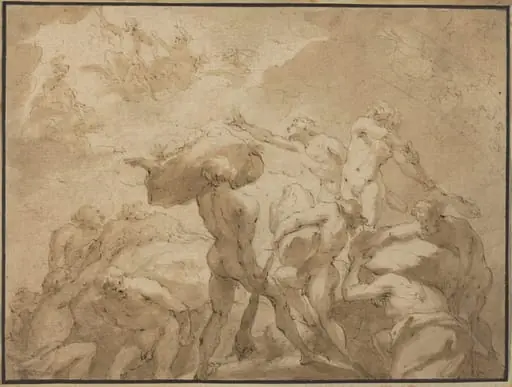
Odysseus and Teiresias is an ink drawing by the Renaissance artist Gerrit Pietersz Sweelinck. It dates from 1606 and is held in the collection of the National Gallery of Art.
About this work
Overview
The loose, rapid strokes and layered shading convey urgency, suggesting a preparatory study rather than a polished composition.
Created in 1606 by Gerrit Pietersz Sweelinck, this drawing depicts a moment from Homer’s Odyssey, rendered in pen and brown ink with wash and white highlights over black chalk. Executed on laid paper, the work captures a turbulent scene with multiple figures and animals in disarray. The loose, rapid strokes and layered shading convey urgency, suggesting a preparatory study rather than a polished composition.
Subject & Meaning
The scene illustrates Odysseus consulting the blind prophet Teiresias in the underworld, as described in Book XI of the Odyssey. The armored figure likely represents Odysseus, while the central woman may be a spectral presence or a companion. The chaotic grouping of figures and animals reflects the eerie, otherworldly atmosphere of the necropolis, emphasizing the spiritual gravity of the encounter.
Technique & Style
Sweelinck employed quick, overlapping lines and layered brown washes to build depth and shadow, enhancing the scene’s dramatic tension. White highlights accentuate key forms, while black chalk underdrawing anchors the composition. Cross-hatching defines volume and texture, particularly in the figures’ drapery and the ground. The sketchy, unfinished quality suggests spontaneous observation rather than idealized finish.
History & Provenance
The drawing is dated 1606, placing it within Sweelinck’s early career as a draftsman in Amsterdam. It remained in private collections until entering a public museum’s holdings, where it is now preserved as a rare example of Dutch Mannerist drawing. Its survival in good condition offers insight into the artist’s working methods and his engagement with classical narratives.
Context
In early 17th-century Netherlands, classical mythology remained a favored subject among artists trained in the Northern Mannerist tradition. Sweelinck, primarily known as a musician, also produced drawings that reflect his interest in human expression and movement. This work aligns with contemporary Flemish and Dutch explorations of mythological themes through dynamic, emotionally charged compositions.
Legacy
Though Sweelinck’s drawings are less widely studied than his musical compositions, this piece contributes to understanding his versatility and the broader Dutch engagement with classical antiquity. Its raw energy and technical experimentation influenced later draftsmen interested in expressive line and atmospheric effect, preserving a vital link between literary narrative and visual interpretation in the period.
Artist & collection