Artwork
The Baptism of Christ
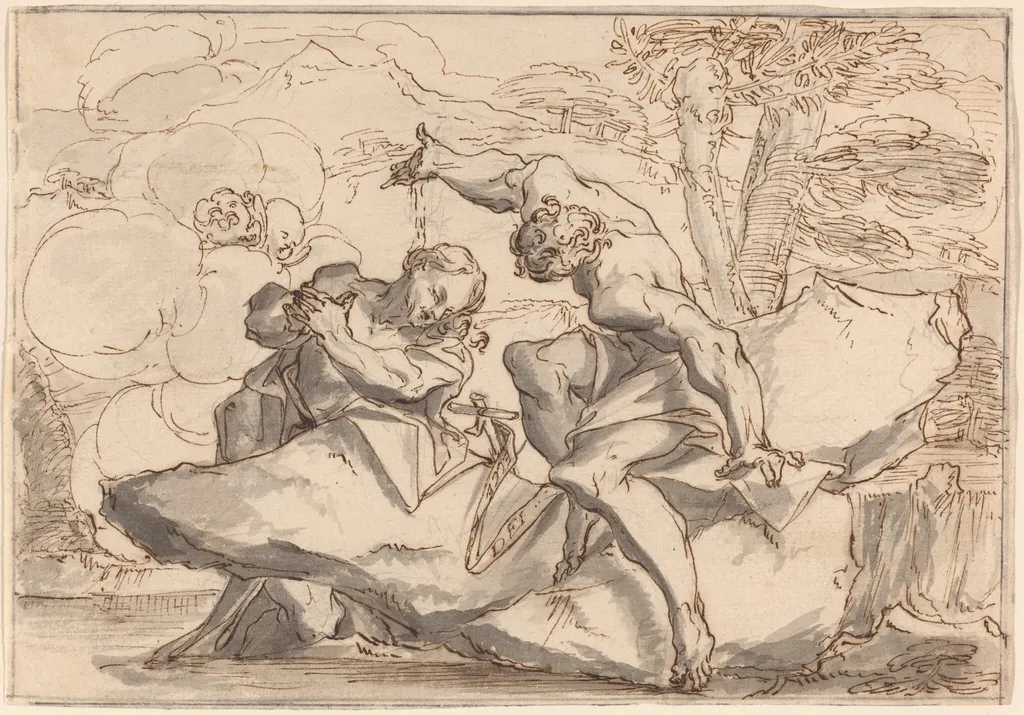
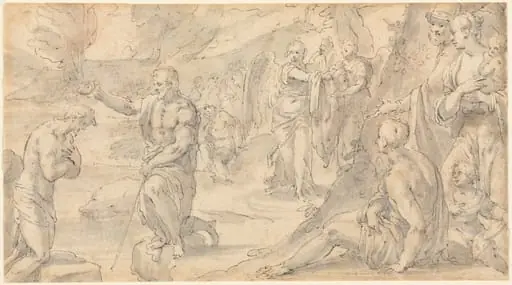
The Baptism of Christ is an ink drawing by the Baroque artist Paul Troger. It dates from 1730 and is held in the collection of the National Gallery of Art.
About this work
Overview
Though best known for large-scale frescoes, this intimate piece reveals his skill in translating monumental religious themes into delicate graphic form.
Created in 1730 by the Austrian artist Paul Troger, this drawing captures the baptism of Christ using pen and iron gall ink with gray wash over black chalk on laid paper. As a preparatory work, it reflects Troger’s mastery of linear precision and tonal gradation. Though best known for large-scale frescoes, this intimate piece reveals his skill in translating monumental religious themes into delicate graphic form.
Subject & Meaning
The scene illustrates Christ’s baptism by John the Baptist in the Jordan River, a moment central to Christian theology as the revelation of Christ’s divine identity. Angels observe from above, while the Holy Spirit descends as a dove. Troger emphasizes spiritual revelation through composed stillness amid flowing drapery and subtle atmospheric shifts, reinforcing the sacred nature of the event without overt drama.
Technique & Style
Troger employed black chalk for initial contours, refined with fine pen lines and layered gray washes to model form and depth. The use of iron gall ink ensured sharp, durable lines, while the washes created soft transitions between light and shadow. This method, rooted in academic draftsmanship, balances clarity of outline with atmospheric nuance, distinguishing it from his more flamboyant fresco style.
History & Provenance
The drawing likely served as a study for a larger commission, possibly a church altarpiece or ceiling design. Its survival suggests it was valued as a finished work in its own right. Though specific early ownership records are sparse, it entered public collections in the 19th century, where it was recognized as a representative example of Austrian Baroque draftsmanship.
Context
In early 18th-century Austria, religious imagery remained central to artistic patronage, especially under Habsburg influence. Troger’s work emerged within a tradition that fused Counter-Reformation piety with emerging Rococo sensibilities. This drawing reflects a transitional moment: disciplined line work coexists with a growing interest in emotional subtlety and naturalistic light.
Legacy
Troger’s drawings, including this one, influenced generations of Austrian artists by demonstrating how preparatory studies could achieve expressive completeness. His integration of tonal wash with linear precision became a model for academic training. Though overshadowed by his frescoes, this work endures as a quiet testament to the intellectual rigor of Baroque draftsmanship in Central Europe.
Artist & collection
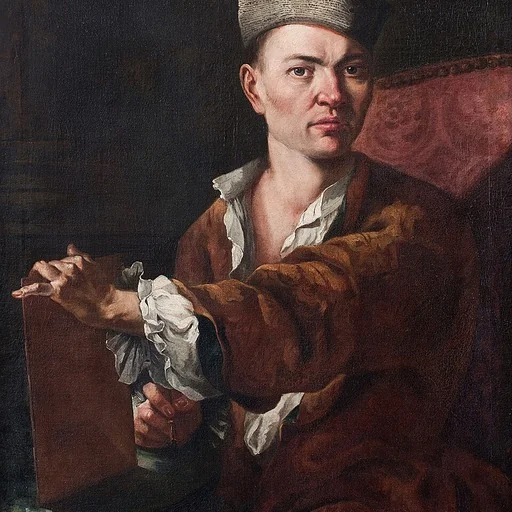
Artist
Paul Troger (30 October 1698 – 20 July 1762) was an Austrian painter, draughtsman, and printmaker of the late Baroque period.

 Romulus and Remus Found by Faustulus (recto)
 The Baptism of Christ
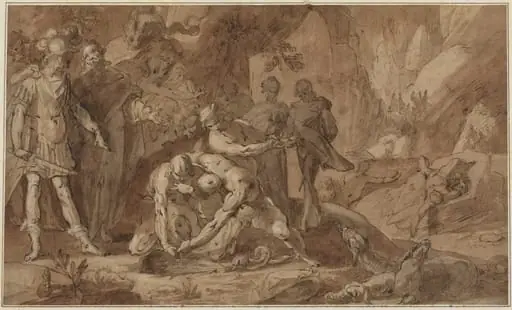 Odysseus and Teiresias
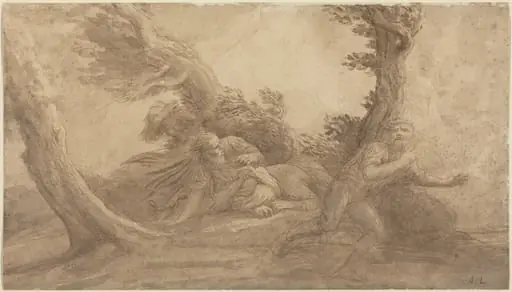 Clap of Thunder
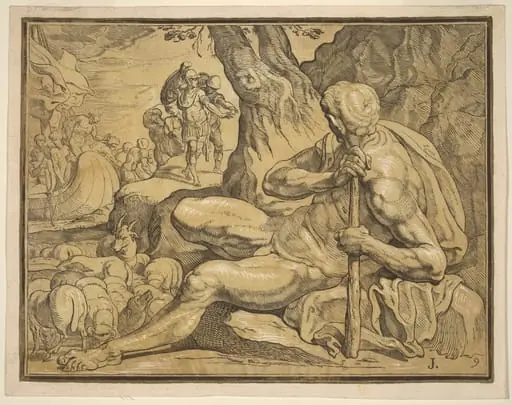 Ulysses and Polyphemus
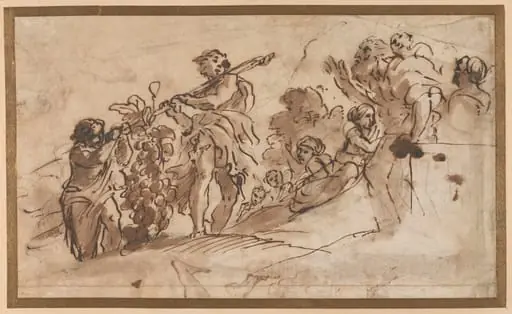 The Return of the Spies from the Promised Land
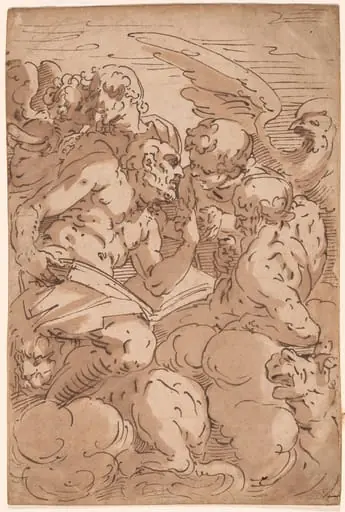 The Four Evangelists
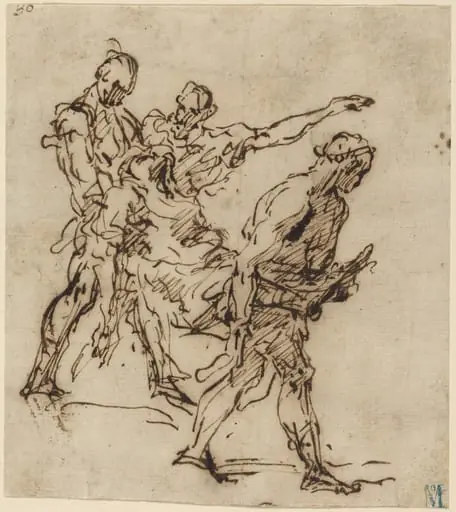 Figures Carrying a Body
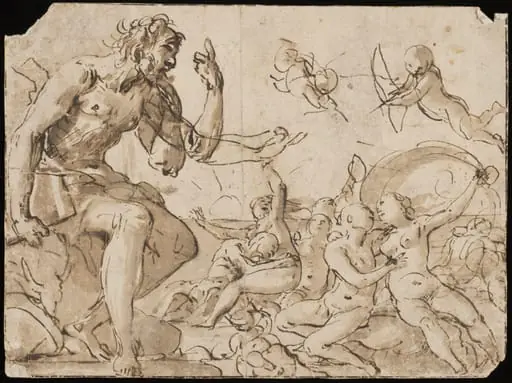 Sea-nymphs playing with tritons and a man; on the left a semi-draped giant, holding a book or stone, seated on a rock; possibly Polyphemus with Acis and Galatea
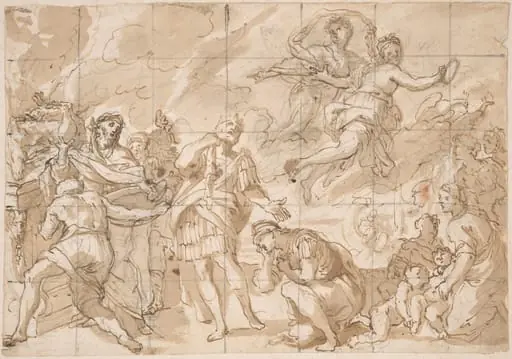 The Sacrifice of Iphigenia
 Reconciliation of the Romans and the Sabines (recto)
 Abraham wrestling with the Angel