Artwork
Uliță țărănească
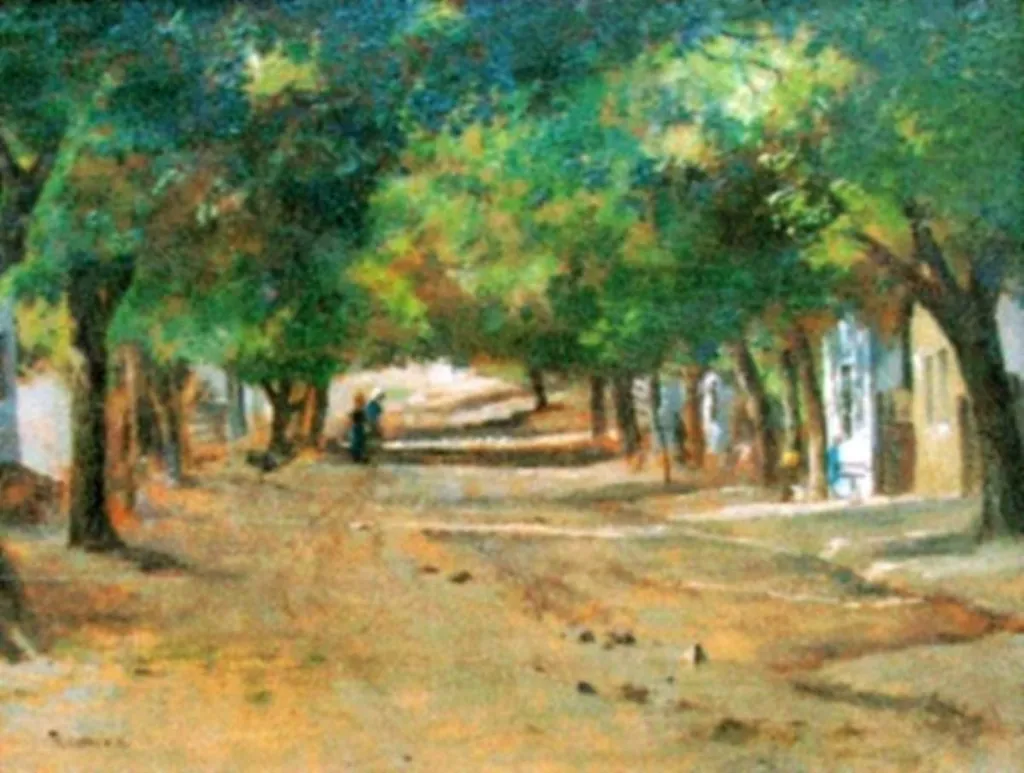
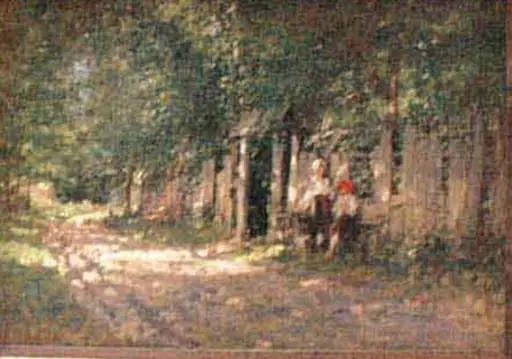
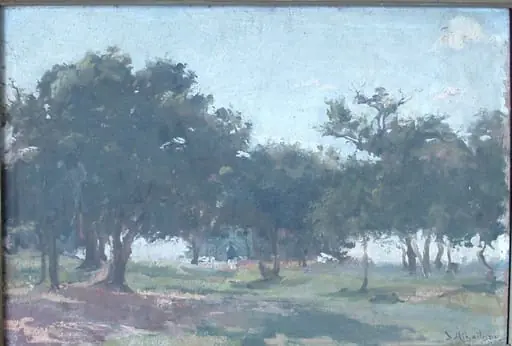
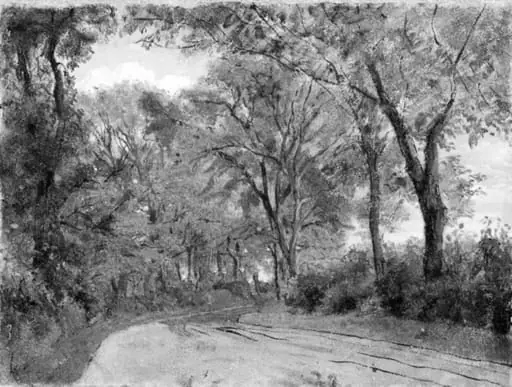
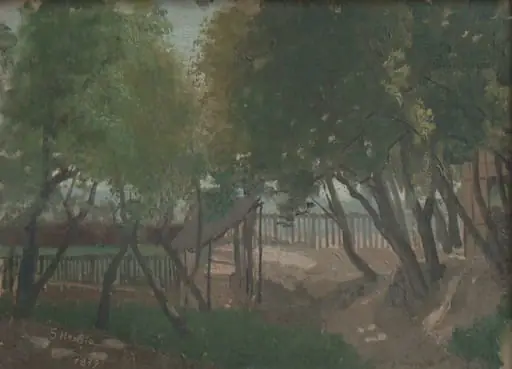
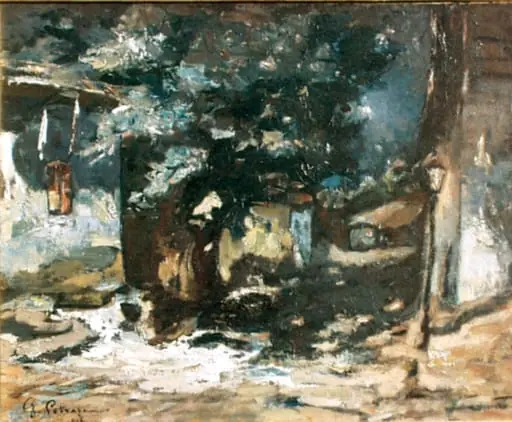
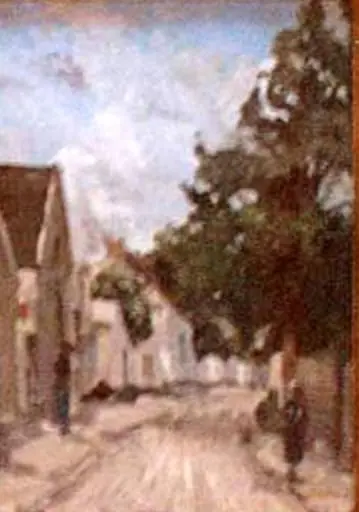
Uliță țărănească is an unspecified painting by Artúr Tölgyessy. It is held in the collection of the Colecție particulară - Arad. This painting captures a quiet rural lane, rendered with loose, energetic brushwork and a luminous palette.
About this work
Overview
The composition emphasizes verticality through tall trees and horizontal lines of the path, creating a balanced, meditative space.
This painting captures a quiet rural lane, rendered with loose, energetic brushwork and a luminous palette. The composition emphasizes verticality through tall trees and horizontal lines of the path, creating a balanced, meditative space. Warm golden light filters through the canopy, casting soft, shifting shadows that suggest late afternoon. A solitary figure in the distance reinforces the scene’s stillness without disrupting its calm.
Subject & Meaning
The scene presents an unidealized view of village life, free from narrative drama or symbolic overload. The empty street and distant walker imply solitude and routine, evoking the rhythm of rural existence. The absence of human activity up close invites contemplation rather than storytelling, aligning the work with quiet realism rather than romanticized pastoralism.
Technique & Style
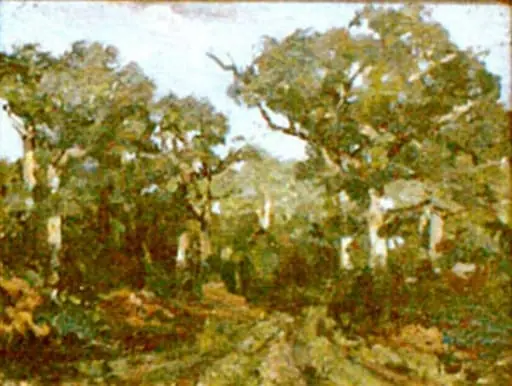
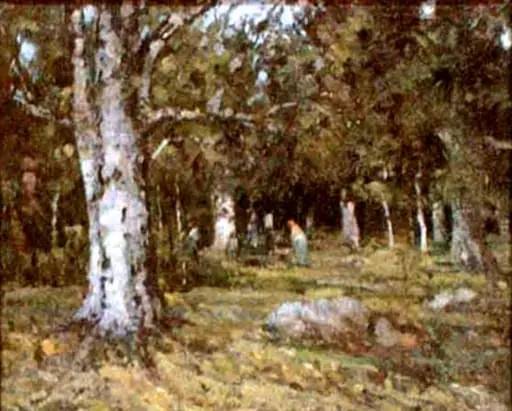
The artist employs expressive, fluid brushstrokes to convey both texture and movement—leaves shimmer, earth glows, and air seems to hum. Color is applied in layered washes, with warm ochres and soft greens building depth without sharp definition. Light is not modeled conventionally but suggested through tonal shifts, enhancing the atmospheric quality of the moment.
History & Provenance
The work is attributed to Artúr Tölgyessy, a Hungarian painter active in the late 19th and early 20th centuries. While specific details of its creation or early ownership are not widely documented, it aligns with his known focus on rural Hungarian landscapes and his engagement with plein air practices of the period.
Context
Tölgyessy worked during a time when Hungarian artists were increasingly turning to native subjects, distancing themselves from academic traditions. This painting reflects a broader regional interest in capturing everyday rural environments with emotional sincerity, influenced by both French Impressionism and local folk aesthetics.
Legacy
Though not widely exhibited internationally, Tölgyessy’s works, including this one, remain part of Hungary’s regional art heritage. His approach to light and landscape contributed to a quieter, more introspective strand of Hungarian painting that emphasized atmosphere over spectacle, influencing later generations focused on place and mood.
Artist & collection
Artist
Artúr Tölgyessy painted scenes of village life in early 20th-century Eastern Europe.