Artwork
Peisaj
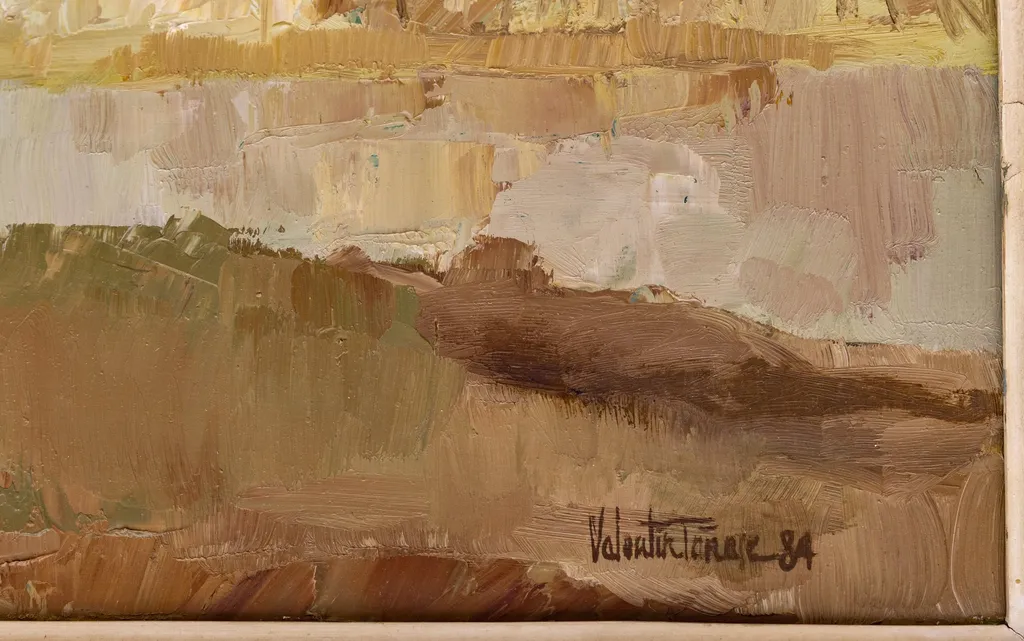
Peisaj is a print by Tănase Valentin. It dates from 1984 and is held in the collection of the Gavrila Simion Eco-Museum Research Institute Tulcea.
About this work
Overview
Created in 1984 by Romanian artist Tănase Valentin, this untitled landscape work is part of the Museum of Ethnography’s collection.
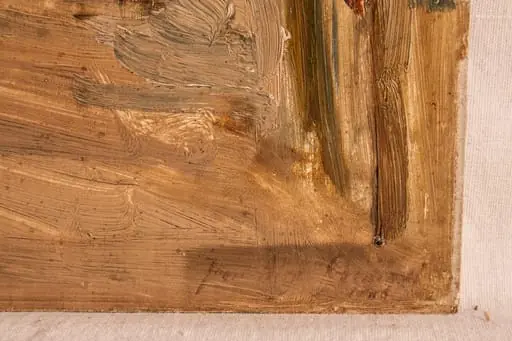
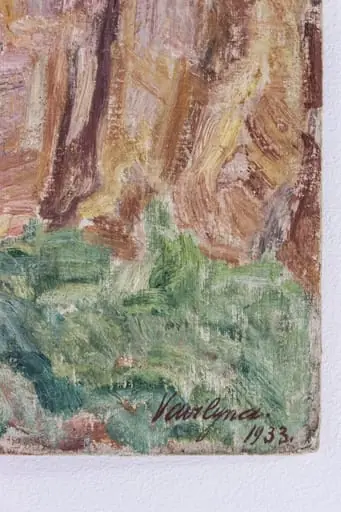
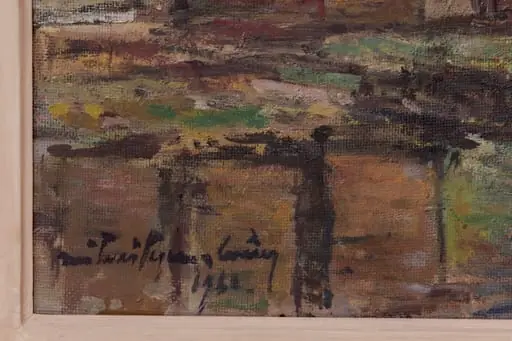
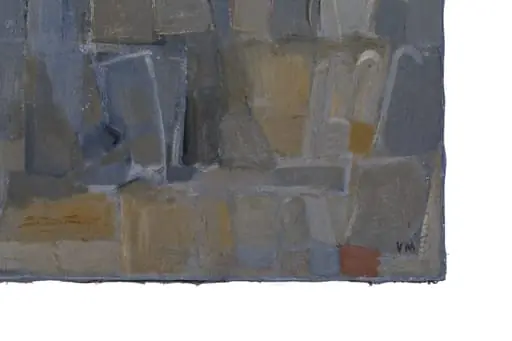
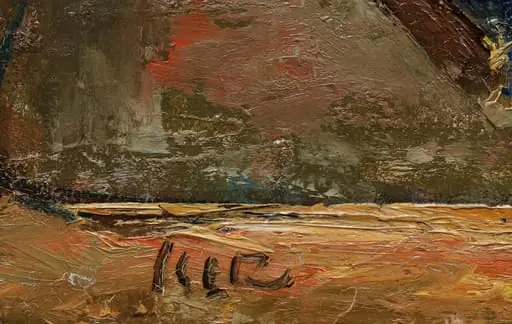
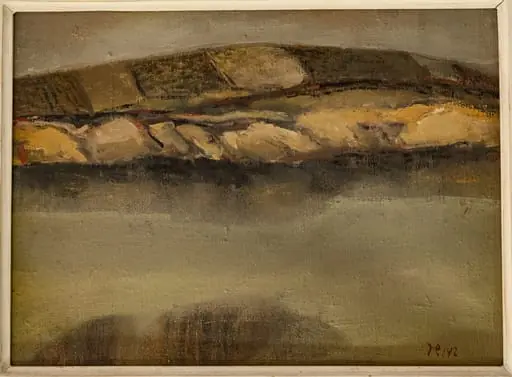
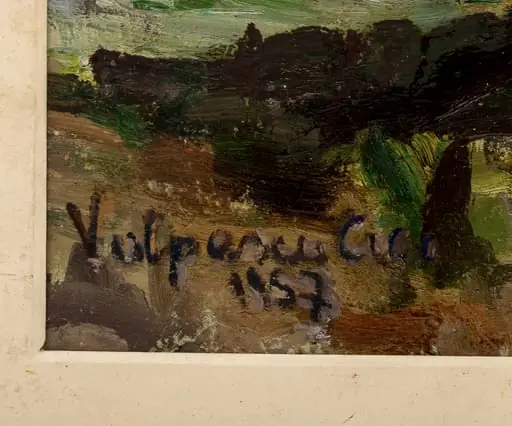
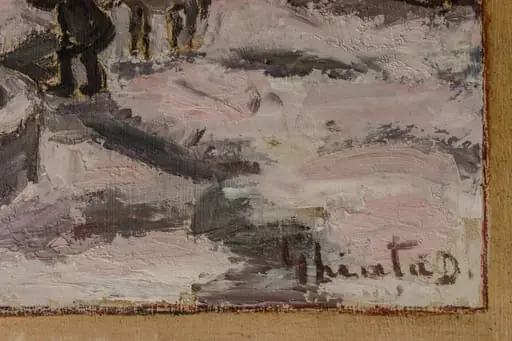
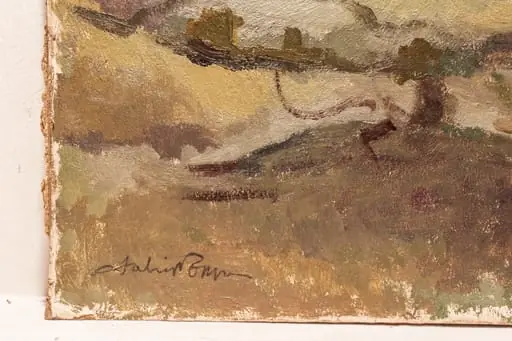
Created in 1984 by Romanian artist Tănase Valentin, this untitled landscape work is part of the Museum of Ethnography’s collection. Rendered in oil or acrylic, the piece presents a loosely defined rural scene with minimal detail. Its raw, unrefined appearance suggests a spontaneous execution, emphasizing gesture over precision. The signature and date are plainly inscribed in the lower corner, reinforcing its direct, unadorned character.
Subject & Meaning
The painting evokes a quiet, undetailed countryside—possibly hills, scattered structures, or fields—without clear boundaries or focal points. It does not depict a specific location but rather conveys a mood of rural stillness through abstraction. The absence of narrative or symbolic elements invites contemplation of place as sensation rather than representation, aligning with a personal, intuitive approach to landscape.
Technique & Style
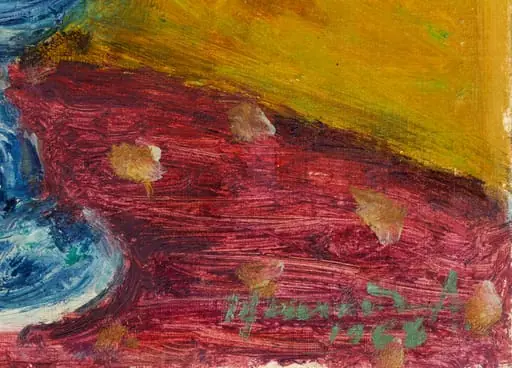
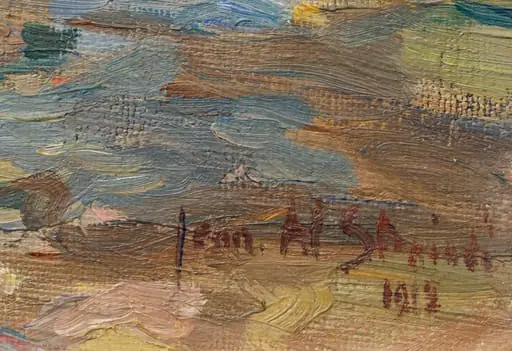
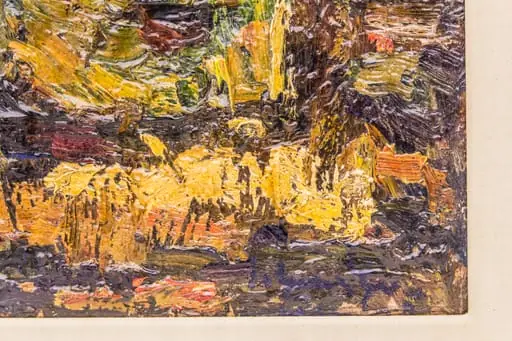
Valentin applied paint with rapid, textured strokes, building form through thick, uneven layers that retain the energy of their making. Colors are restrained: earthy browns, muted whites, and faint hints of green and yellow. The surface appears wet in places, suggesting a single-session execution. The approach resembles impasto, prioritizing material presence and movement over refined finish.
History & Provenance
The work entered the Museum of Ethnography’s collection following its creation in 1984, likely acquired directly from the artist or through a regional exhibition. No public record of prior ownership or exhibition history exists beyond its inclusion in the museum’s holdings. Its modest scale and informal style suggest it was not commissioned, but rather a personal study or sketch elevated to finished status.
Context
Made during the final years of Romania’s communist regime, the painting avoids political or ideological themes common in state-sanctioned art. Its informal, non-idealized style contrasts with official realism, reflecting a quieter, individual resistance through aesthetic simplicity. Valentin’s focus on immediate perception aligns with broader postwar tendencies toward expressive, non-conformist painting in Eastern Europe.
Legacy
The work remains a quiet example of Valentin’s personal approach to landscape, valued for its emotional honesty rather than technical polish. It contributes to understanding how Romanian artists navigated creative expression under restrictive conditions. While not widely exhibited beyond the museum, it stands as a testament to the power of restraint and immediacy in visual art.
Artist & collection
Artist
Romanian printmaker Tănase Valentin made quiet, atmospheric landscapes in the 1980s.
Museum
Gavrila Simion Eco-Museum Research Institute Tulcea
Continue through works from the same source collection.