Artwork
St Paul the Apostle
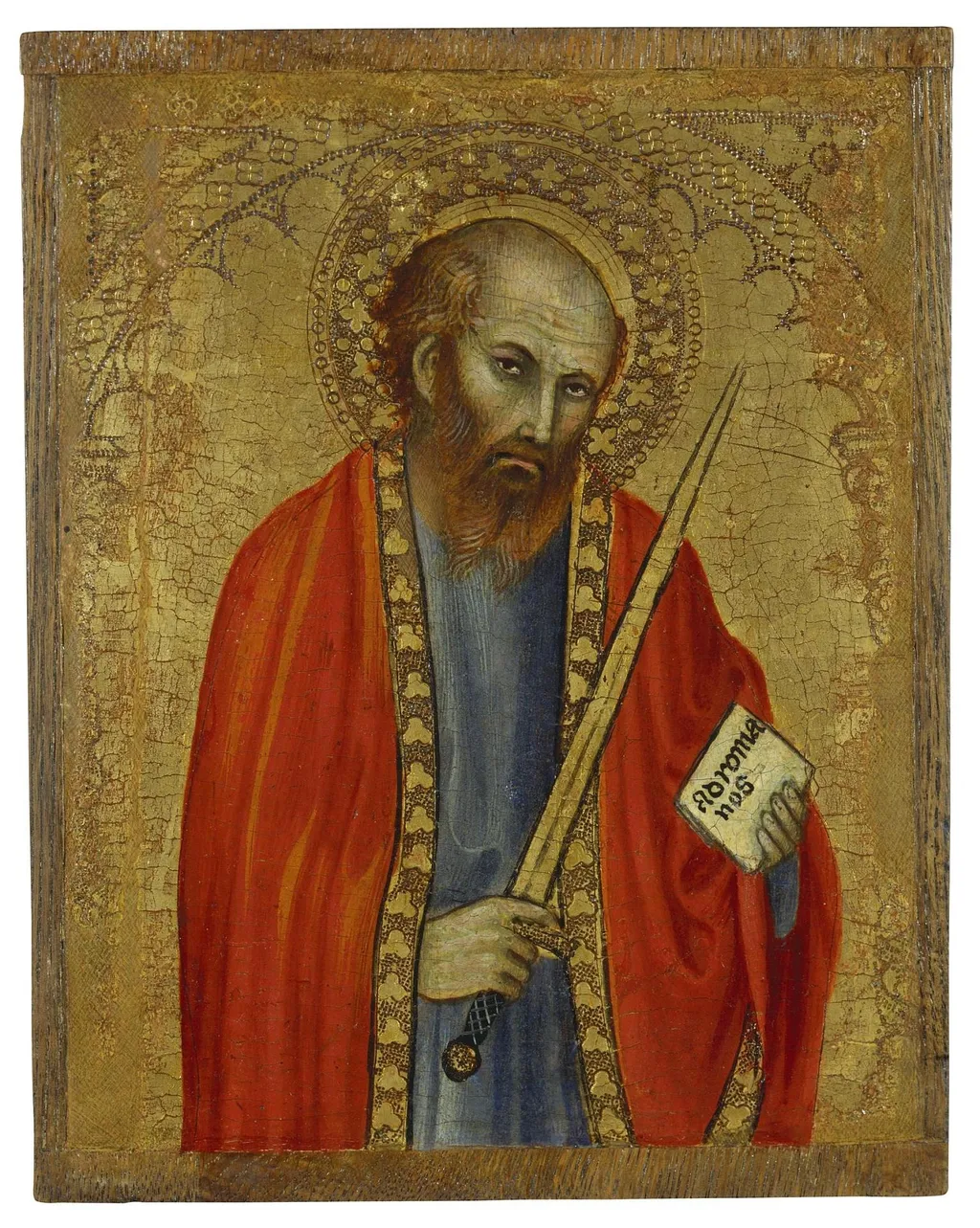
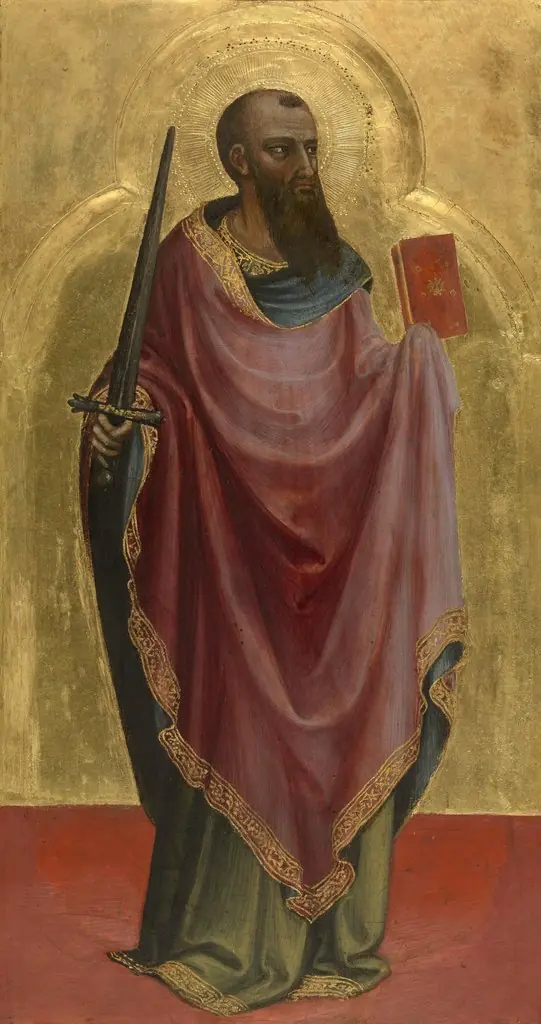
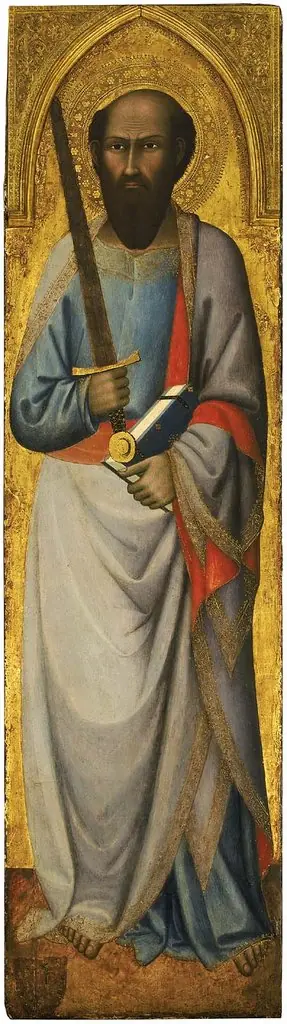
St Paul the Apostle is an unspecified painting by Taddeo di Bartolo. It dates from 1402 and is held in the collection of the Hermitage Museum. Created circa 1402, this panel painting portrays the Apostle Paul in the early Renaissance style of the Sienese School.
About this work
Overview
Created circa 1402, this panel painting portrays the Apostle Paul in the early Renaissance style of the Sienese School. Executed by Taddeo di Bartolo, the work now belongs to the State Hermitage Museum’s collection and exemplifies the period’s devotional portraiture.
Subject & Meaning
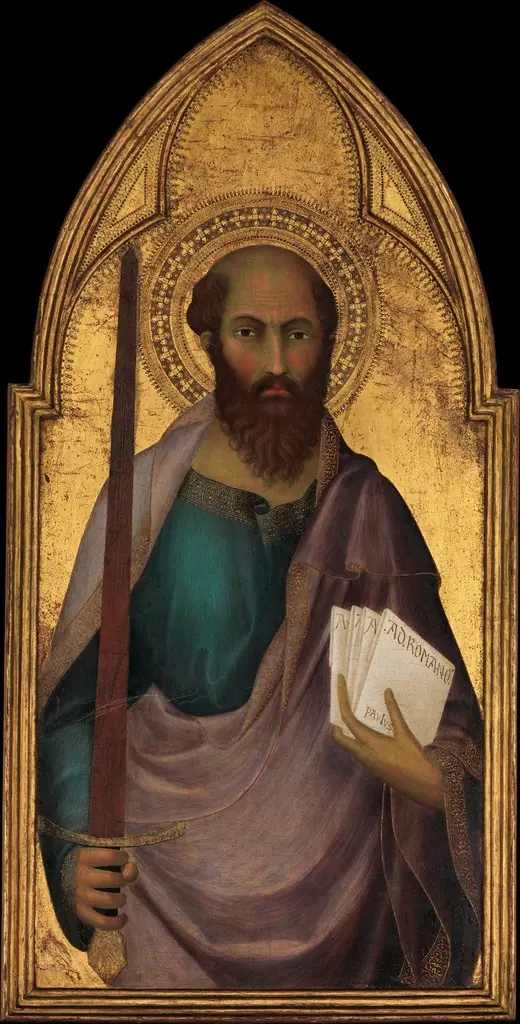
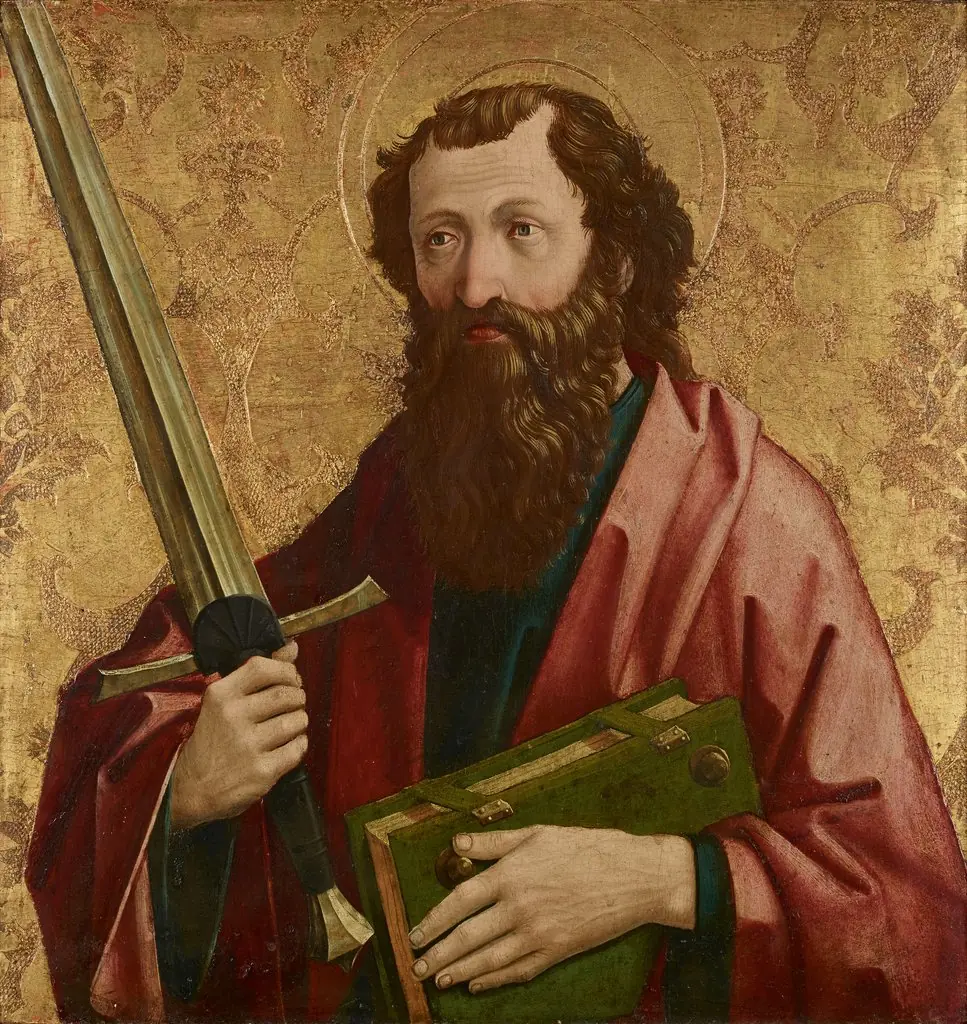
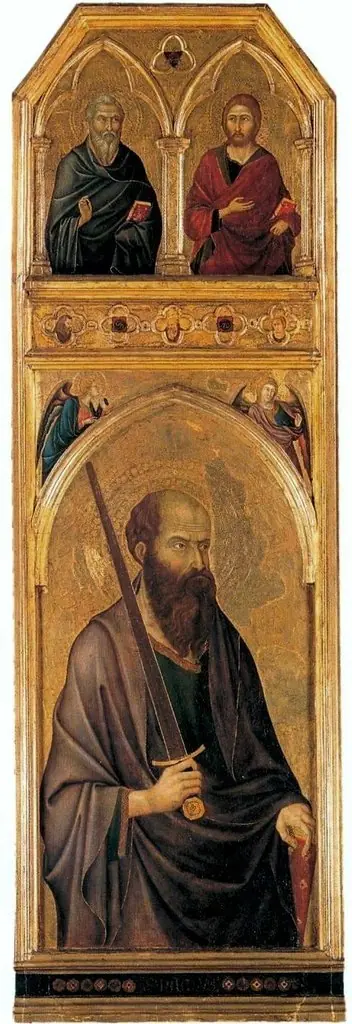
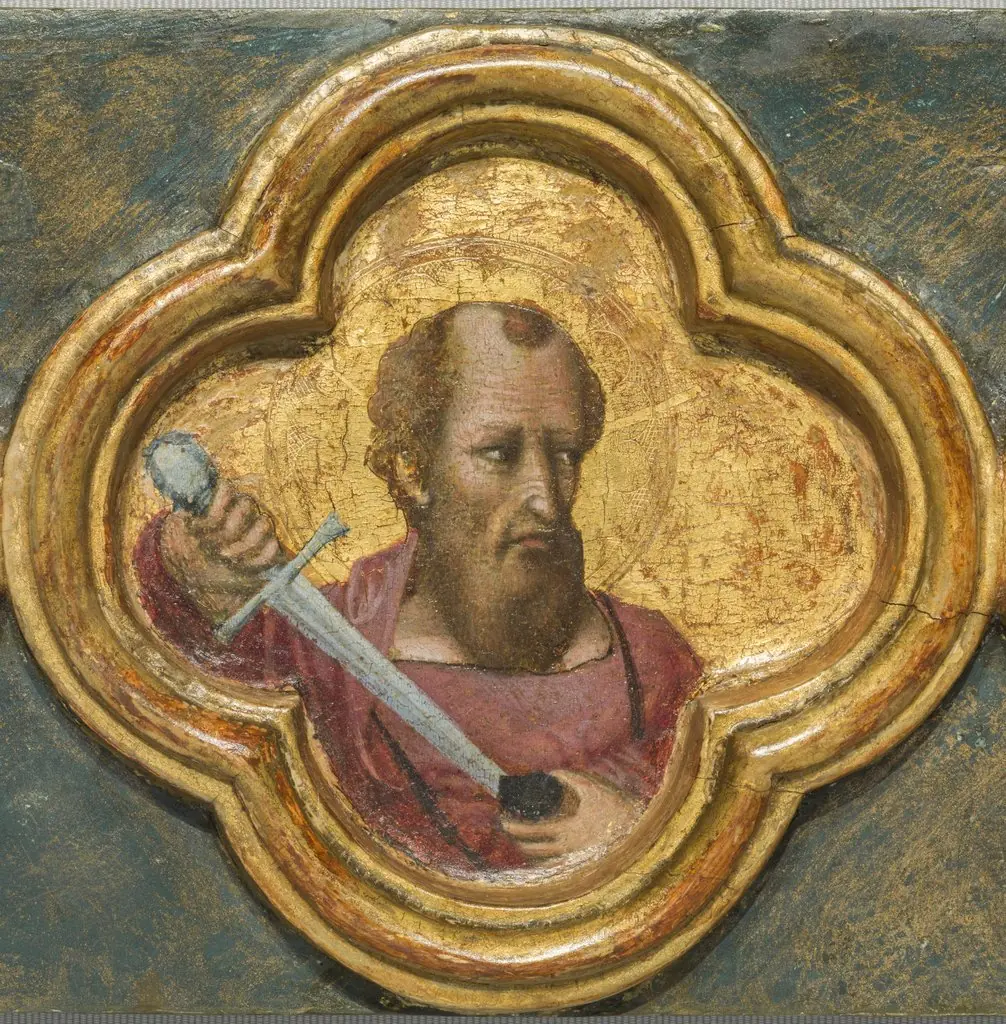
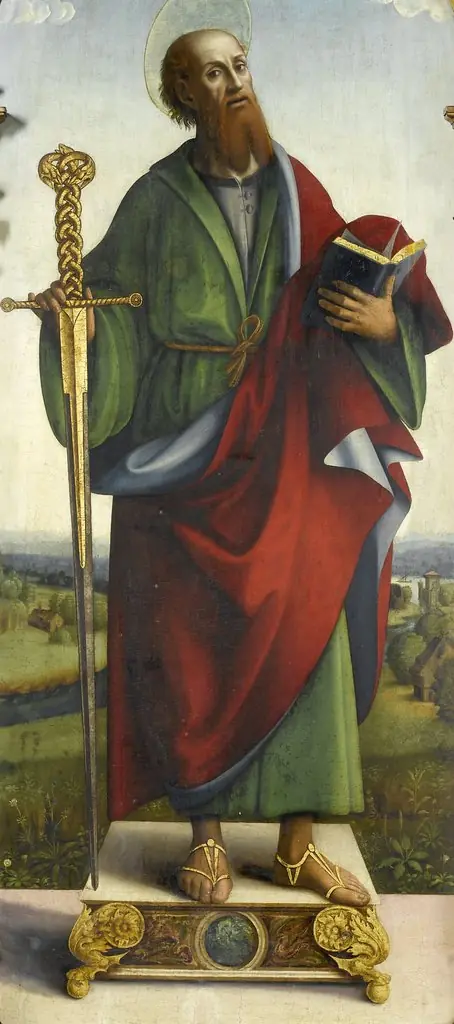
The figure is shown in a red robe edged with gold, standing before a golden backdrop. A halo crowns his head, indicating sanctity, while he holds a sword in his right hand—a traditional attribute of Paul’s martyrdom—and a book in his left, alluding to his epistolary contributions to Christian theology.
Technique & Style
Taddeo employs precise linear modeling and rich coloration typical of Sienese painting, with careful attention to the texture of the fabrics and the luminous gold background. The composition balances a solemn facial expression with a forward‑gazing pose, reinforcing the dignified presence of the saint.
History & Provenance
The artist, recorded by Giorgio Vasari as the uncle of Domenico di Bartolo, was active in Siena during the early 15th century. The panel later entered the State Hermitage Museum, where it remains part of the museum’s holdings of early Italian religious art.
Context
In the early 1400s, Siena’s artistic output emphasized devotional imagery for private and ecclesiastical patrons. Portraits of apostles, especially Paul, were common, serving both as objects of veneration and as visual reinforcement of theological teachings.
Artist & collection
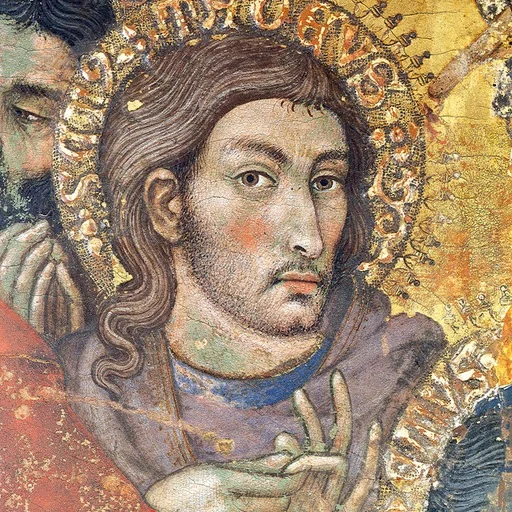
Artist
Taddeo di Bartolo (c. 1363 – 26 August 1422), also known as Taddeo Bartoli, was an Italian painter of the Sienese School during the early Renaissance. His biography appears in the Vite of Giorgio Vasari, who claims that…