Artwork
Fair before Easter at the Bernardine square in Lviv in 1895
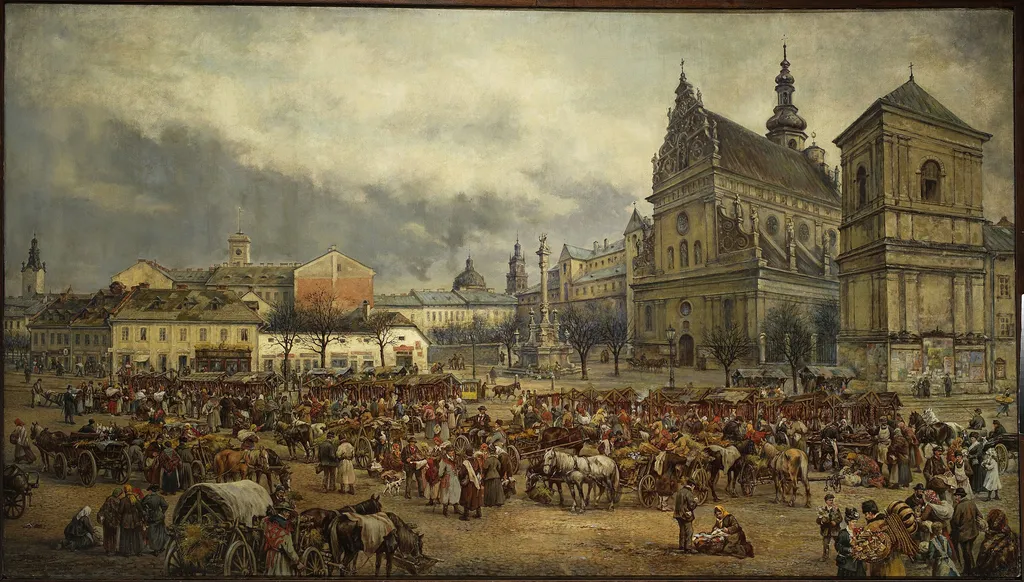
Fair before Easter at the Bernardine square in Lviv in 1895 is an oil painting by the Impressionist artist Tadeusz Rybkowski. It dates from 1898 and is held in the collection of the National Museum in Warsaw.
About this work
Overview
The composition captures the everyday rhythm of urban life in late 19th-century Galicia, with vendors, pedestrians, and horse-drawn vehicles filling the space.
Painted in 1898 by Tadeusz Rybkowski, this oil work depicts a lively market scene in Lviv’s Bernardine Square just before Easter. The composition captures the everyday rhythm of urban life in late 19th-century Galicia, with vendors, pedestrians, and horse-drawn vehicles filling the space. The painting is part of the National Museum in Warsaw’s collection, where it serves as a record of regional social customs during a period of cultural transition.
Subject & Meaning
The scene portrays a seasonal fair preceding Easter, a time when rural and urban communities converged for trade and religious preparation. Figures are engaged in routine activities—haggling, loading goods, walking—suggesting continuity rather than spectacle. The presence of the Bernardine Church anchors the moment in local tradition, implying the intertwining of commerce and faith in daily life under Austro-Hungarian rule.
Technique & Style
Rybkowski employed a restrained palette of browns, grays, and muted ochres to reflect the overcast spring weather and the earthy textures of the square. Brushwork is loose yet deliberate, conveying movement without theatricality. The composition directs the eye toward the church tower, balancing architectural stability with the chaotic energy of the crowd, reflecting a realist approach grounded in observation rather than idealization.
History & Provenance
Completed in 1898, the painting was acquired by the National Museum in Warsaw, where it has remained since. Its preservation reflects early 20th-century efforts to document regional life across the former Polish-Lithuanian Commonwealth. While Rybkowski’s broader oeuvre is less widely studied, this work endures as a documented example of genre painting from Lviv’s multicultural milieu under imperial administration.
Context
In 1895, Lviv was part of the Austro-Hungarian Empire, a multiethnic city where Ukrainian, Polish, Jewish, and German communities coexisted. The Easter fair reflected both religious observance and economic exchange among these groups. Rybkowski’s depiction avoids political commentary, instead focusing on the mundane rhythms of urban life, offering a quiet testament to the city’s social fabric during a time of rising national consciousness.
Legacy
Though not widely reproduced, the painting contributes to a broader archive of Central European genre scenes from the late 19th century. It provides visual evidence of pre-war urban customs and the role of public squares as sites of communal interaction. Its presence in a national collection underscores its value as a historical document, preserving the texture of everyday life in a region now shaped by shifting borders and identities.
Artist & collection

 Zwierzyniec Hobby-Horse
 Sukiennice (Cloth Hall) in Kraków
 Krasiński Square and the Piarist church
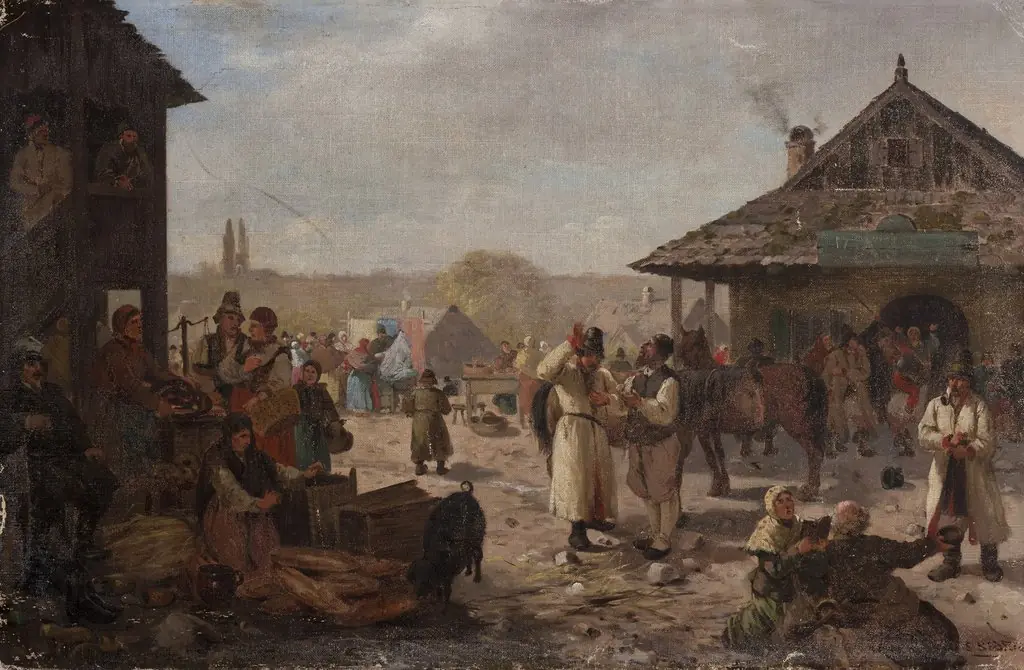 Fair in a Small Town
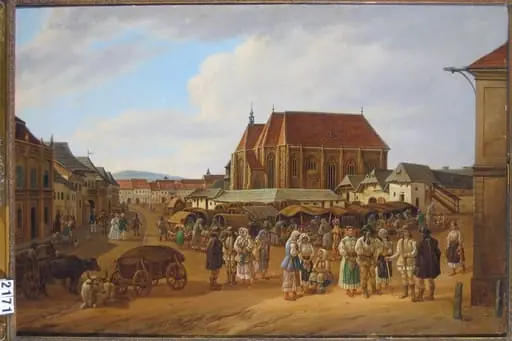 Biserica din Piața Mare din Cluj
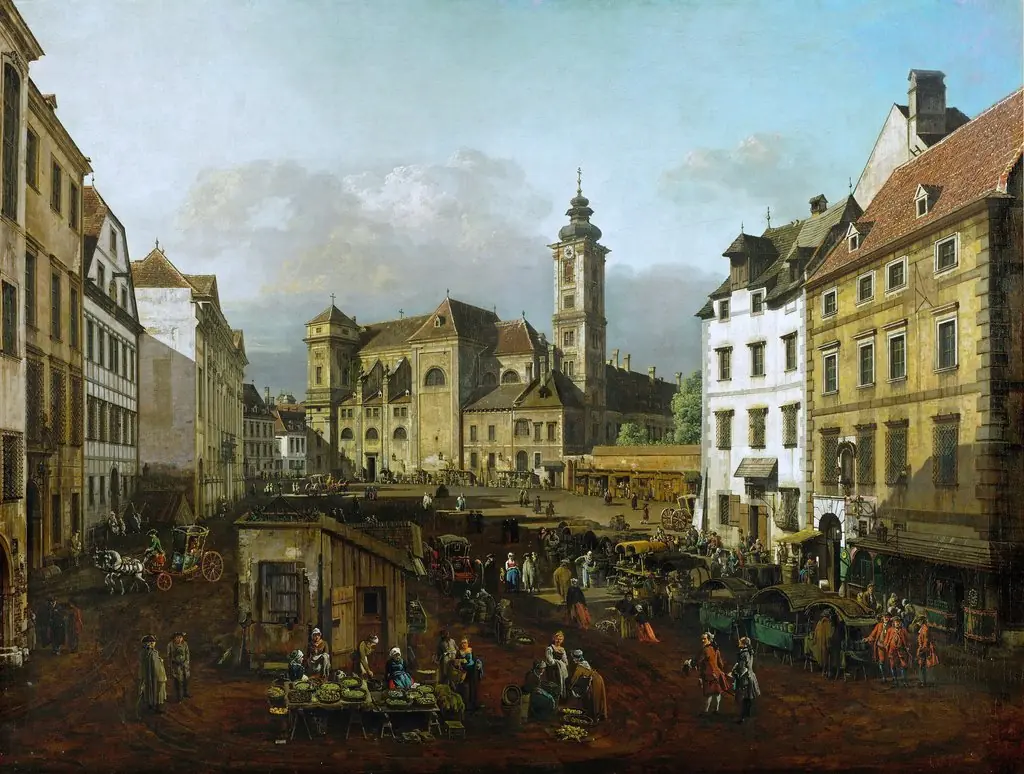 The Freyung in Vienne, from the South-East
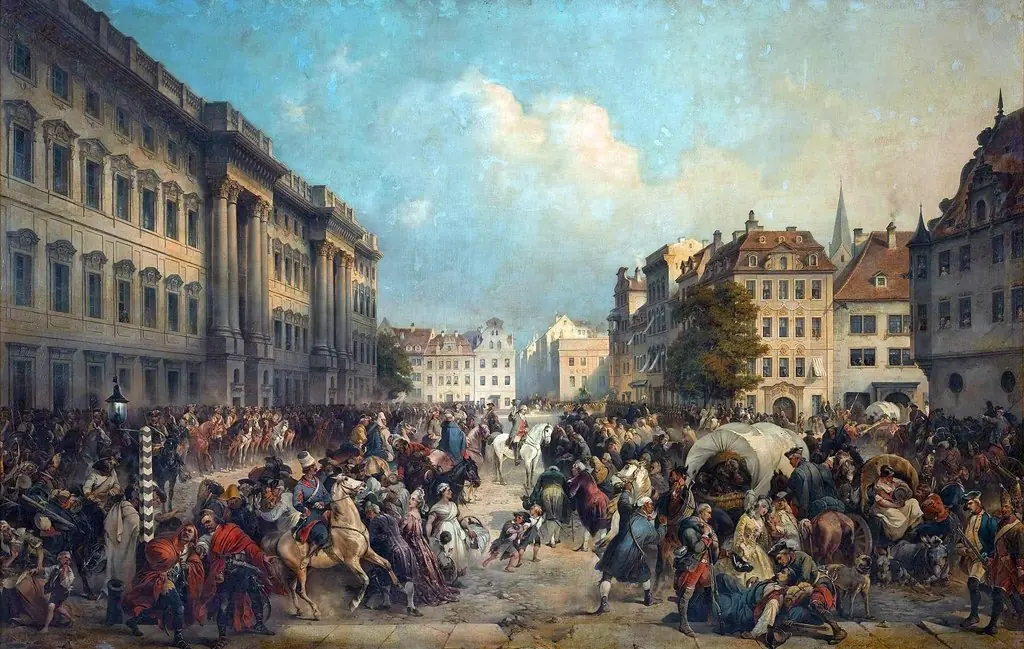 Capture of Berlin on 28 September 1760
 Castle of Martinsburg, Mainz, Germany
 Old town hall at the Wolnica square in Kazimierz, Kraków