Artwork
Cupid and Psyche
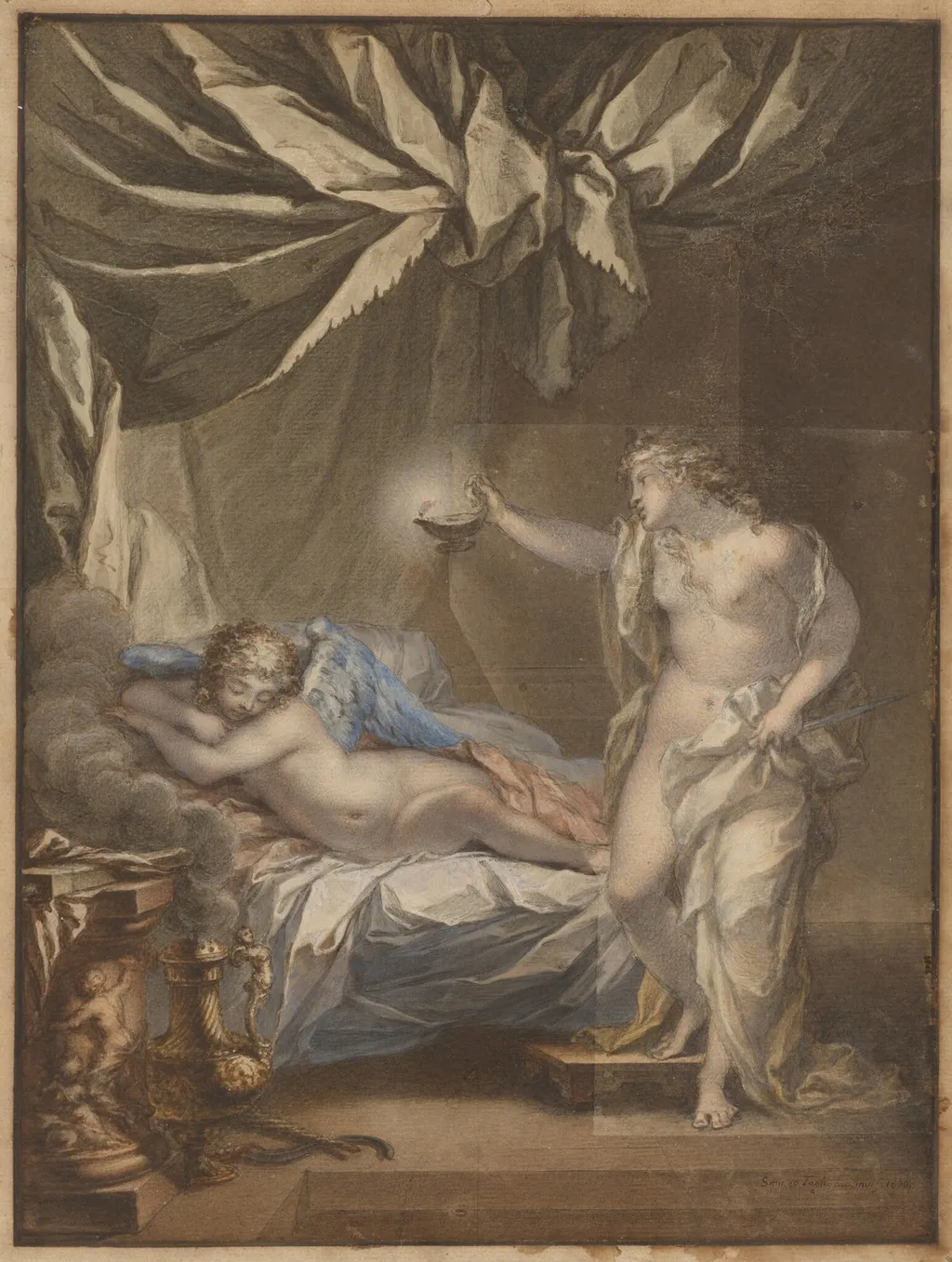
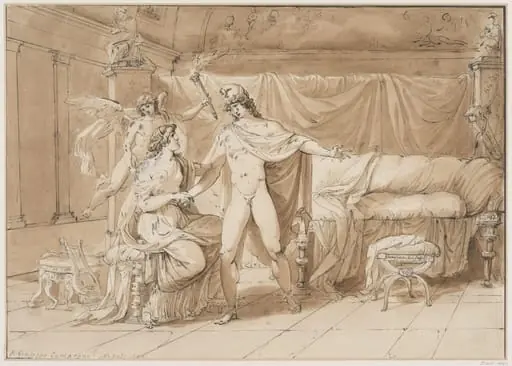
Cupid and Psyche is a watercolor drawing by the Romanticist artist Santino Tagliafichi. It dates from 1800 and is held in the collection of the National Gallery of Art.
About this work
Overview
The work’s delicate handling and layered pigments reflect a refined approach to light and form, characteristic of early 19th-century draftsmanship.
Created around 1800, this drawing by Santino Tagliafichi depicts a moment from the myth of Cupid and Psyche using watercolor and gouache over black chalk and graphite. Executed on laid paper, it resides in the National Gallery of Art in Washington, D.C. The work’s delicate handling and layered pigments reflect a refined approach to light and form, characteristic of early 19th-century draftsmanship.
Subject & Meaning
The scene illustrates Psyche, reclining in slumber, as Cupid hovers above, holding a small object—likely a lamp or arrow—while gazing upward. The floating wings above suggest his divine presence, and the intimate gesture implies a moment of tender observation. The narrative draws from Apuleius’s tale, where love and trust are tested through secrecy and vision, rendered here as a quiet, contemplative encounter.
Technique & Style
Tagliafichi employed watercolor and gouache over a graphite underdrawing to build subtle tonal transitions. Delicate glazes create a luminous glow around the wings and figures, while loose, fluid strokes suggest movement and softness. The use of black chalk anchors the composition, grounding the ethereal elements in a tactile, shadowed space that enhances the dreamlike mood.
History & Provenance
The drawing entered the National Gallery of Art’s collection through established acquisition channels, likely from a private European collection. Its attribution to Santino Tagliafichi, a lesser-known Italian artist active in the early 1800s, reflects scholarly consensus based on stylistic comparison and archival records. No significant alterations or restorations are documented.
Context
In early 19th-century Europe, mythological subjects remained popular among artists seeking to blend classical narrative with emotional intimacy. Tagliafichi’s approach aligns with a trend toward lyrical, introspective interpretations of ancient tales, moving away from grand historical drama toward quiet, personal moments—often favored in private collections and salon exhibitions.
Legacy
Though not widely exhibited, the work exemplifies the quiet sophistication of water-based media in Romantic-era draftsmanship. Its preservation offers insight into how artists of the period used layered washes to evoke atmosphere without overt spectacle. It remains a quiet reference in studies of mythological illustration beyond the major canonical names.
Artist & collection