Artwork
Le roi d'Ethiopie
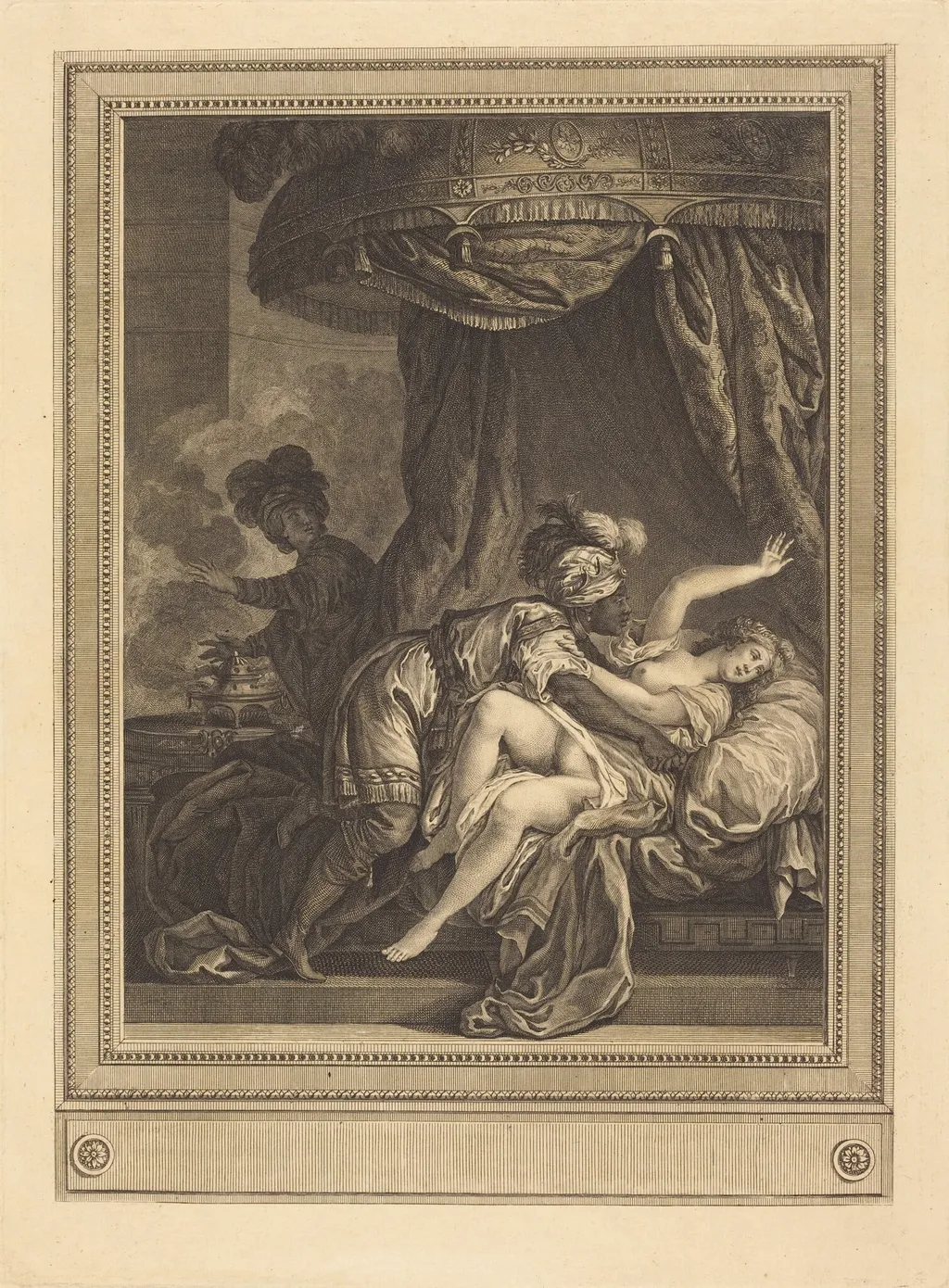
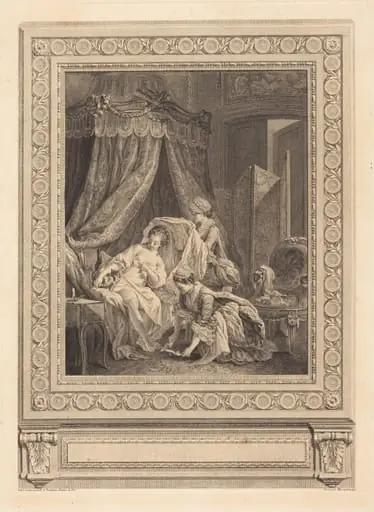
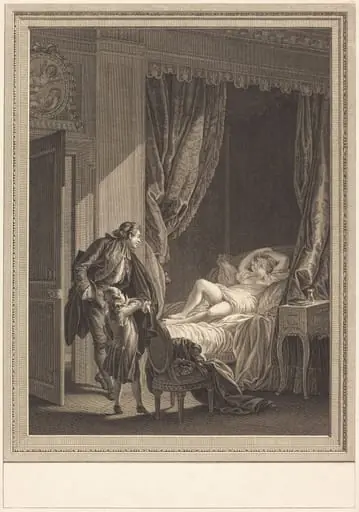
Le roi d'Ethiopie is an ink print by the Baroque artist Gérard Vidal. It dates from 1772 and is held in the collection of the National Gallery of Art.
About this work
Overview
The composition relies on chiaroscuro to heighten tension, characteristic of late 18th-century printmaking influenced by earlier Baroque traditions.
Le roi d'Ethiopie is an 1772 print by Gérard Vidal, executed in etching and engraving. It depicts a quiet, emotionally charged interior scene with three figures: a reclining woman, a child near her, and a standing man. The composition relies on chiaroscuro to heighten tension, characteristic of late 18th-century printmaking influenced by earlier Baroque traditions. The work belongs to a genre of narrative prints that conveyed intimate human moments through controlled lighting and detail.
Subject & Meaning
The scene suggests a moment of vulnerability or farewell. The woman, stretched toward the child, appears physically weakened, while the man, holding an unidentified object, stands apart, possibly as a witness or guardian. The dim room and heavy bed curtains imply privacy and gravity. Though the title references an Ethiopian king, the figures appear European, suggesting the title may be symbolic or allegorical rather than literal.
Technique & Style
Vidal employed fine etched lines and engraved accents to render texture and depth, particularly in the fabric of the bed curtains and the play of light on skin and wood. The strong contrast between light and shadow—chiaroscuro—guides the viewer’s eye to the central figures, enhancing emotional weight. This technique, rooted in Baroque printmaking, was adapted by 18th-century artists to convey psychological nuance in small-scale works.
History & Provenance
Created in 1772, the print was likely produced for a private or scholarly audience, as such works circulated among collectors of illustrated narratives. No documented early ownership records are widely known. Vidal, active in France during the late Enlightenment, specialized in reproductive and original prints that often drew from literary or dramatic sources, though the specific origin of this scene remains unverified.
Context
In the decades before the French Revolution, prints like this served as accessible art for the educated middle class. They often borrowed visual language from theater and religious painting, using domestic settings to imply larger moral or emotional themes. Vidal’s work reflects a trend toward intimate, psychologically nuanced imagery, distinct from grand historical subjects but still steeped in classical dramatic conventions.
Legacy
Le roi d'Ethiopie exemplifies how 18th-century printmakers adapted Baroque lighting techniques to explore quiet, human moments. While not widely reproduced or studied today, it remains a representative example of the era’s interest in emotional subtlety within domestic scenes. Its survival in institutional collections underscores its value as a document of print culture and visual storytelling in pre-revolutionary France.
Artist & collection