Artwork
Rape of Danae
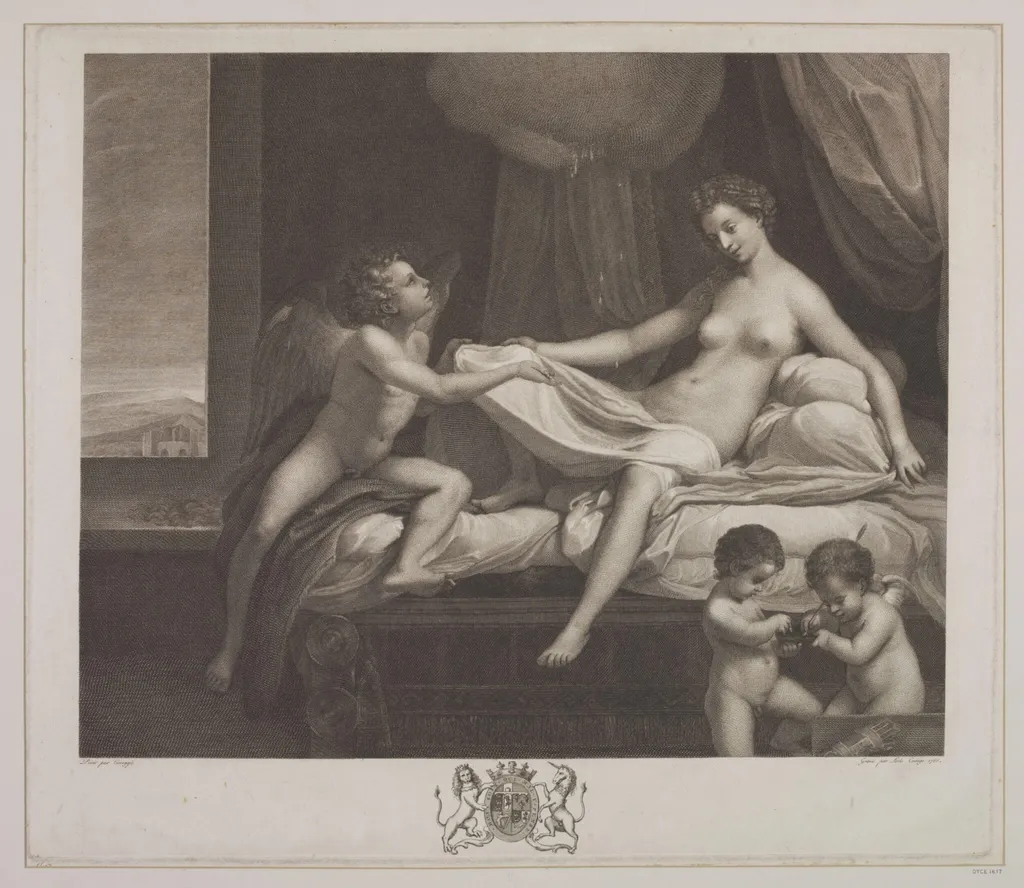
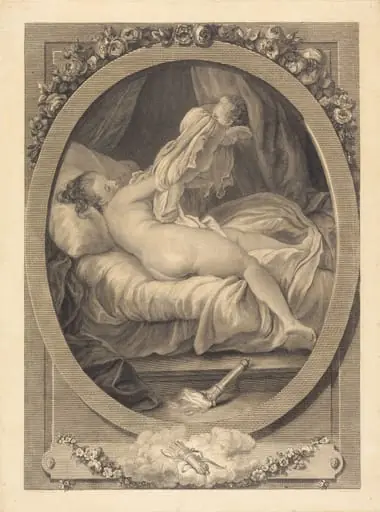
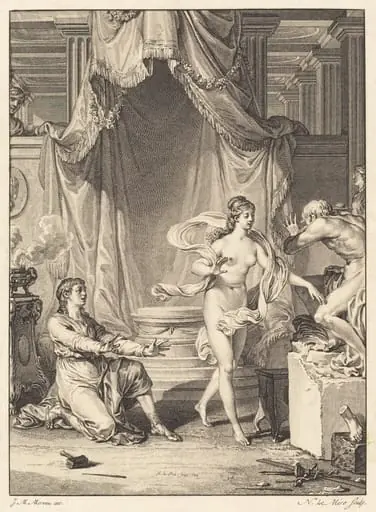
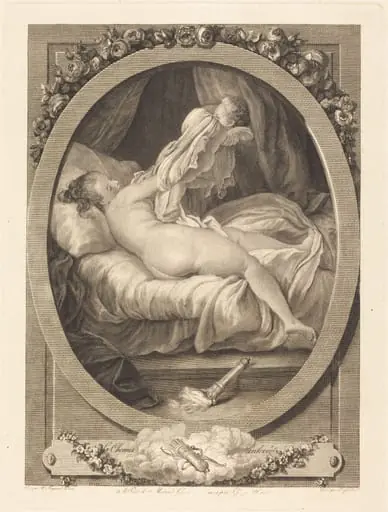
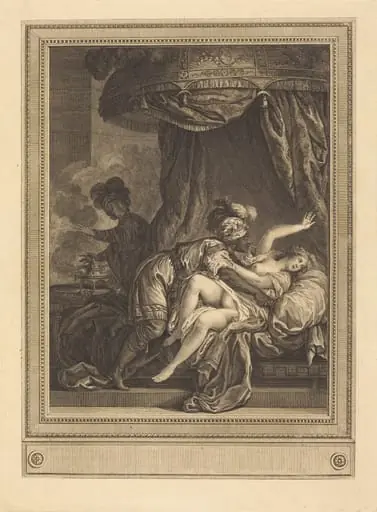
Rape of Danae is a print by Aloysio Cunego. It dates from 1850 and is held in the collection of the Victoria and Albert Museum. This print is a 16th-century engraved reproduction of Correggio’s painted depiction of the myth of Danaë.
About this work
Overview
It translates the original composition into a monochromatic medium, preserving the dramatic positioning of figures and the spatial arrangement of the scene.
This print is a 16th-century engraved reproduction of Correggio’s painted depiction of the myth of Danaë. It translates the original composition into a monochromatic medium, preserving the dramatic positioning of figures and the spatial arrangement of the scene. The work serves as a mechanical extension of the painting, allowing wider dissemination of its imagery among collectors and artists of the period.
Subject & Meaning
The scene illustrates the moment Zeus, disguised as a golden rain, descends upon Danaë to impregnate her. The winged figure above represents the divine presence, while Danaë’s reclining posture conveys passive reception. Two children at the foot of the bed, observing quietly, may symbolize the future lineage or the innocence juxtaposed against the supernatural event, deepening the narrative’s emotional complexity.
Technique & Style
The engraving employs fine, controlled lines to render light and shadow, emulating the chiaroscuro of Correggio’s painting. The contrast between the illuminated figure of Danaë and the darkened room enhances the sense of divine intrusion. Heavy curtains and architectural details frame the scene, guiding the viewer’s eye toward the central action while maintaining a restrained, intimate atmosphere.
History & Provenance
Created shortly after Correggio’s original painting, this print was likely produced by a skilled engraver working in northern Italy or the Netherlands, where reproductive prints flourished. It circulated among aristocratic and artistic circles, serving both as a study aid and a collectible. Its survival in multiple impressions suggests demand for mythological imagery in private collections during the late Renaissance.
Context
In the mid-1500s, mythological subjects were favored in elite art circles, often reflecting humanist interests and classical revival. Reproductive prints like this one allowed patrons without access to original paintings to engage with such themes. The inclusion of children in the scene may reflect contemporary tastes for domesticated myth, blending divine narrative with intimate, everyday settings.
Legacy
This print contributed to the enduring visual vocabulary of the Danaë myth, influencing later interpretations in both print and painting. Its careful translation of Correggio’s composition helped standardize the iconography across Europe. Though secondary to the original, it preserved the emotional and spatial dynamics of the scene for generations of viewers unfamiliar with the painted version.
Artist & collection
Artist
Aloysio Cunego spent his life carving copper plates like a jeweler, turning Vatican ceilings into paper prints you could slip into your coat pocket.