Artwork
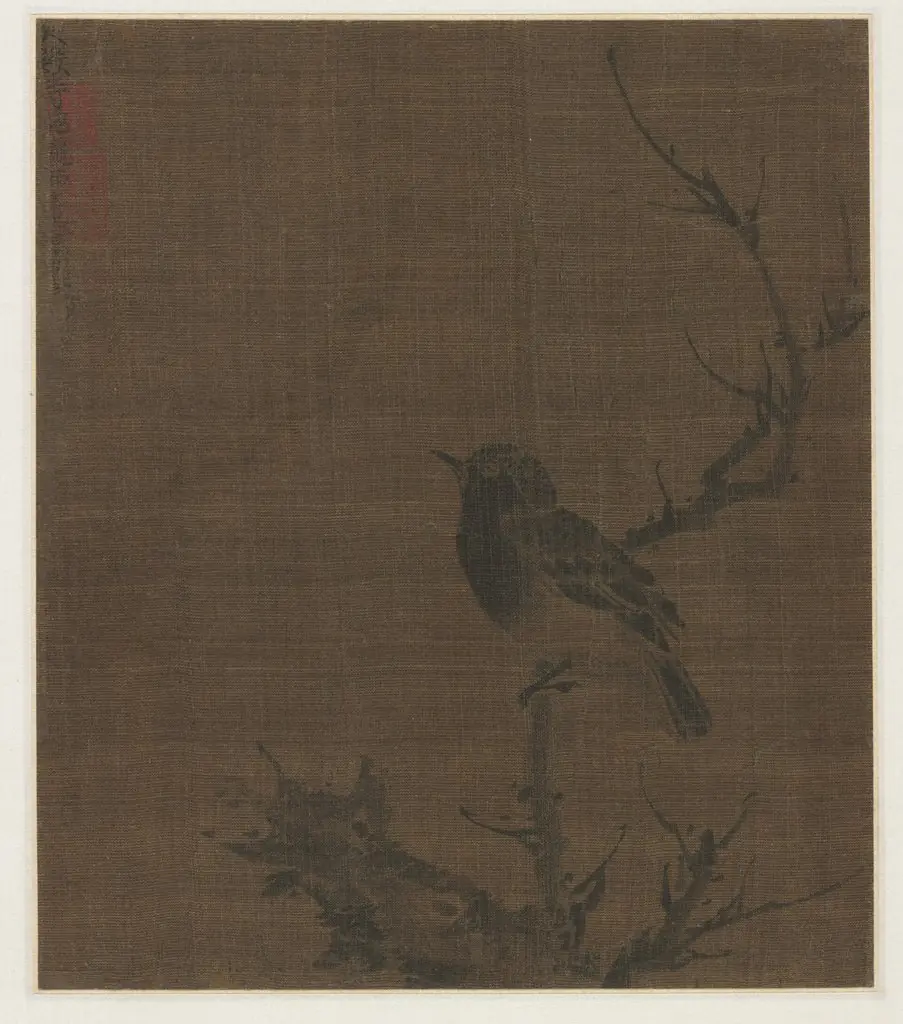
伝太虚元寿筆 岩に鶺鴒図|Wagtail on a Rock
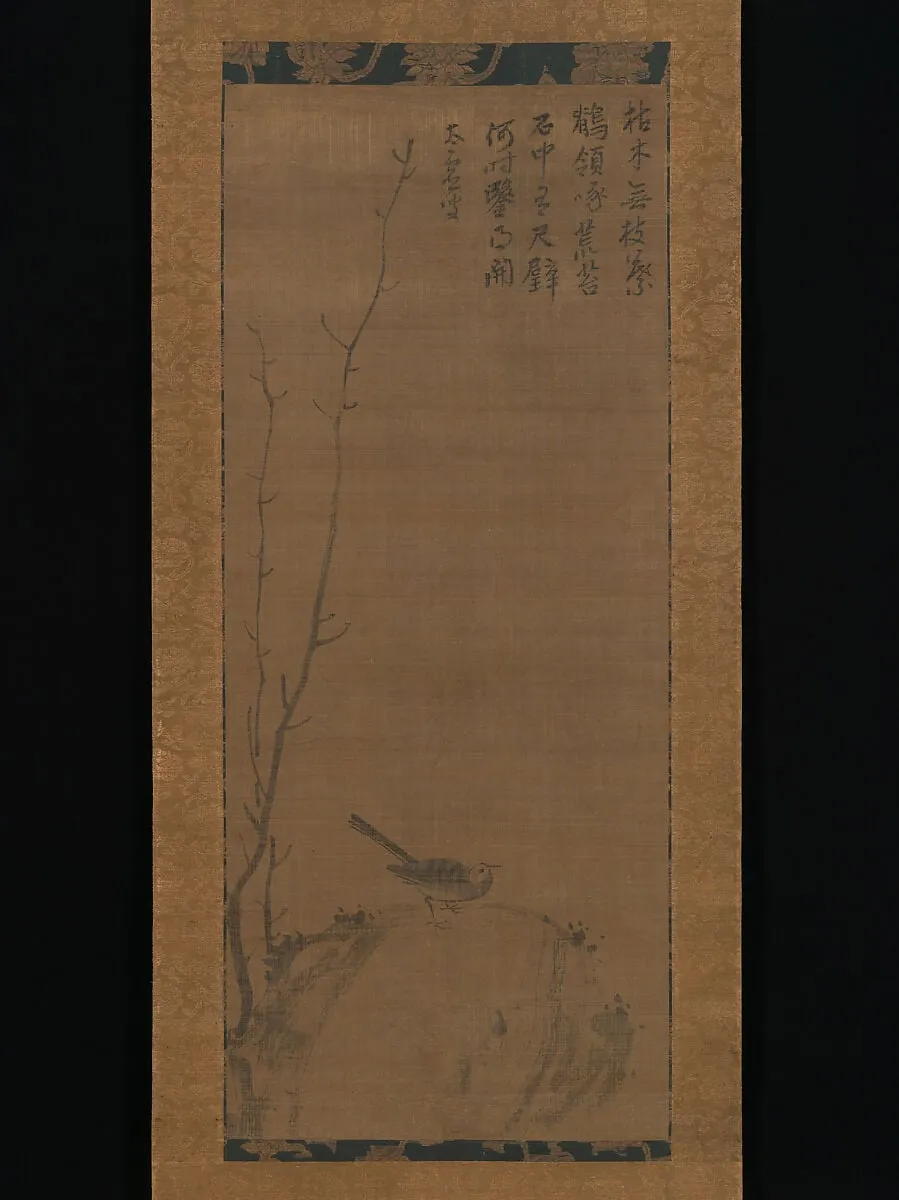
伝太虚元寿筆 岩に鶺鴒図|Wagtail on a Rock is an ink painting by the Ming dynasty painting artist Taikyo Genju. It dates from 1350 and is held in the collection of the Metropolitan Museum of Art.
About this work
Overview
Created around 1350, this hanging scroll by the Japanese artist Taikyo Genju presents a solitary wagtail perched on a rugged stone. Executed in ink on silk, the composition is minimalist: the bird occupies the foreground while the background consists of an unadorned, pale silk field, emphasizing the quiet presence of the creature.
Subject & Meaning
The work captures a moment of poised stillness, the wagtail’s wings slightly lifted as if ready to launch. Though the bird is not in flight, the brushwork conveys a sense of imminent movement, inviting contemplation of the subtle vitality found in ordinary natural scenes.
Technique & Style
Genju employs swift, assured brushstrokes that delineate the bird’s form with minimal lines, a hallmark of early Japanese ink painting. The contrast between the dark silhouette of the bird and the soft, empty background highlights the artist’s skill in suggesting depth and texture with limited means.
History & Provenance
As one of the earliest extant Japanese paintings focusing on avian subjects, the scroll marks a transitional period when artists began to explore secular nature themes rather than exclusively religious iconography. Its survival offers valuable insight into the evolving aesthetic priorities of mid‑14th‑century Japan.
Context
During the Nanboku-chō period, Japanese painters increasingly turned to direct observation of the natural world. This piece reflects that broader cultural shift, aligning with contemporary developments in ink painting that favored simplicity, spontaneity, and the depiction of everyday fauna.
Artist & collection