Artwork
Ducks
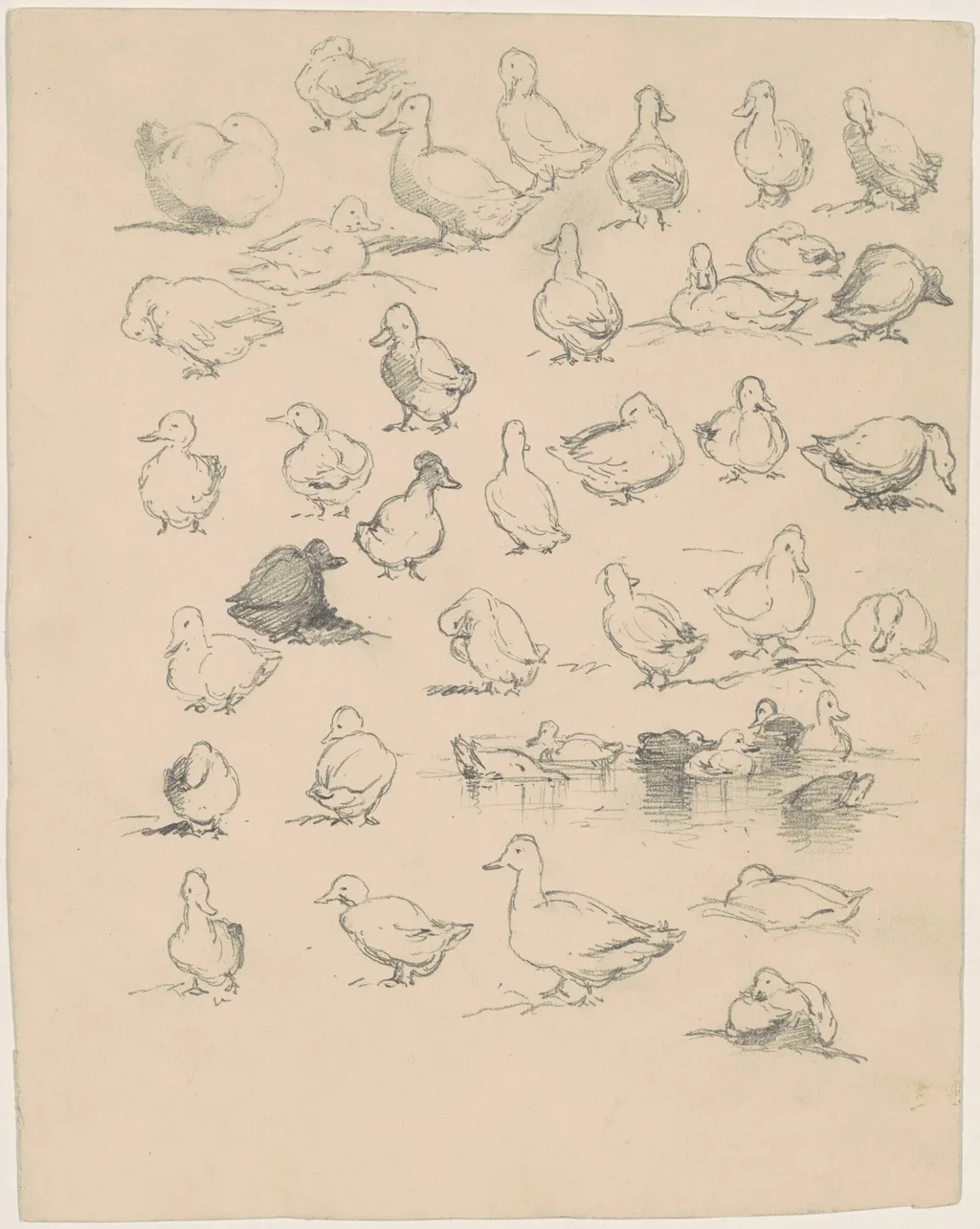
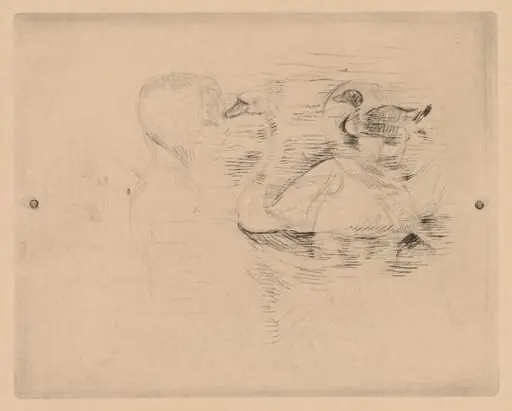
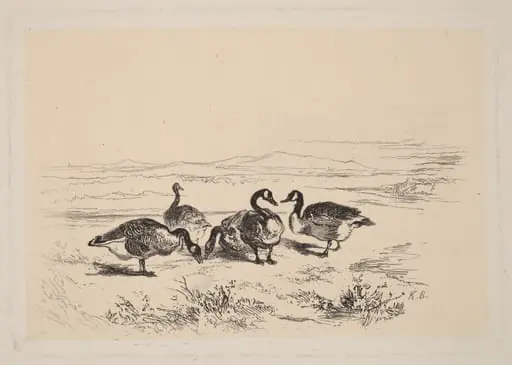
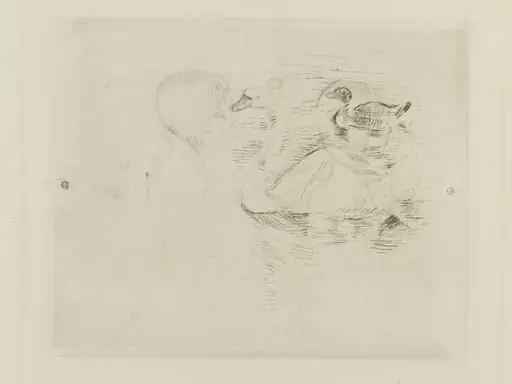
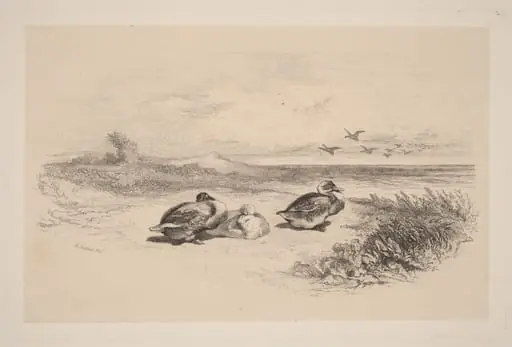
Ducks is a graphite drawing by the Impressionist artist Andrew Fisher Bunner. It dates from 1880 and is held in the collection of the National Gallery of Art.
About this work
Overview
Ducks is a graphite drawing on wove paper, dated around 1880, by Andrew Fisher Bunner. The work captures a group of waterfowl resting on a grassy shoreline, rendered with delicate, fluid lines that suggest movement and natural posture. Unlike stiff academic illustrations, the piece conveys quiet observation, reflecting Bunner’s direct engagement with live subjects in their habitat.
Subject & Meaning
The ducks are depicted in a moment of stillness, their forms softened by subtle graphite shading. Rather than serving as mere ornithological records, the drawing conveys a sense of quiet coexistence between bird and landscape. The absence of human presence and the focus on natural behavior suggest an appreciation for wildlife as it exists beyond human intervention.
Technique & Style
Bunner employed soft graphite to achieve a range of tonal gradations, avoiding harsh outlines in favor of blended contours that mimic the texture of feathers and wet grass. His lines are loose yet deliberate, capturing the weight and posture of the birds without rigid detail. This approach contrasts with the more formalized engraving techniques common in scientific illustration of the period.
History & Provenance
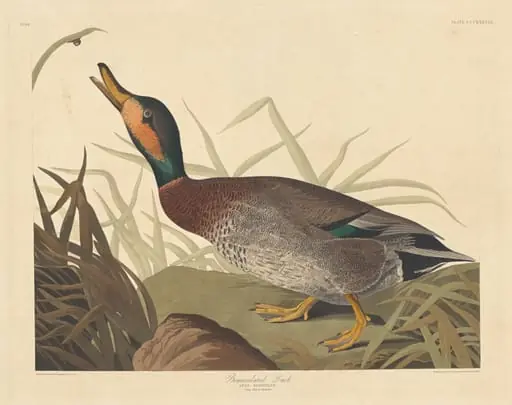
The drawing is held in the collection of the National Gallery of Art in Washington, D.C. Bunner studied under John James Audubon, though his style diverges from Audubon’s dramatic, posed compositions. His work reflects a quieter, more intimate mode of observation, rooted in field studies rather than studio reconstruction, aligning with emerging naturalist practices of the late 19th century.
Context
In the decades following Audubon’s death, American artists increasingly turned to direct observation of nature over idealized or staged representations. Bunner’s drawings reflect this shift, aligning with the growing interest in ecological realism. His focus on everyday wildlife in unposed settings mirrors broader cultural movements toward conservation and scientific accuracy in art.
Legacy
Bunner’s Ducks exemplifies a transition in American drawing—from ornamental naturalism toward empathetic, observational realism. While not widely known today, his work contributes to a quieter lineage of nature study that prioritized authenticity over spectacle. The drawing remains a quiet testament to the value of patient, firsthand engagement with the natural world.
Own this work as a print
Artist & collection


![Catskill Mountains, Round-Top in the Distance; Catskills Looking North from Palenville; and Round Top, Catskills, from the Road to Bracketts [verso], by Andrew Fisher Bunner](https://artifactworldgallery.com/img/andrew-fisher-bunner--catskill-mountains-round-top-in-the-distance-catskills-looki--6573d51b388ff9bd-w320.webp)
![Geese; Girls in Bonnets, Geese [recto], by Paul Gauguin](https://artifactworldgallery.com/img/paul-gauguin--geese-girls-in-bonnets-geese-recto--8a9024cb5f19eb3f-w320.webp)