Artwork
Portrait of Benjamin de Brissac, minister of the Walloon Church in Amsterdam
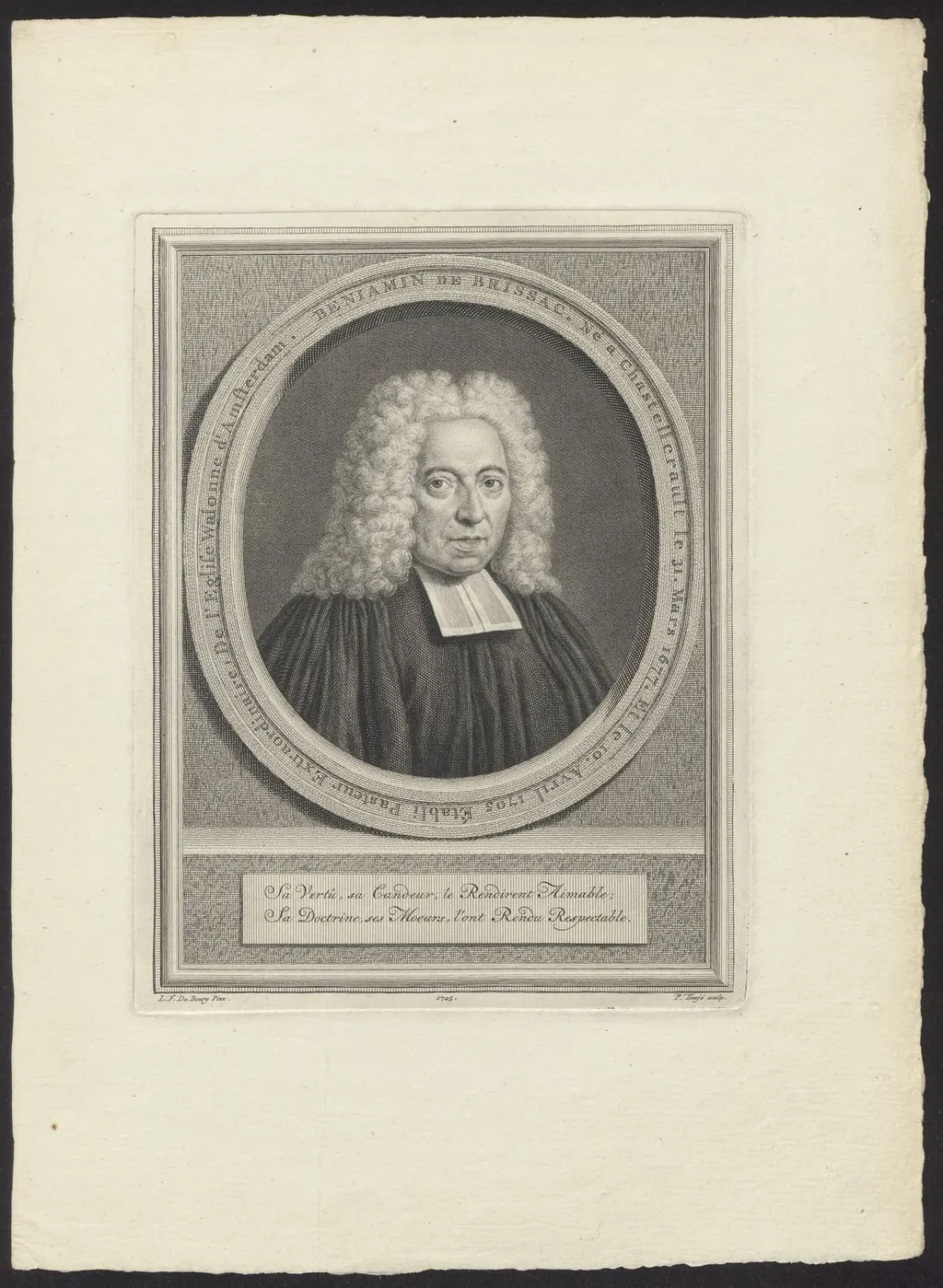
Portrait of Benjamin de Brissac, minister of the Walloon Church in Amsterdam is an unspecified painting by the Baroque artist Pieter, Tanjé. It dates from 1745 and is held in the collection of the Leiden University Libraries. The work is a portrait of Benjamin de Brissac, a minister serving the Walloon congregation in Amsterdam.
About this work
Overview
The work is a portrait of Benjamin de Brissac, a minister serving the Walloon congregation in Amsterdam. Rendered in a traditional format, the sitter is shown seated within an interior, attired in period costume and holding a book, his expression solemn. The image is derived from an earlier painting by L.F. du Bourg, and a line of French verse appears beneath the composition.
Subject & Meaning
Benjamin de Brissac, noted for his leadership of the French‑speaking Protestant community in 17th‑century Amsterdam, is presented as a learned and contemplative figure. The book he grasps alludes to his theological duties, while his restrained demeanor reflects the seriousness associated with clerical office. The inclusion of French verse underscores his cultural ties to the Walloon diaspora.
Technique & Style
The portrait employs the sfumato technique, softening edges and creating a gradual tonal transition that lends the figure a subtle atmospheric quality. This approach, popularized in the late Renaissance, enhances the sense of depth and lends a modest realism to the clothing and surrounding furnishings, while preserving a dignified aura around the sitter.
History & Provenance
Originally based on a composition by L.F. du Bourg, the image reproduces the earlier artist’s design while adapting it to a later medium. The French inscription beneath the portrait indicates a textual accompaniment typical of the period. The work has remained linked to the Walloon Church’s archival collection, documenting the ministerial lineage of the community in Amsterdam.
Artist & collection
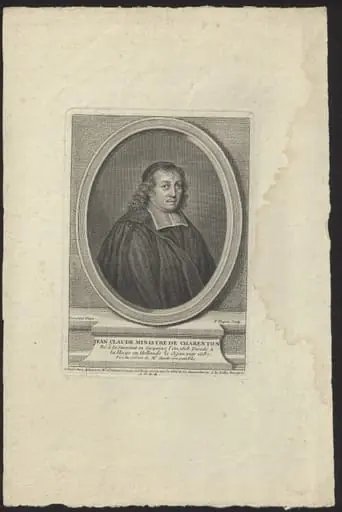 Portrait of Jean Claude, Ministre de Charenton
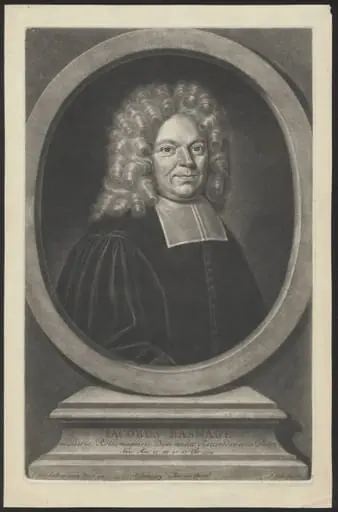 Portrait of Jacobus Basnage, Walloon minister and historian
![Portrait of J. Basnage, [Walloon minister and historian], by Unknown](https://artifactworldgallery.com/img/unknown--portrait-of-j-basnage-walloon-minister-and-historian--5c5b22a95cb99991-w320.webp) Portrait of J. Basnage, [Walloon minister and historian]
Portrait of J. Basnage, [Walloon minister and historian]![Portrait of J. Basnage, [Walloon minister and historian], by Pieter van, Gunst](https://artifactworldgallery.com/img/pieter-van-gunst--portrait-of-j-basnage-walloon-minister-and-historian--be59663770daddd2-w320.webp) Portrait of J. Basnage, [Walloon minister and historian]
Portrait of J. Basnage, [Walloon minister and historian]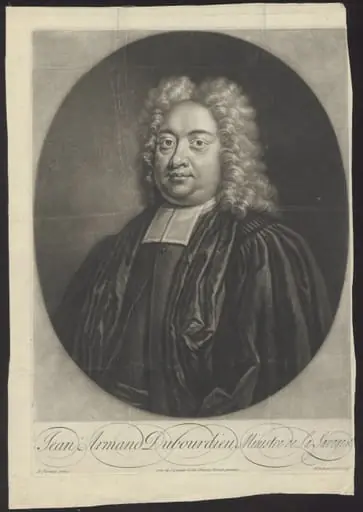 Portrait of Jean Armand Dubourdieu, Ministre de la Savoye
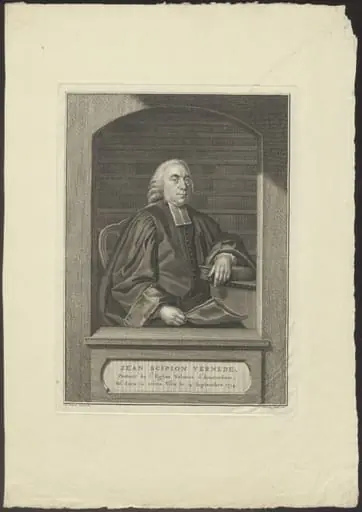 Portrait of Jean Scipion Vernede, Walloon minister in Amsterdam
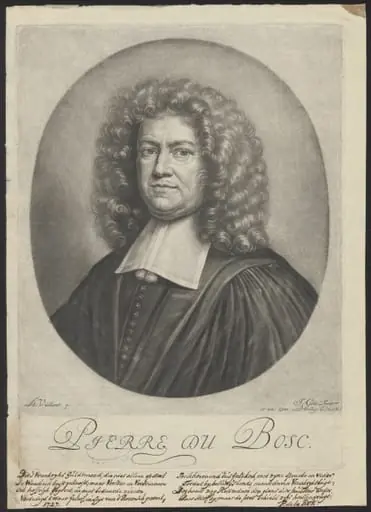 Portrait of Piere du Bosc
![Portrait of [Pierre Jacques Courtonne], by Jacob, Houbraken](https://artifactworldgallery.com/img/jacob-houbraken--portrait-of-pierre-jacques-courtonne--6455a7507ab17d46-w320.webp) Portrait of [Pierre Jacques Courtonne]
Portrait of [Pierre Jacques Courtonne]