Artwork
Peonies
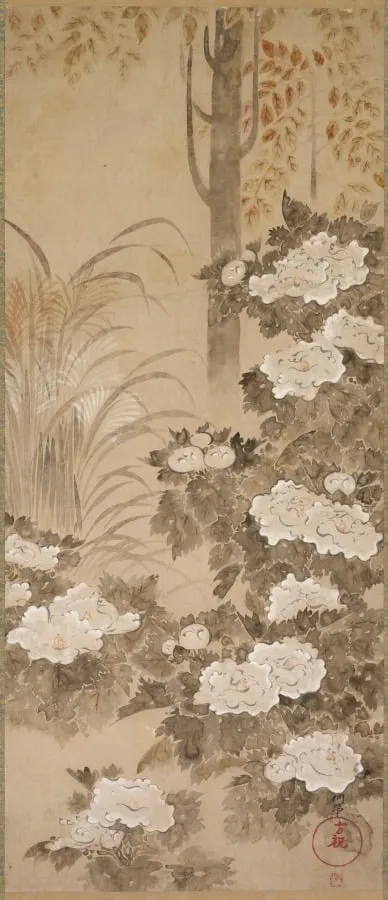
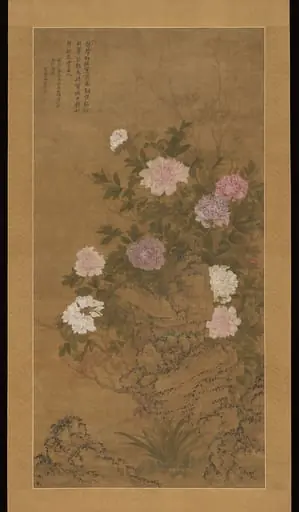
Peonies is an unspecified painting by the Baroque artist Tatebayashi Kagei. It dates from 1704 and is held in the collection of the Cleveland Museum of Art.
About this work
The artist used a wet-on-wet trick called *tarashikomi*—letting ink and color bleed together while still damp.
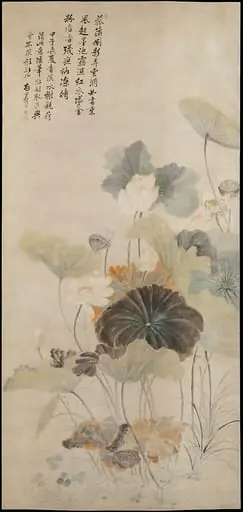
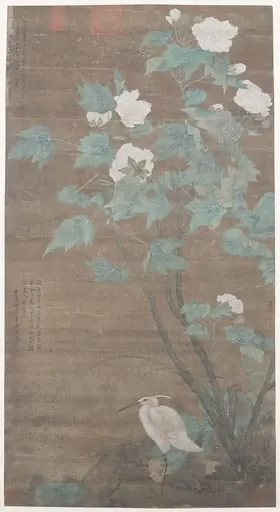
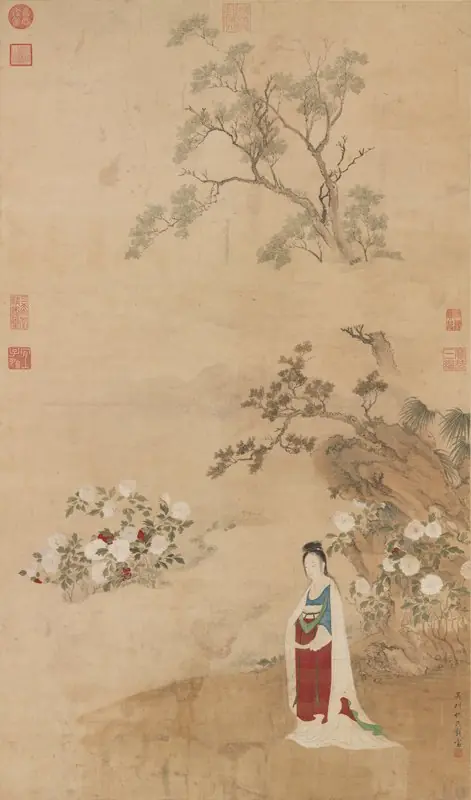
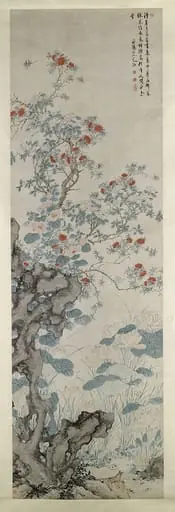
Big white peonies fill most of the picture. Behind them, tall grasses and leafy trees fade into the background.
The artist used a wet-on-wet trick called *tarashikomi*—letting ink and color bleed together while still damp. The soft edges make the leaves look almost alive. The whole painting uses only ink, red, white, and a touch of green.
To see more paintings like this, look up *japan, edo period (1615–1868)*.
Overview
The work presents a dense cluster of white tree peonies that occupy the majority of the surface. Behind the blossoms, slender susuki grasses with feathery tops and broad‑leaved deciduous trees recede into a muted background, creating a layered sense of depth.
Subject & Meaning
The composition emphasizes the seasonal abundance of peonies, a flower traditionally associated with wealth and honor in Japanese culture. The sparse green of the leaves and grasses, together with the occasional gaps that suggest insect damage, hint at the transience of the bloom and the passage of late summer.
Technique & Style
The artist limited the palette to ink, red, white, and minimal green, employing the tarashikomi method—applying fresh pigment onto still‑wet areas so that colors bleed and pool. This wet‑on‑wet approach yields soft, blurred edges on the foliage, giving the leaves a subtly animated appearance.
History & Provenance
Created by Tatebayashi Kagei, a painter active during the Edo period, the piece reflects the era’s refined monochrome aesthetics while incorporating restrained color. Its provenance traces back to private collections before entering a public museum, where it remains displayed as an example of Edo‑period brushwork.
Context
During the Edo era, artists often explored botanical subjects using limited pigments to highlight form and brush technique. Kagei’s focus on peonies aligns with contemporary interest in seasonal motifs and the practice of integrating natural elements into a harmonious composition.
Artist & collection