Artwork
Flowers and Rocks
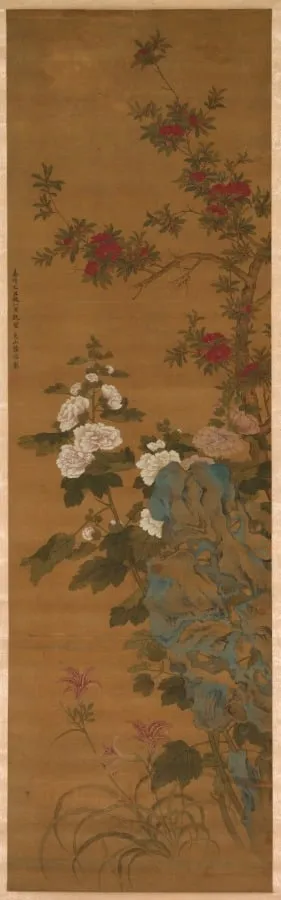
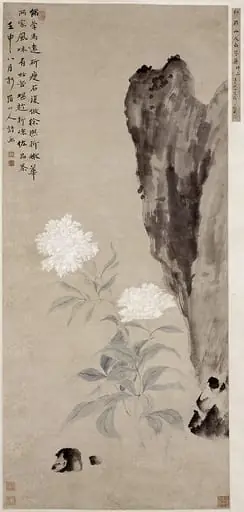
Flowers and Rocks is an unspecified painting by the Ming dynasty painting artist Unknown. It dates from 1506 and is held in the collection of the Cleveland Museum of Art.
About this work
Look up *china, ming dynasty (1368–1644)* to see more of these quiet, hopeful gardens.
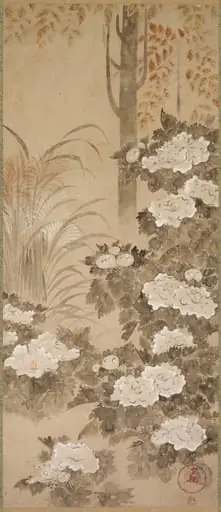
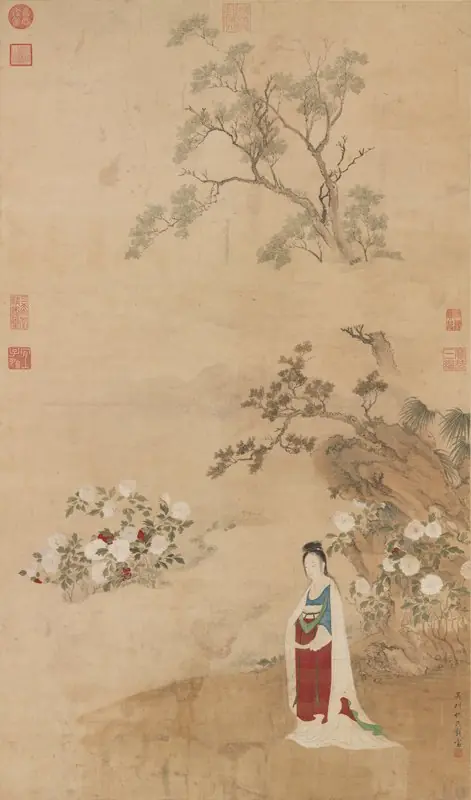
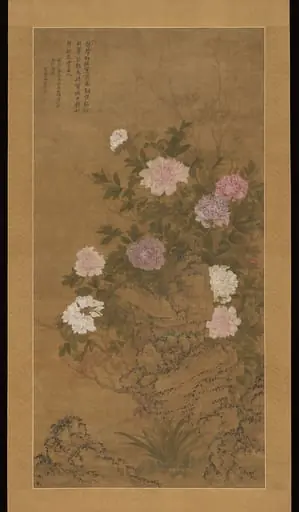
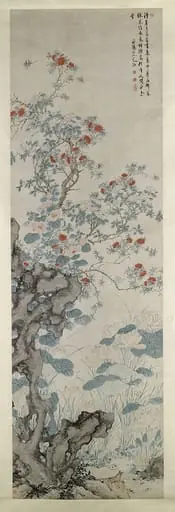
You see three flowers—pomegranate, peony, and lily—growing beside a jagged rock. The colors are bright, the brushstrokes light and careful.
Each flower carries a wish. The pomegranate means many children. The peony stands for wealth. The lily sounds like the word for "together" in Chinese. People in the Ming dynasty painted these symbols to bring good luck.
Look up *china, ming dynasty (1368–1644)* to see more of these quiet, hopeful gardens.
Overview
The painting presents a tranquil early‑summer garden scene in which three distinct blossoms—pomegranate, peony and lily—rise beside a rugged stone. Each flower is rendered in bright hues, arranged vertically from top to bottom, while the rock provides a grounding counterpoint. The composition balances delicate brushwork with vivid coloration, creating a serene tableau that reflects traditional garden motifs.
Subject & Meaning
In the work each bloom carries a conventional wish: the pomegranate, shown in a festive red, alludes to the desire for numerous offspring; the peony, with its lush petals, symbolizes aspirations for wealth and prosperity; the lily, known in Chinese as “baihe,” sounds like a phrase for lasting unity, invoking hopes for harmonious family life. Together they form a visual blessing often presented to married women.
Technique & Style
The artist employs fine, controlled strokes that convey the softness of petals and the texture of the rock. A palette of saturated reds, pinks and whites emphasizes the seasonal freshness of the scene. The light, almost airy handling of the brush contrasts with the solidity of the stone, reflecting the refined aesthetic of Ming‑period literati painting.
Context
Created during the Ming dynasty (1368–1644), the piece aligns with a broader cultural practice of embedding auspicious symbols in decorative art. Such garden scenes were popular as gifts, especially for women entering marriage, reinforcing social values of fertility, wealth and familial harmony. The painting’s provenance traces to private collections that valued its emblematic content and delicate execution.
Artist & collection

 Domestic Scene
 Giacomo and Cardinal Marco, investing Andrea, Abbot of San Zeno, with his Benefice
 The Nymph of Fontainebleau
 Portrait of a Woman
 Madonna and Child with Saints in the Enclosed Garden
 Venus and Minerva
 Family Group of Four on Sofa
 Wall painting from Room H of the Villa of P. Fannius Synistor at Boscoreale