Artwork
Înger
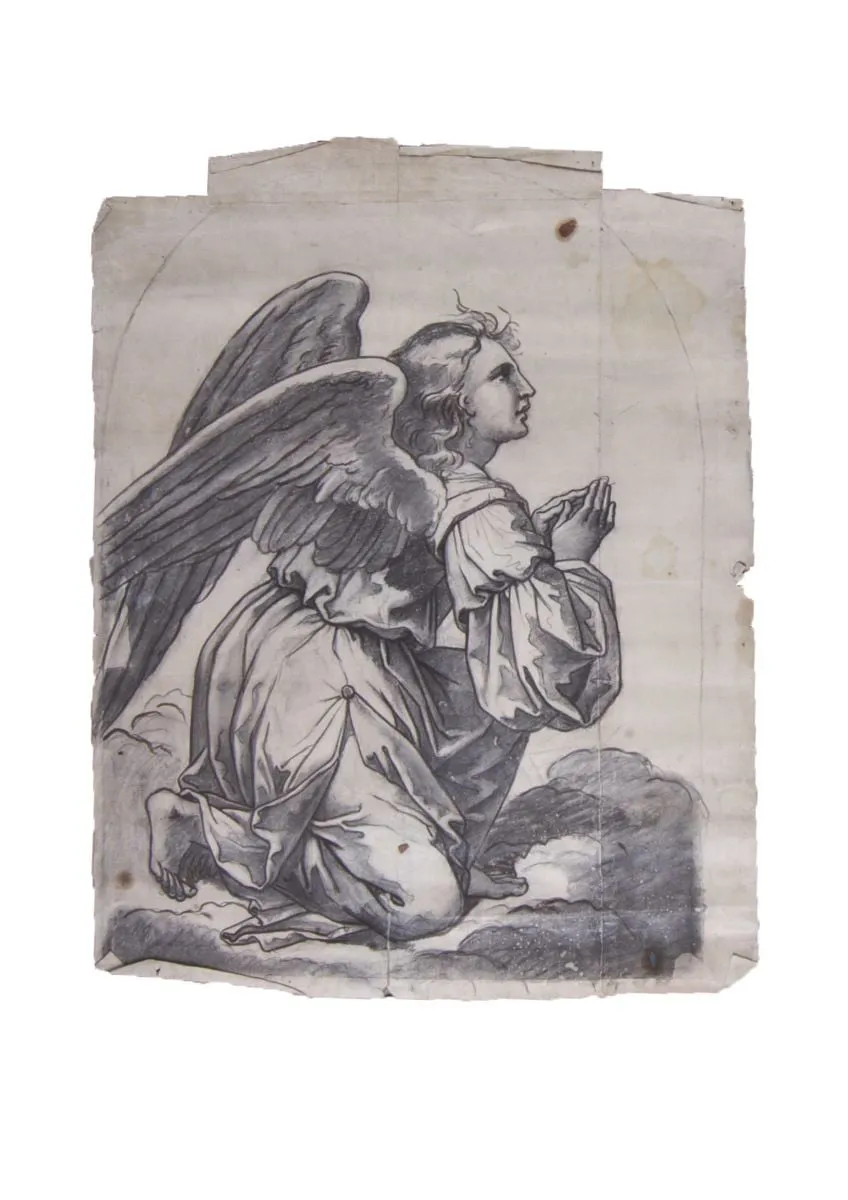
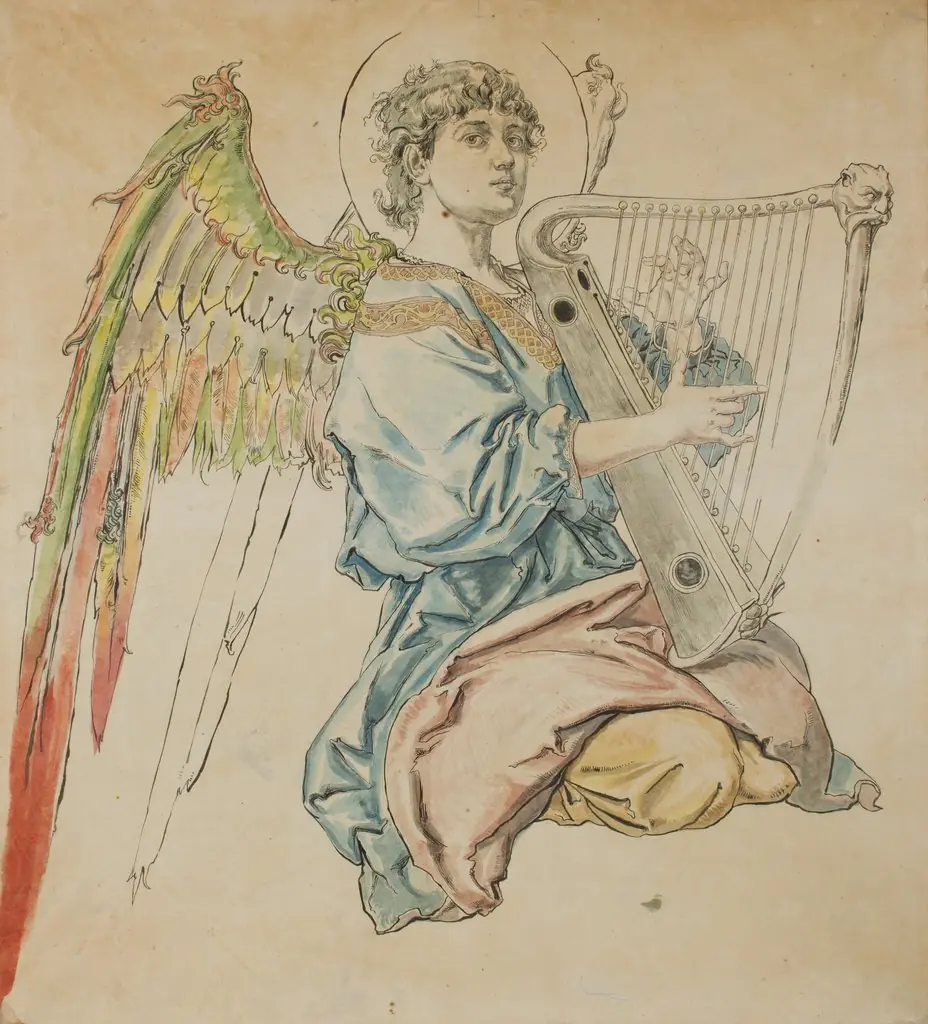
Înger is a drawing by Gheorghe Tattarescu. It dates from 1867 and is held in the collection of the Bucharest Municipality Museum.
About this work
Overview
Created circa 1867 by Gheorghe Tattarescu, *Înger* is a neoclassical drawing that resides in the Museum of Ethnography’s collection. The work presents a solitary angel in a kneeling, prayerful pose, set against an unadorned white background that isolates the figure and emphasizes its devotional gesture.
Subject & Meaning
The composition centers on an angelic being, kneeling with hands clasped in prayer, its wings unfurled behind. The posture and serene expression convey themes of piety and intercession, reflecting the 19th‑century Romanian interest in religious symbolism and the moral ideals associated with neoclassical art.
Technique & Style
Tattarescu employs precise line work and subtle shading to model the angel’s draped robe, puffy sleeves, and feathered wings, achieving a sense of volume on a flat surface. The drawing’s clean white ground eliminates distraction, allowing the intricate detailing to create depth while adhering to the academic standards of his training.
History & Provenance
Gheorghe Tattarescu, a pivotal figure in introducing neoclassicism to Romanian art, produced *Înger* during the later phase of his career. The piece entered the Museum of Ethnography’s holdings, where it remains accessible for study, illustrating the artist’s synthesis of classical technique with local religious iconography.
Artist & collection
Artist
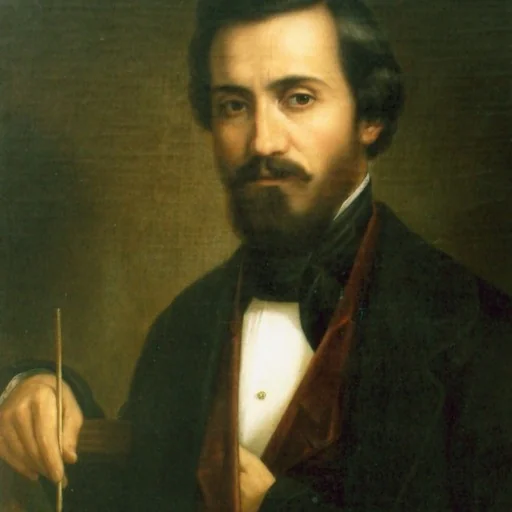
Gheorghe Tattarescu (Romanian pronunciation: ; October 1818 – October 24, 1894) was a Romanian painter and a pioneer of neoclassicism in his country's modern painting.
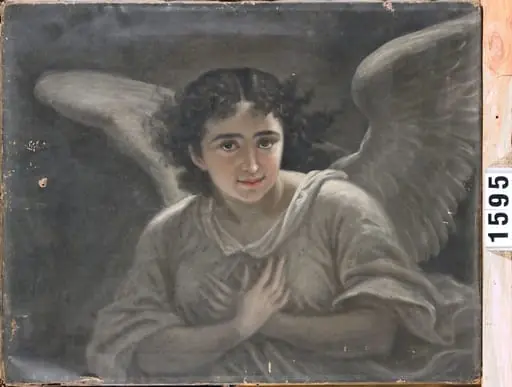 Un înger (Elisa Petrovici)
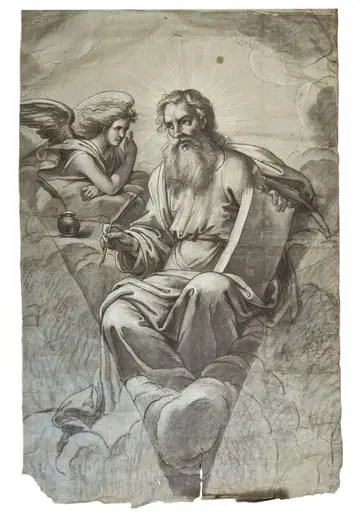 Evanghelistul Matei
 Cardboard for the Polychromy in the St Mary's Church – Figure of an Angel Playing the Lute
 Ærkeenglen Raphael
 A Flying Angel (recto)
 Ærkeenglen Raphael
 Ornament
 Efect de lumină
 Vignette for a Title Page: "Winged Victory"
 The Mysteries of the Passion: The Annunciation