Artwork
Scenă religioasă - Prezentarea la Templu
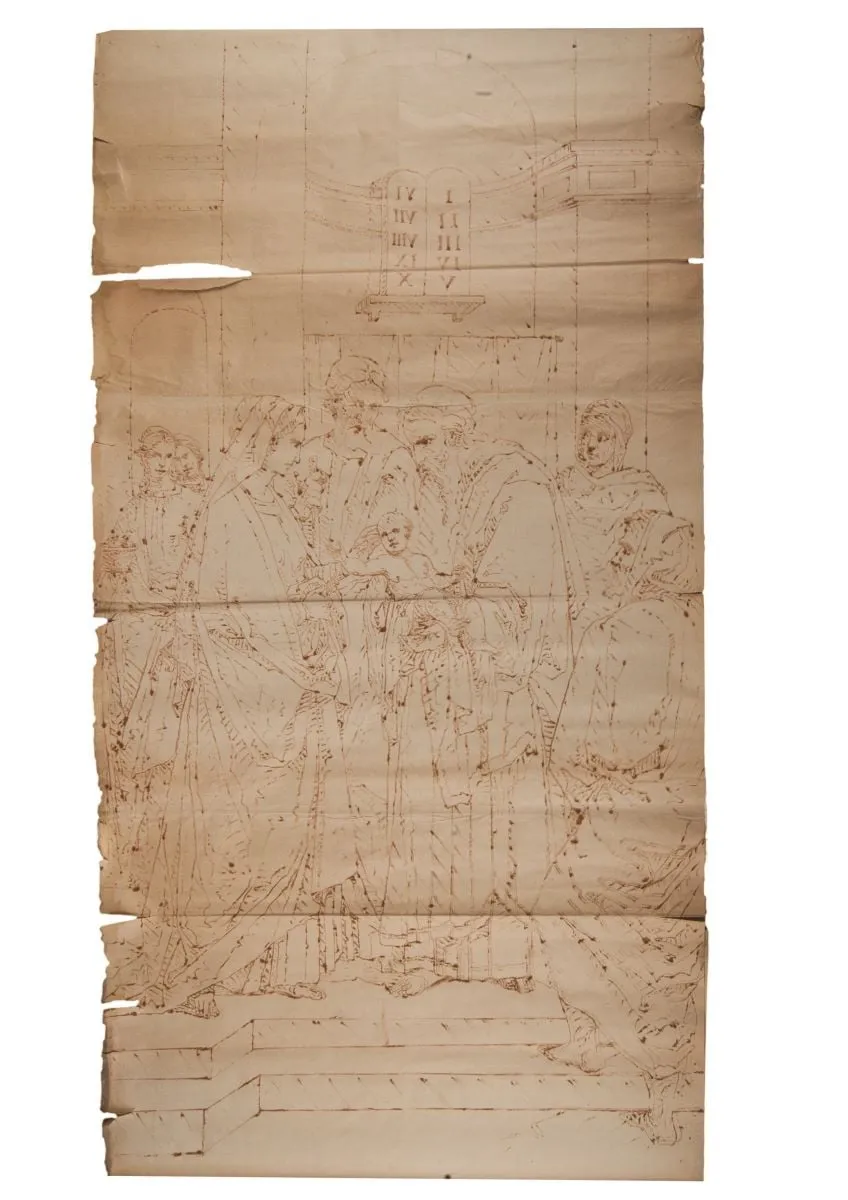
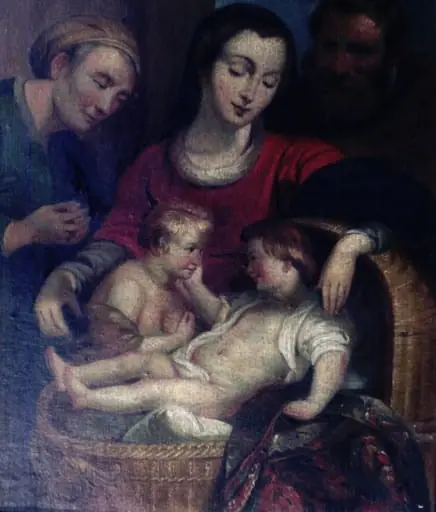
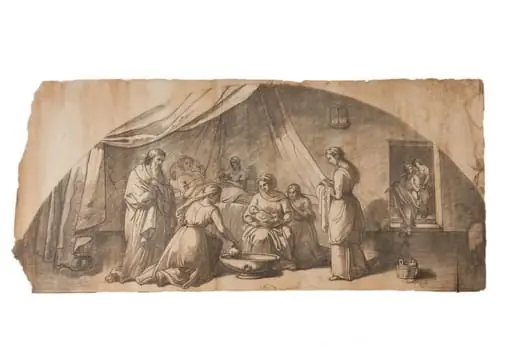
Scenă religioasă - Prezentarea la Templu is a drawing by Gheorghe Tattarescu. It dates from 1867 and is held in the collection of the Bucharest Municipality Museum.
About this work
Overview
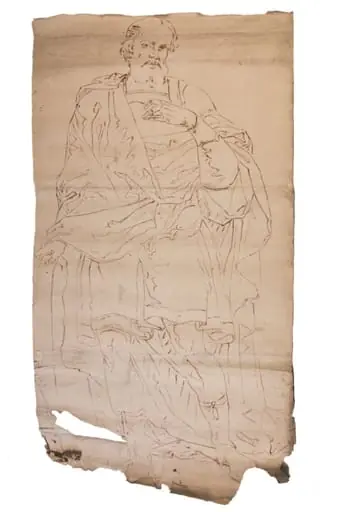
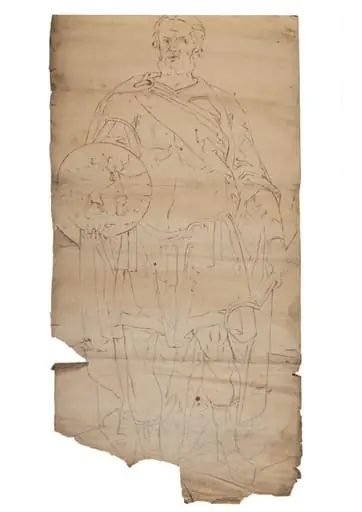
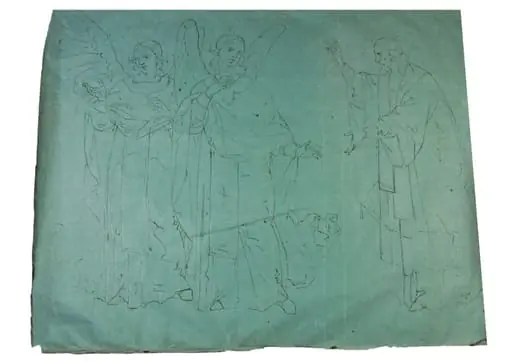
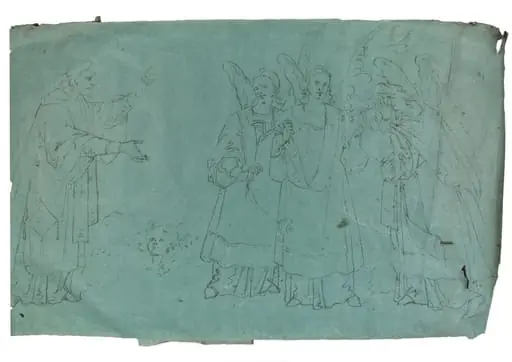
Created around 1867 by Gheorghe Tattarescu, this work is a monochrome drawing on paper depicting the Presentation of Jesus at the Temple.
Created around 1867 by Gheorghe Tattarescu, this work is a monochrome drawing on paper depicting the Presentation of Jesus at the Temple. Executed in a restrained tonal palette of brown ink, it reflects the artist’s academic training and engagement with neoclassical ideals. Though formally religious, the scene is rendered with quiet intimacy rather than grandeur. The drawing is part of the Museum of Ethnography’s collection, where its fragile state and subtle execution suggest a study or preparatory work rather than a finished painting.
Subject & Meaning
The scene illustrates the biblical moment when Mary and Joseph present the infant Jesus at the Temple in Jerusalem, as prescribed by Jewish law. Three figures dominate the composition: a woman holding the child, a male figure beside her, and an older man receiving them. Their gestures are minimal but deliberate, conveying reverence without theatricality. The absence of ornate architecture or divine symbols shifts focus to the human ritual, emphasizing humility and familial duty over religious spectacle.
Technique & Style
Tattarescu employs fine, controlled lines and delicate cross-hatching to model form and suggest volume. The paper’s texture and visible creases contribute to the work’s quiet, intimate character. Facial features are simplified to essential strokes, avoiding individualized expression in favor of typified calm. The lack of color and the muted tones align with academic drawing practices of the time, prioritizing clarity of composition and anatomical accuracy over decorative effect.
History & Provenance
The drawing entered the Museum of Ethnography’s holdings, likely through institutional acquisition or donation in the late 19th or early 20th century. Its condition—faded, creased, and worn—suggests prolonged handling or display, possibly as part of an educational or archival collection. Unlike Tattarescu’s larger oil paintings, this work was never widely reproduced, preserving its status as a private or preparatory study rather than a public commission.
Context
In mid-19th century Romania, artists like Tattarescu sought to align local religious art with European academic standards. This drawing reflects that effort, drawing from classical composition and biblical narrative while avoiding the emotional intensity of Romanticism. Its modest scale and monochrome medium distinguish it from monumental altarpieces, positioning it instead as part of a broader scholarly tradition of religious illustration within Romanian art education.
Legacy
Though not among Tattarescu’s most celebrated works, this drawing exemplifies his role in shaping Romania’s transition toward academic realism. Its restraint and technical precision influenced later generations of Romanian artists who valued disciplined draftsmanship. Today, it serves as a quiet testament to the role of drawing in religious art, offering insight into how sacred narratives were studied and internalized by artists working within institutional frameworks.
Artist & collection
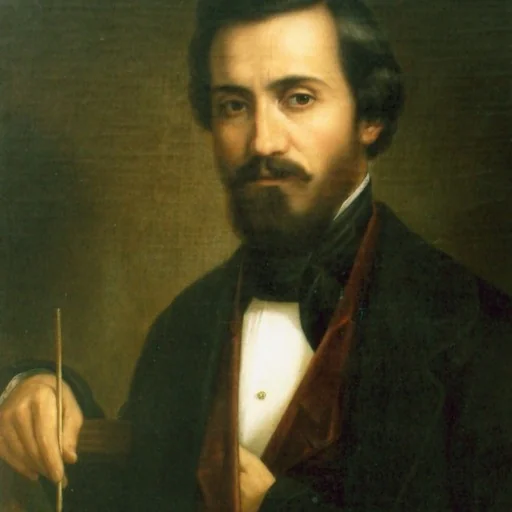
Artist
Gheorghe Tattarescu (Romanian pronunciation: ; October 1818 – October 24, 1894) was a Romanian painter and a pioneer of neoclassicism in his country's modern painting.