Artwork
The Rape of the Sabine Women and The Triumph of Two Emperors

The Rape of the Sabine Women and The Triumph of Two Emperors is an ink print by the Renaissance artist Cherubino Alberti. It dates from 1600 and is held in the collection of the National Gallery of Art. Five narrow vertical engravings, printed on yellow silk satin and mounted on thick paper, depict sequential scenes from Roman legend.
About this work
Overview
Created around 1600 by Cherubino Alberti, the work combines printmaking with an unusual support: silk, which enhances the luminosity of the ink.
Five narrow vertical engravings, printed on yellow silk satin and mounted on thick paper, depict sequential scenes from Roman legend. Created around 1600 by Cherubino Alberti, the work combines printmaking with an unusual support: silk, which enhances the luminosity of the ink. Each panel is a self-contained narrative, linked by style and scale, forming a continuous visual sequence that unfolds like a frieze.
Subject & Meaning
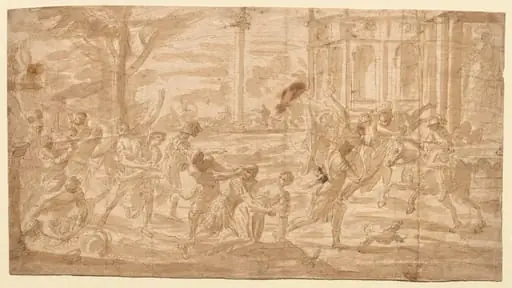
The panels illustrate two episodes from early Roman history: the abduction of Sabine women to secure wives for Roman men, followed by the triumphal procession of two emperors. The scenes emphasize civic foundation and imperial authority, framing violence as a necessary act of state-building. Figures are arranged in dense, rhythmic compositions, conveying movement and hierarchy without individualized emotion.
Technique & Style
Alberti used metalplate engraving to produce sharp, linear forms on silk, a rare medium for such prints. The dark, precise lines contrast against the pale yellow ground, enhancing clarity and drama. Figures are stylized with rigid postures and elongated limbs, typical of late Mannerist conventions. The technique prioritizes structural clarity over naturalism, suited to the narrative urgency of the scenes.
History & Provenance
The set was likely commissioned for a private or elite collector, given the cost of silk and the complexity of the prints. Its survival in near-original condition is uncommon, as fabric supports are fragile. No definitive early ownership records exist, but the work’s craftsmanship suggests it was produced in Rome or Florence during a period of renewed interest in classical themes.
Context
Created at the turn of the 17th century, the engravings reflect the enduring fascination with Roman antiquity among Italian elites. While painting and sculpture dominated public art, prints on unconventional materials like silk catered to intimate, scholarly audiences. Alberti’s work aligns with contemporaries who translated classical narratives into graphic form for private contemplation rather than public display.
Legacy
Though not widely reproduced or exhibited in its time, the set remains a rare example of printmaking on textile in early modern Europe. It demonstrates how traditional engraving techniques were adapted to novel surfaces, expanding the boundaries of the medium. Today, it is studied for its material innovation and its reflection of classical revival in late Renaissance visual culture.
Artist & collection


![Prudence [recto], by Cherubino Alberti](https://artifactworldgallery.com/img/cherubino-alberti--prudence-recto--3f44e6d72db5eb8c-w320.webp)
 The Parable of the Tribute Money
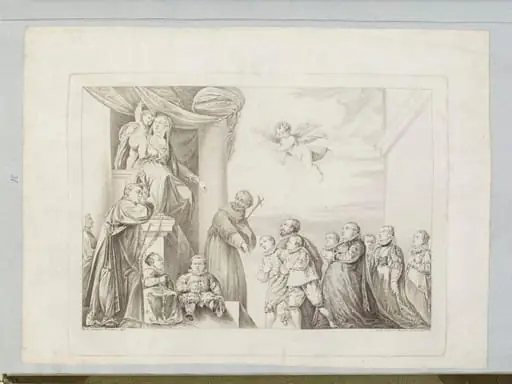 Virgin Enthroned
 Scenă religioasă - Prezentarea la Templu
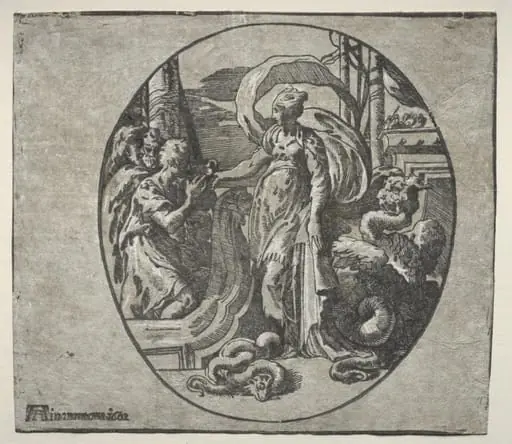 Circe Giving Drink to the Companions of Ulysses
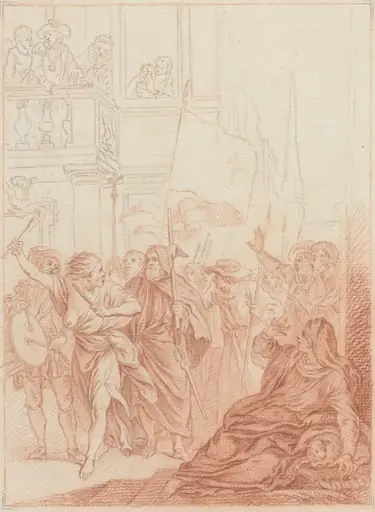 Mayenne qui de loin voit leur folle Entreprise...
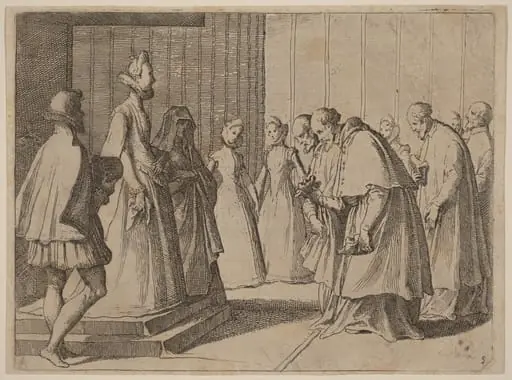 Margaret of Austria Receiving the Homage of Cardinals and Prelates
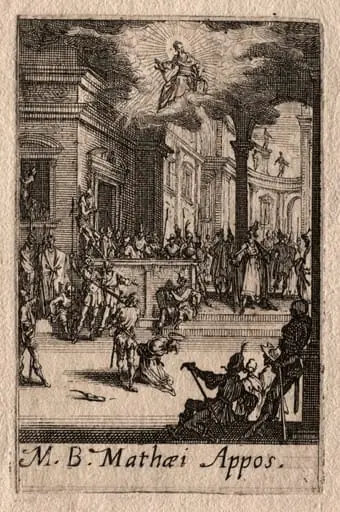 The Martyrdom of the Apostles: St. Matthew
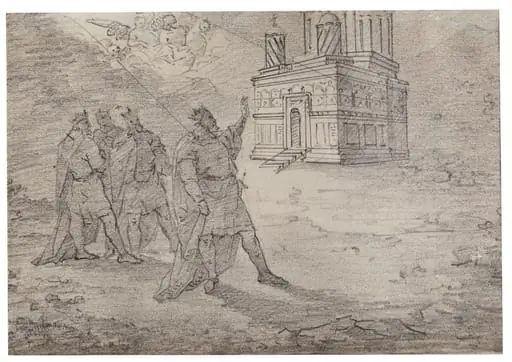 Neagoe Basarab în fața mânăstirii Curtea de Argeș
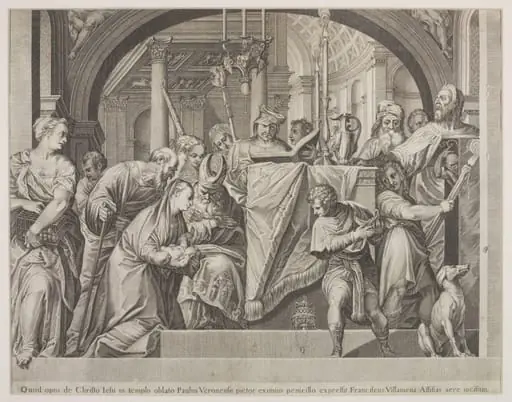 Presentation in the Temple
 Allegory in Honor of Claude de Mesmes, Count d'Avaux (Allegorie en l'honneur de Claude de Mesmes, comte d'Avaux)
 Grand Duchess at the Procession of the Young Girls
 Rape of the Sabines