Artwork
Hawking party crossing a stream
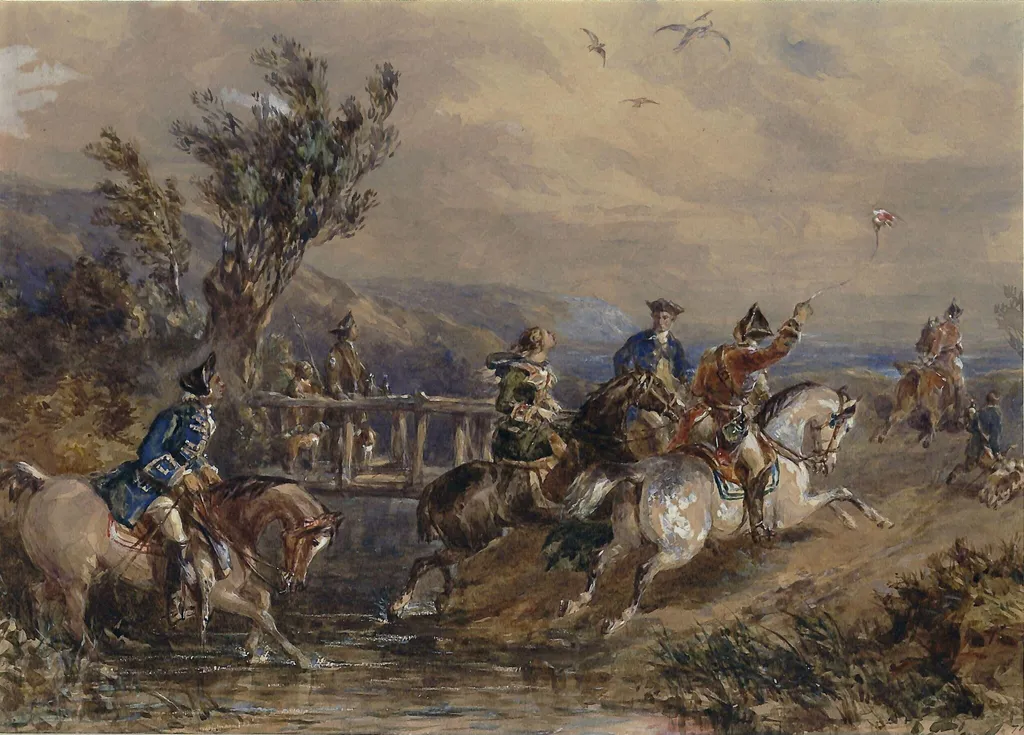
Hawking party crossing a stream is a watercolor work on paper by the British Romanticist artist John Frederick PRWS Tayler. It dates from 1820 and is held in the collection of the Victoria and Albert Museum. John Frederick Tayler’s watercolour portrays a hawking party as it fords a shallow stream.
About this work
Overview
John Frederick Tayler’s watercolour portrays a hawking party as it fords a shallow stream. The composition balances the movement of horses and riders with a tranquil rural backdrop of trees, hills, and a distant bridge, conveying a calm, harmonious scene.
Subject & Meaning
The work captures a social outing of hunters on horseback, a pastime associated with country leisure in the 19th century. The participants, dressed in period attire, navigate the water with measured steps, suggesting both the practical challenges of travel and the genteel enjoyment of the countryside.
Technique & Style
Executed in watercolor, Tayler employs delicate washes and soft edges that lend the scene a hazy, atmospheric quality. The handling of light on the water and the subtle tonal variations in the foliage reflect the Romantic emphasis on mood and the natural environment.
History & Provenance
Created during Tayler’s active period in the mid‑1800s, the painting aligns with his broader interest in landscape and sporting subjects. It has remained within private collections, with documented exhibition records indicating its presence in 19th‑century British art shows.
Context
The piece belongs to the Romantic tradition, which favored evocative depictions of nature and leisure activities. Hawking parties were a common motif, symbolising the intersection of aristocratic sport and the pastoral ideal prevalent in Victorian England.
Own this work as a print
Artist & collection
Artist
John Frederick Tayler painted scenes filled with animals and nature using delicate watercolours.

 Napoleon and Troops
 Parade of the Austrian troops before King Jan Sobieski
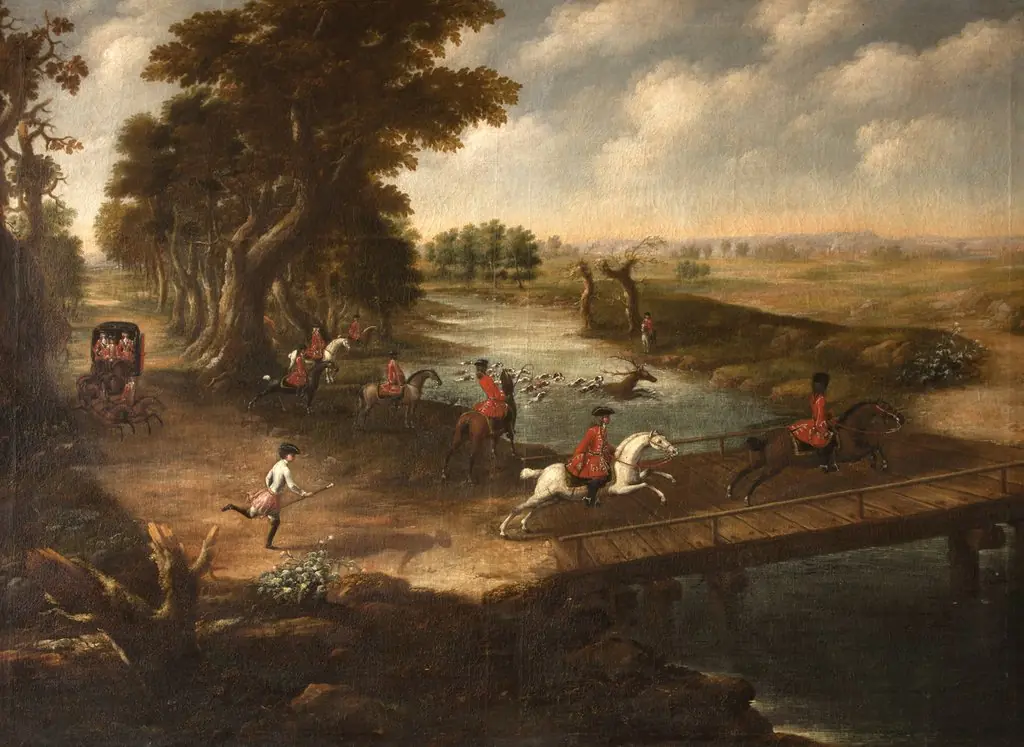 En jagt af kongelige personer
 The Wedding Journey
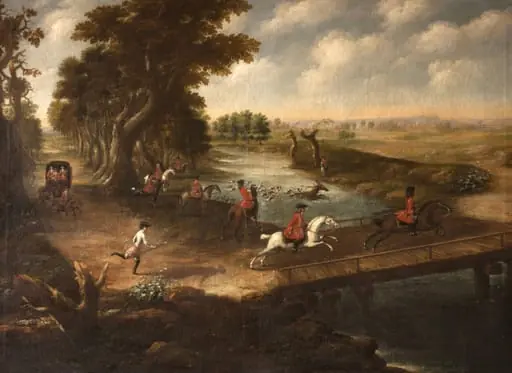 En jagt af kongelige personer
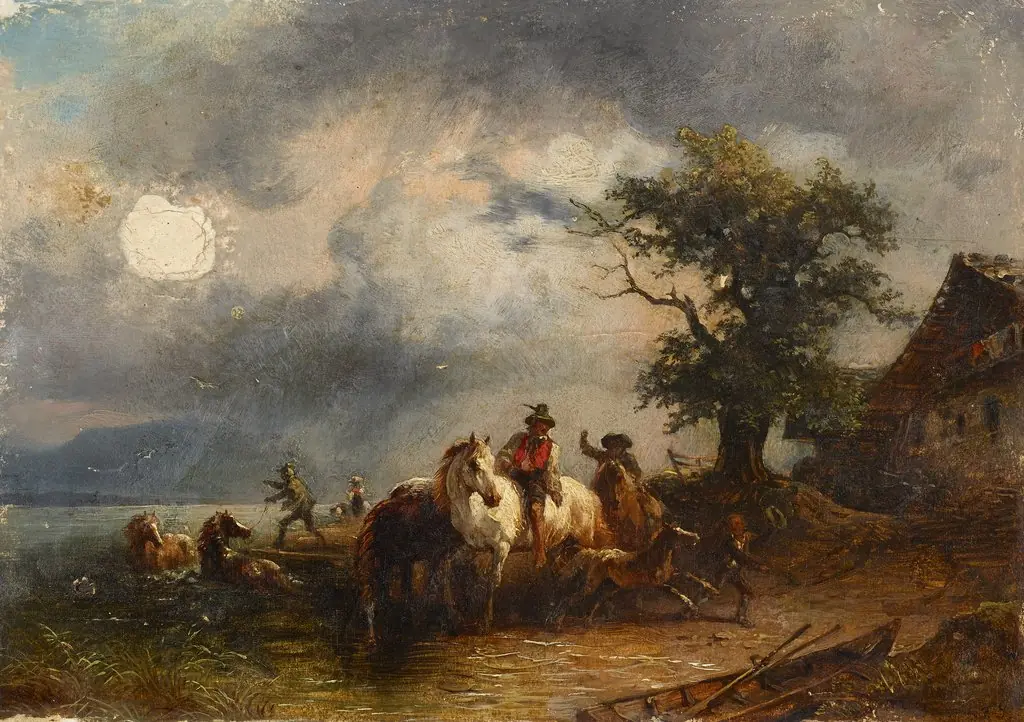 Watering Horses
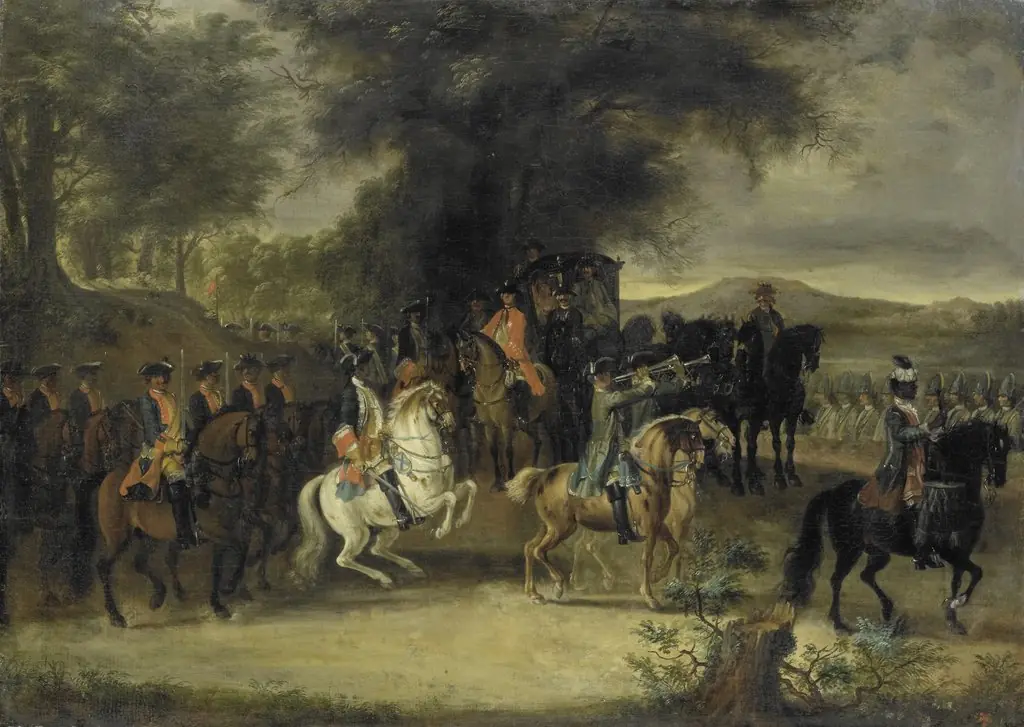 Inspection of a Cavalry Regiment, perhaps by William of Hesse-Homburg
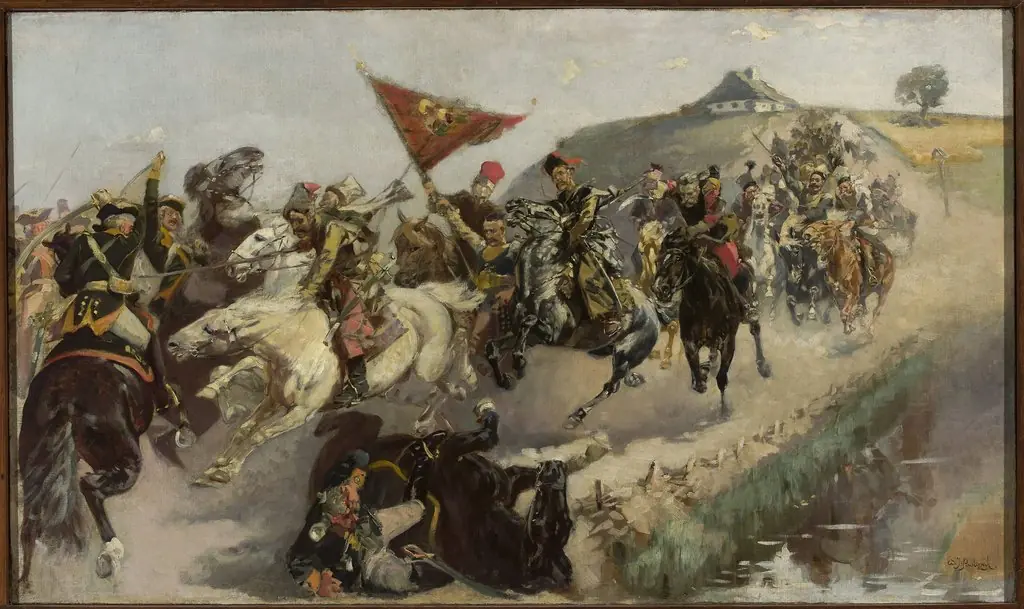 Skirmish on the road
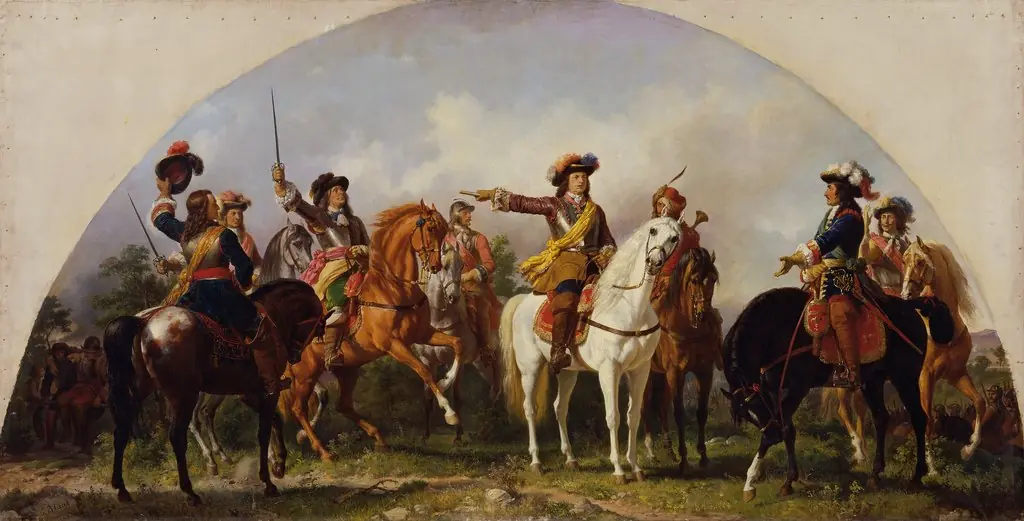 The Battle of St. Gotthard 1664
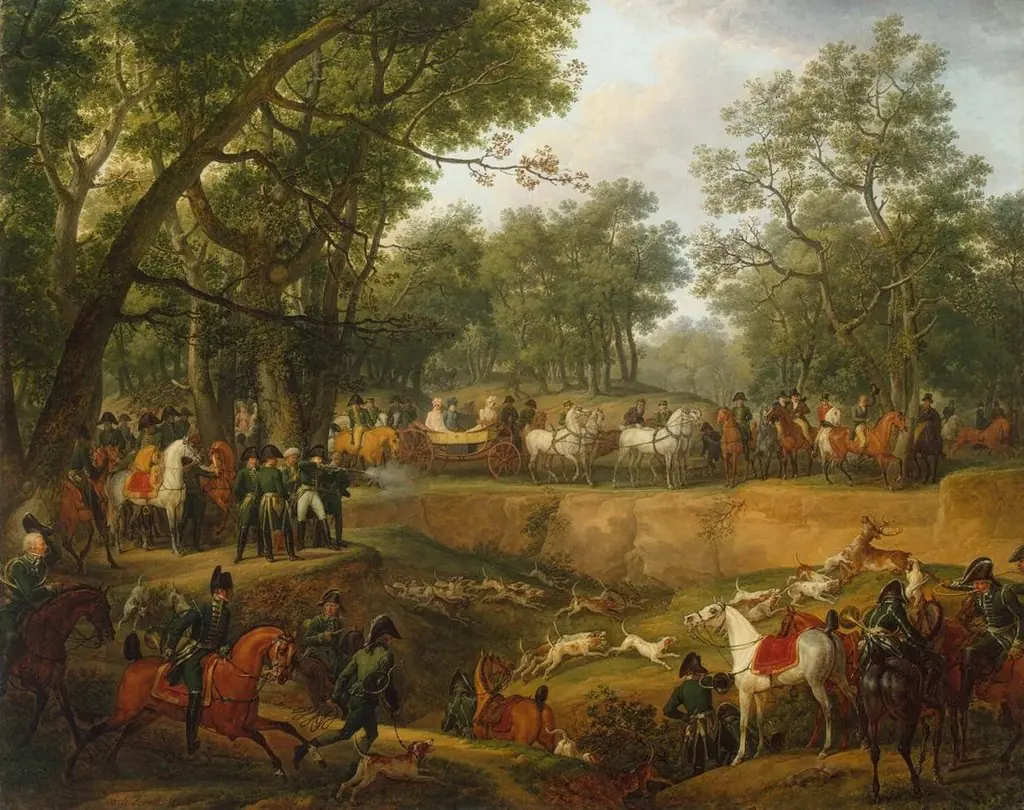 Napoleon on a Hunt in the Forest of Compiegne
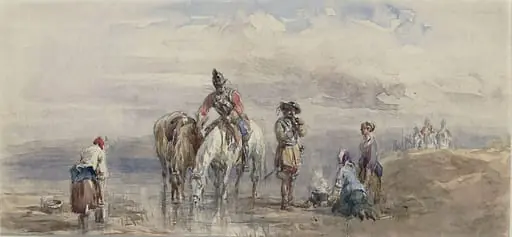 Troopers Watering Horses
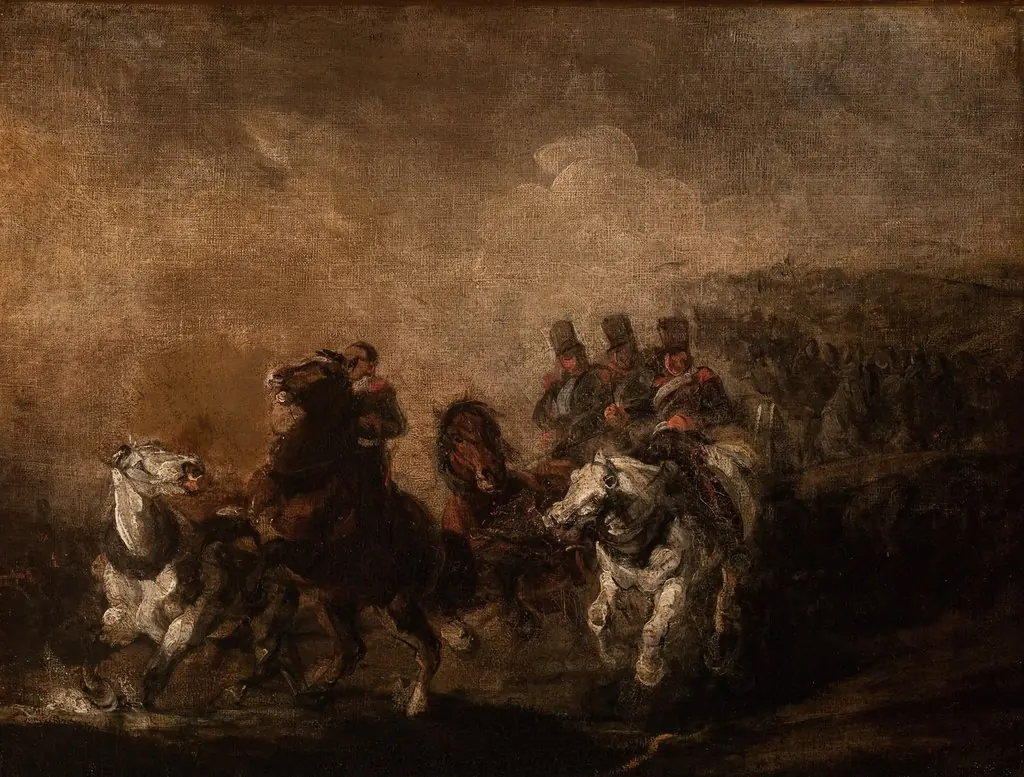 Artillery Crossing a Stream