Artwork
Romeo and Juliet
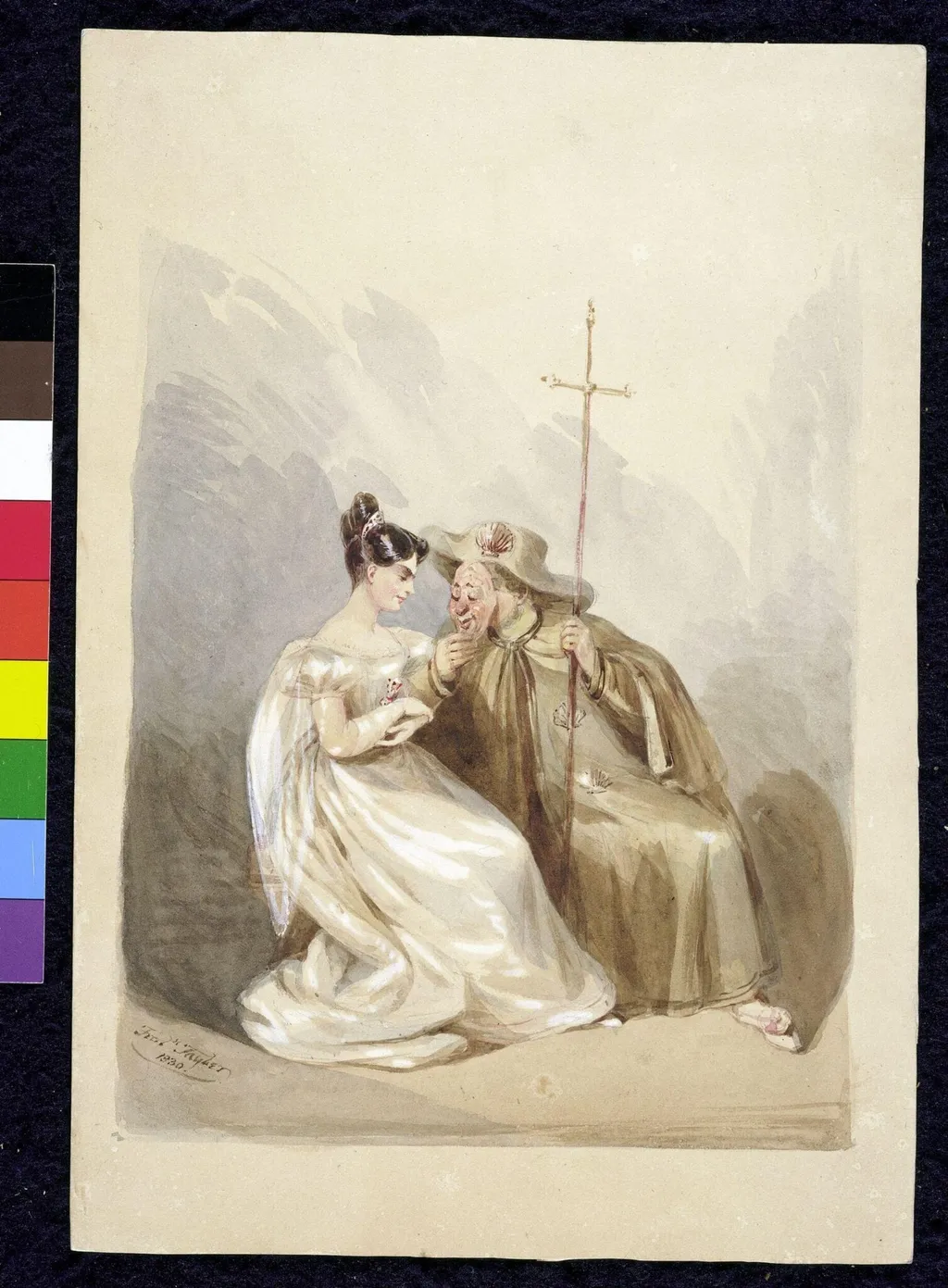
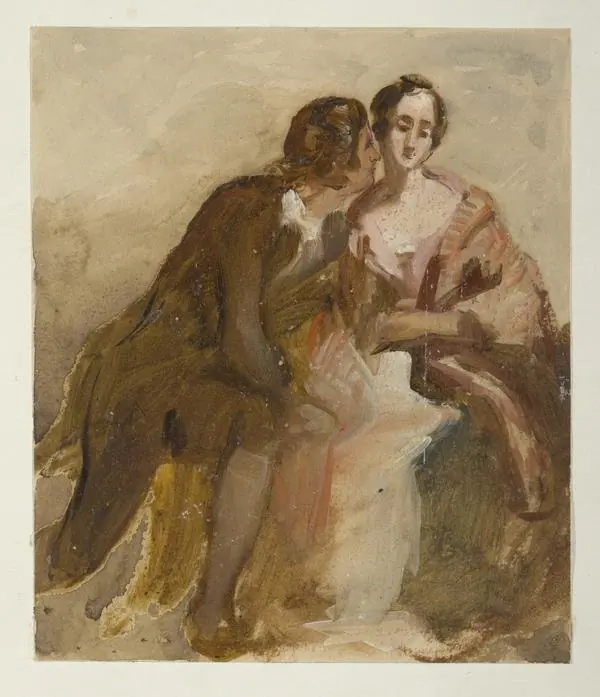
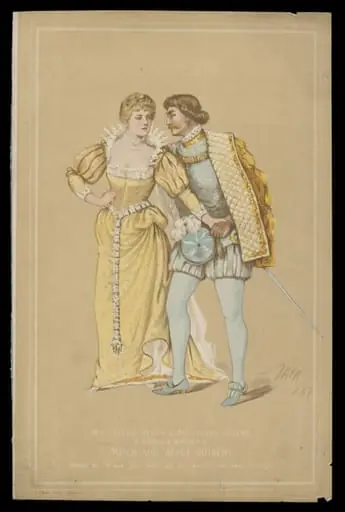
Romeo and Juliet is a watercolor work on paper by the Romanticist artist John Frederick PRWS Tayler. It dates from 1829 and is held in the collection of the Victoria and Albert Museum.
About this work
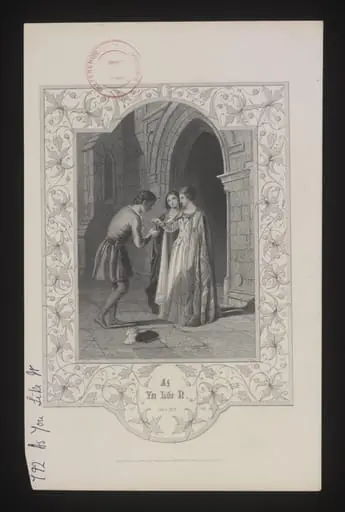
This watercolour shows two actors on stage. It’s Romeo and Juliet’s first meeting at the Capulet ball in 1829. Tayler painted Fanny Kemble and William Abbot in the roles.
The artist hid Romeo’s disguise cleverly. He dressed him as a monk to match the script’s “pilgrim” talk. That detail makes the scene fun to read in the play.
Look up the artist next. Tayler, John Frederick PRWS
Overview
John Frederick Tayler’s watercolour captures a moment from the 5 October 1829 performance of Shakespeare’s *Romeo and Juliet* at Covent Garden. The work portrays the first encounter of the title characters during the Capulet’s ball, featuring the actors Fanny Kemble as Juliet and William Abbot as Romeo.
Subject & Meaning
The scene illustrates the pivotal meeting in Act I, scene V, when Romeo, still in disguise, approaches Juliet. Tayler’s inclusion of the actors emphasizes the theatricality of the encounter, highlighting the play’s themes of love and mistaken identity.
Technique & Style
Executed in watercolor, the composition balances delicate washes with precise line work to convey the stage lighting and costume details. Tayler’s palette captures the rich fabrics of the period while maintaining the translucency characteristic of the medium.
Context
The performance was part of Covent Garden’s 1829 season, a notable moment in early‑19th‑century British theatre. Both Kemble and Abbot were prominent stage figures, and their casting in the lead roles attracted considerable public attention.
Artist & collection
Artist
John Frederick Tayler painted scenes filled with animals and nature using delicate watercolours.