Artwork
Dezgheț la Suceava
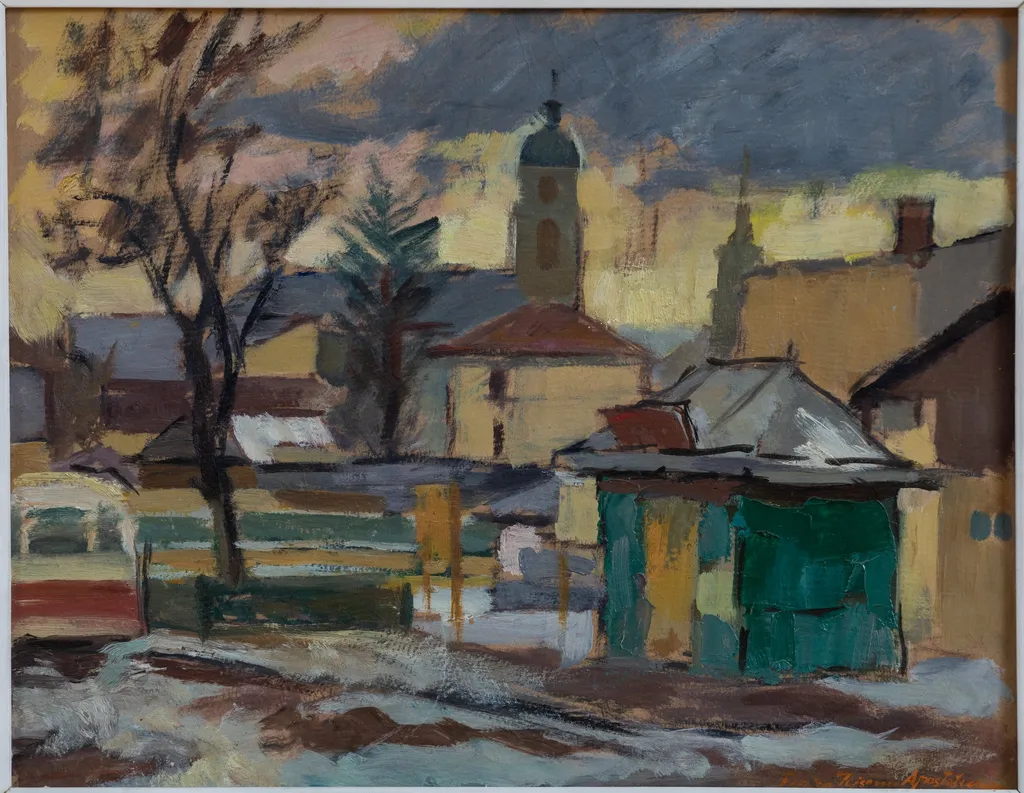
Dezgheț la Suceava is a print by Teișanu-Apostoleanu Florica. It dates from 1958 and is held in the collection of the Moldova National Museum Complex.
About this work
Overview
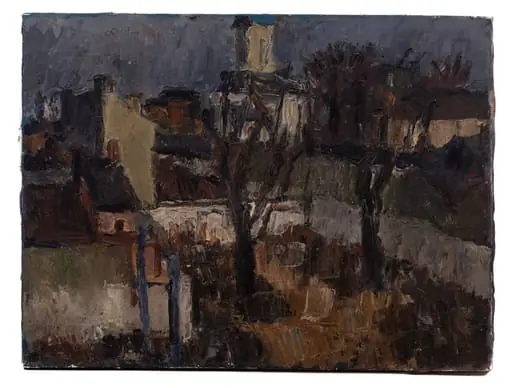
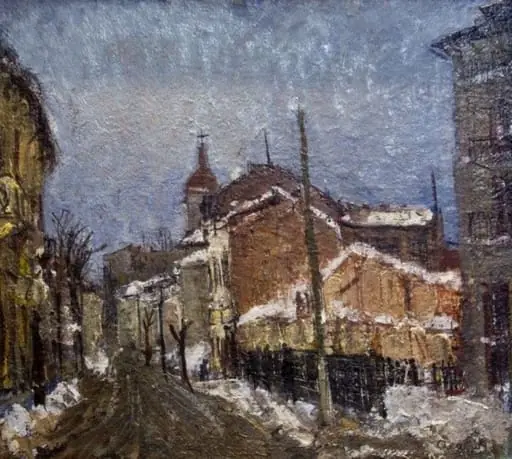
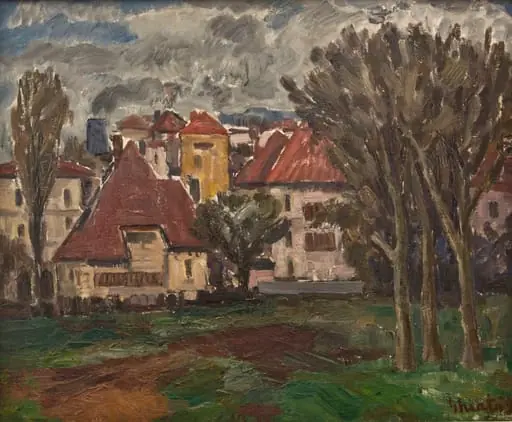
Dezgheț la Suceava, painted by Florica Teișanu‑Apostoleanu in 1958, depicts a modest urban landscape bathed in the muted light of early spring.
Dezgheț la Suceava, painted by Florica Teișanu‑Apostoleanu in 1958, depicts a modest urban landscape bathed in the muted light of early spring. The composition centers on a cluster of low‑rise structures rendered in warm yellows and browns, set against a brooding, cloud‑filled sky. A solitary, mature tree dominates the left margin, while a green fence or wall lies in the foreground, anchoring the scene.
Subject & Meaning
The work captures a moment of thaw in the historic town of Suceava, suggesting the transition from winter’s chill to the tentative warmth of spring. The juxtaposition of dark, overcast heavens with the bright, earthy tones of the buildings conveys a subtle tension between lingering cold and the promise of renewal, reflecting everyday life in a post‑war Romanian setting.
Technique & Style
Executed with a pronounced impasto technique, the painting features thickly applied pigment that gives the surface a tactile, three‑dimensional quality. Visible brushstrokes and layered color create a textured visual field, emphasizing the materiality of the paint and enhancing the atmospheric depth of the cloudy sky and sun‑kissed façades.
History & Provenance
Since its creation in 1958, Dezgheț la Suceava has been part of the collection of the Museum of Ethnography. The museum acquired the piece as part of its effort to document mid‑century Romanian visual culture, and it remains on display as an example of regional artistic response to everyday urban scenes.
Context
The painting emerges from a period when Romanian artists were navigating between socialist realism and personal expression. Florica Teișanu‑Apostoleanu’s focus on a specific locale, rendered with a tactile impasto approach, reflects a broader trend of grounding national identity in recognizable, local environments during the late 1950s.
Artist & collection
Artist
A Romanian printmaker of the mid-20th century, Florica Teișanu-Apostoleanu left a small but telling body of work.