Artwork
Six Cavalrymen in Combat
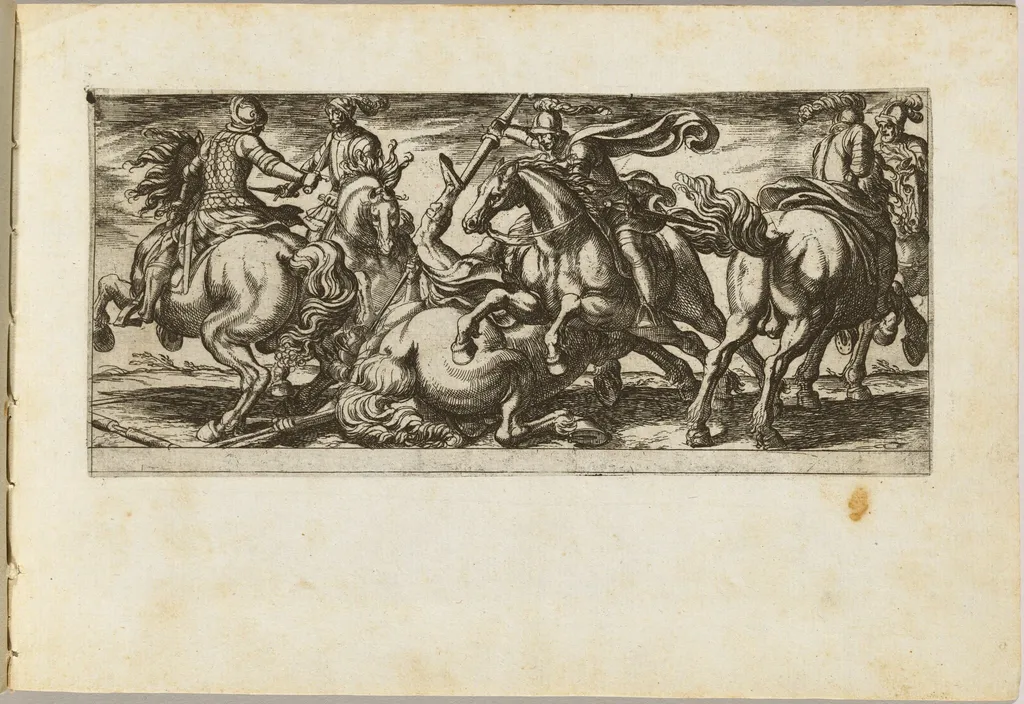
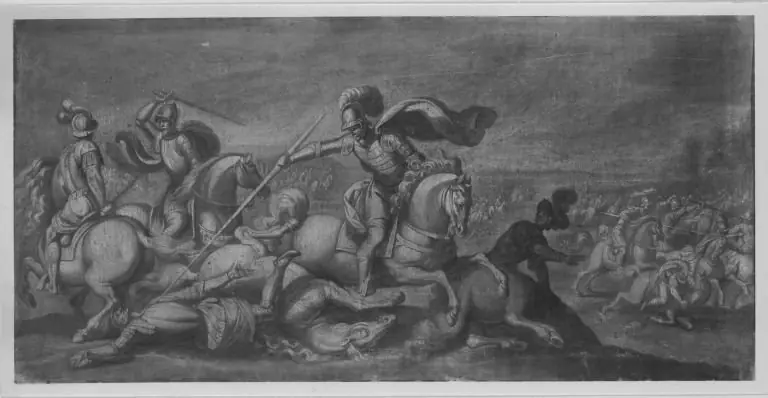
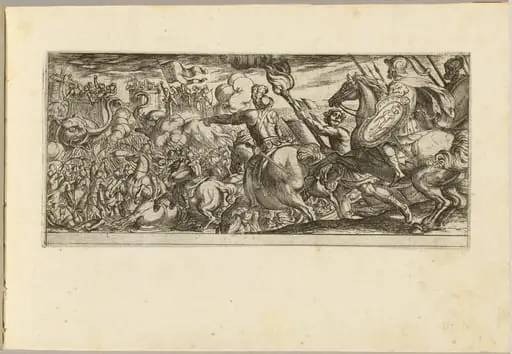
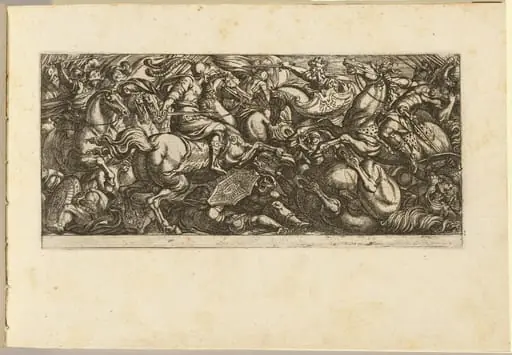
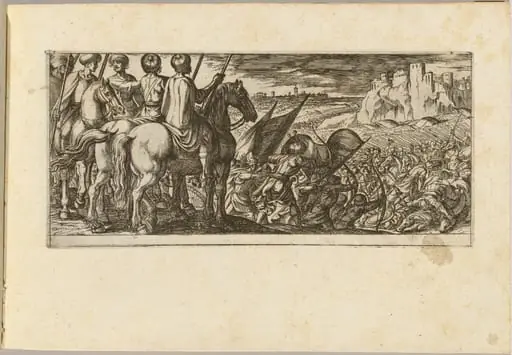
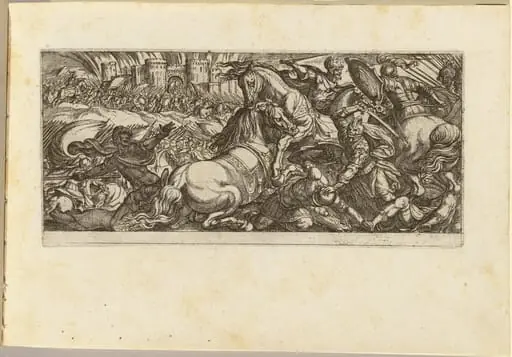
Six Cavalrymen in Combat is an ink print by the Renaissance artist Antonio Tempesta. It dates from 1592 and is held in the collection of the National Gallery of Art.
About this work
Overview
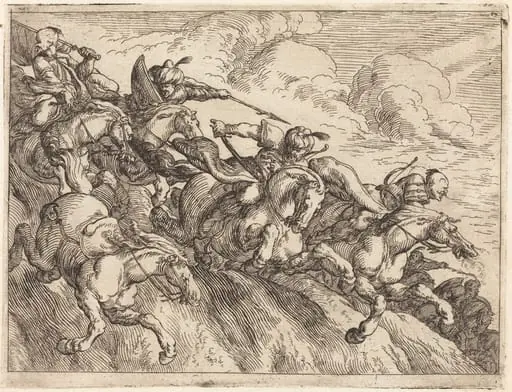
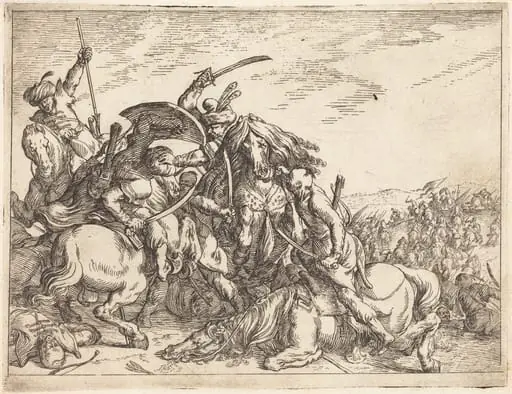
Antonio Tempesta’s 1592 etching *Six Cavalrymen in Combat* presents a turbulent encounter between six mounted soldiers. Executed in black ink on paper, the image captures a moment of intense conflict, with horses rearing and intertwining, and riders brandishing spears and swords amid a stormy, swirling backdrop.
Subject & Meaning
The composition focuses on a chaotic melee of cavalry, emphasizing the physical strain of battle. Armored figures confront each other in close quarters, suggesting themes of martial bravery and the disorder inherent in warfare, while the turbulent sky reinforces a sense of danger and upheaval.
Technique & Style
Tempesta employed the etching process, incising fine lines into a metal plate to produce a network of sharp, expressive strokes. The artist’s handling of line creates a three‑dimensional illusion of muscular horses and tense bodies, while the dense cross‑hatching conveys atmospheric depth and movement.
History & Provenance
Tempesta, known as il Tempestino, worked at the crossroads of Roman Baroque and the print traditions of Antwerp. His oeuvre, rich in battle and historical scenes, reflects this synthesis. The print was produced during his mature period, when his reputation as a painter‑engraver was well established across Italy and the Low Countries.
Context
In the late sixteenth century, prints served both as artistic works and as means of disseminating visual narratives of warfare. Tempesta’s etching aligns with contemporary interests in dynamic, dramatic compositions, echoing the vigor of Baroque art while retaining the detailed line work characteristic of Northern European engraving.
Artist & collection
Artist
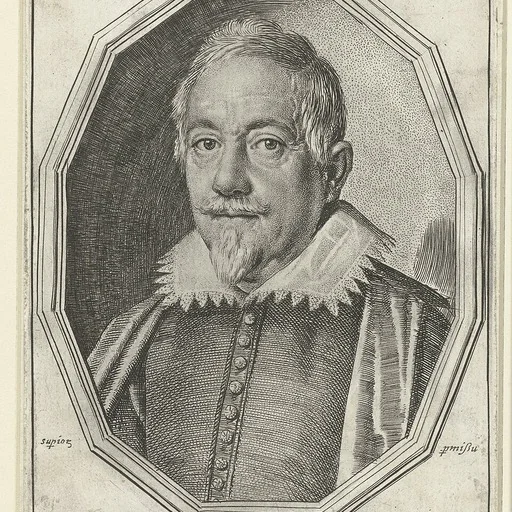
Antonio Tempesta, also called il Tempestino (1555 – 5 August 1630), was an Italian painter and engraver, whose art acted as a point of connection between Baroque Rome and the culture of Antwerp.