Artwork
Design for a Ceiling
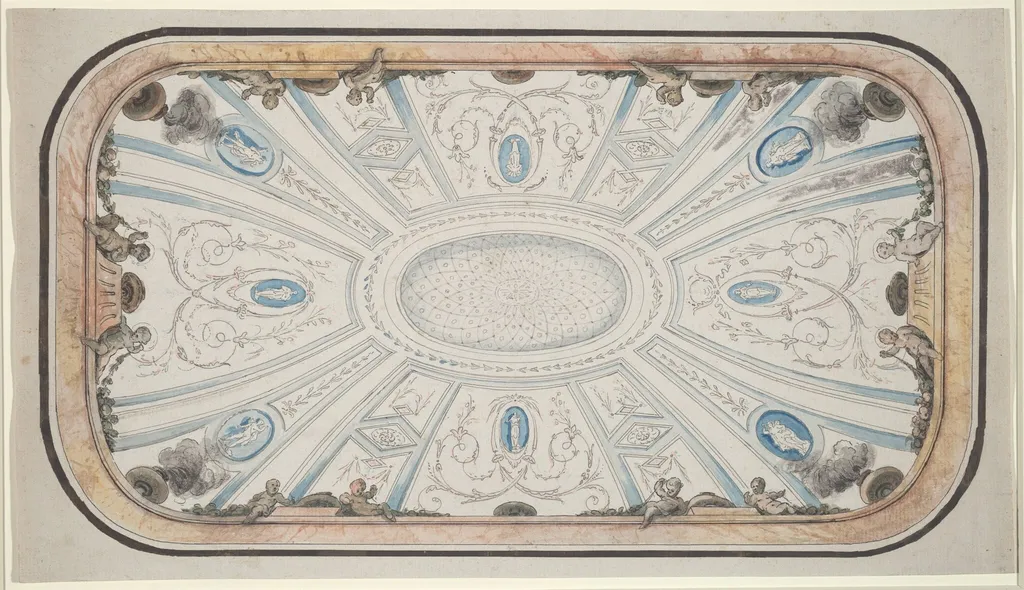
Design for a Ceiling is an ink drawing by the Baroque artist Mauro Antonio Tesi. It dates from 1748 and is held in the collection of the National Gallery of Art.
About this work
Overview
Mauro Antonio Tesi’s 1748 drawing entitled Design for a Ceiling presents a comprehensive architectural scheme intended for a vaulted interior. Executed as a pen drawing enhanced with washes of brown, blue, yellow and pink, the work functions as a preparatory study rather than a finished fresco, illustrating the artist’s approach to ornamental ceiling composition.
Subject & Meaning
The composition is organized around a central ornamental framework filled with a variety of motifs, including allegorical figures, floral clusters, and decorative scrollwork. These elements combine to suggest a celebratory or mythological narrative typical of ceiling programs, while also demonstrating the artist’s capacity to integrate human and botanical forms within a cohesive spatial design.
Technique & Style
Tesi employs fine black ink lines to delineate structural outlines and intricate patterns, then applies subtle color washes to differentiate planes and highlight ornamental details. The palette of muted earth tones alongside pastel blues, yellows and pinks reflects a Baroque sensibility, emphasizing depth, movement, and the theatricality of architectural illusion.
History & Provenance
Created in 1748, the drawing was likely produced as a proposal for a patron’s interior decoration project, a common practice among 18th‑century Italian architects. Its subsequent ownership record is limited, but it remains within a collection of preparatory works that document Tesi’s contributions to decorative architecture during the late Baroque period.
Context
Tesi worked in a period when elaborate ceiling schemes were central to ecclesiastical and aristocratic interiors, aligning with the broader Baroque emphasis on grandeur and visual drama. His designs echo the influence of earlier masters such as Andrea Pozzo, while also anticipating the lighter, more decorative tendencies that would emerge in the Rococo.
Artist & collection


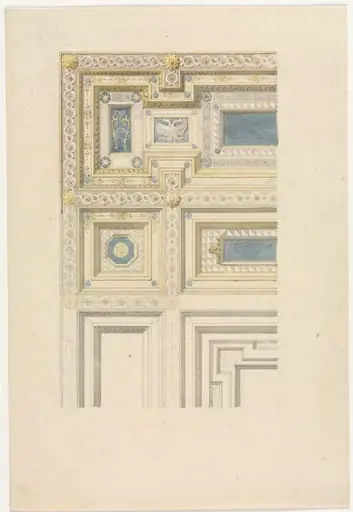 Design for Ornamental Ceiling
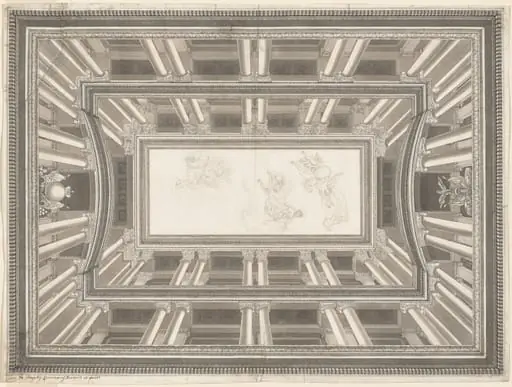 Design for a Trompe-l'oeil Ceiling Decoration
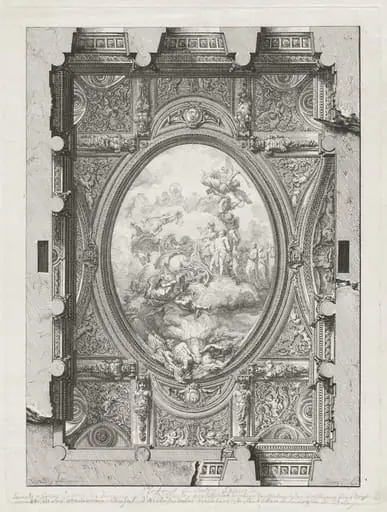 Design for the Ceiling of the Salon of the Palazzo Spinola, Genoa
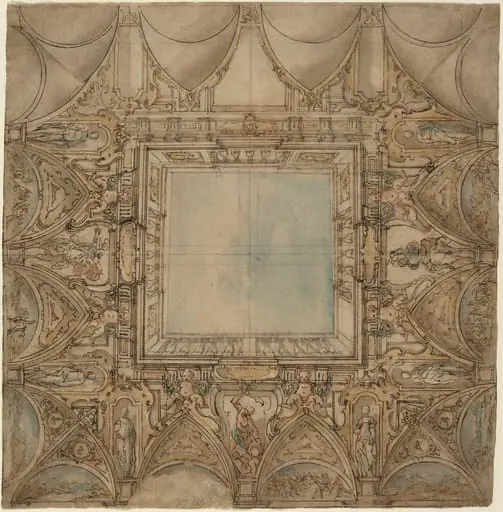 A Ceiling Decoration with Landscapes and Battles
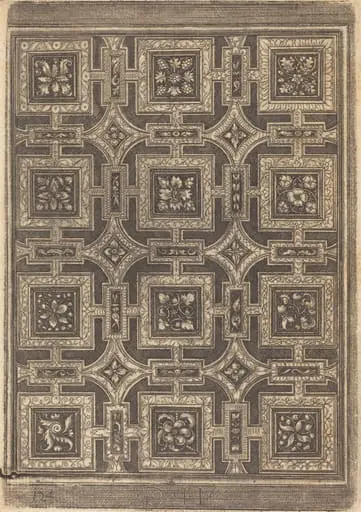 Ornamental Design for Coffered Ceiling
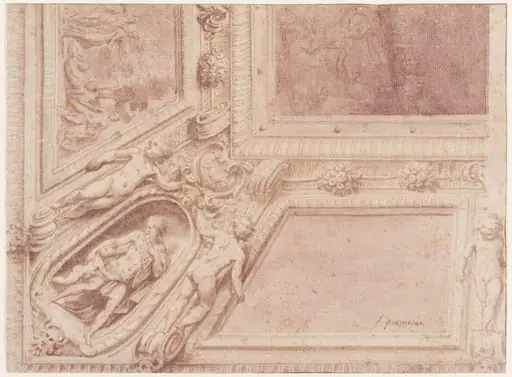 Design for a ceiling with a deep cove, showing a corner only
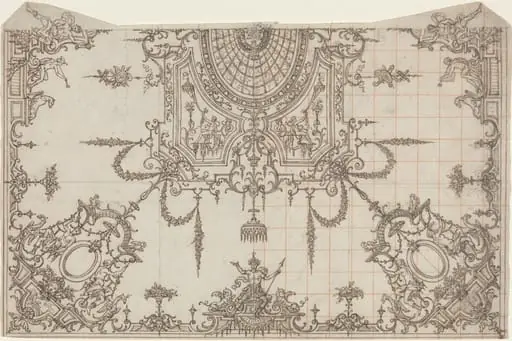 An Elaborate Ceiling with Trellises and Seated Figures
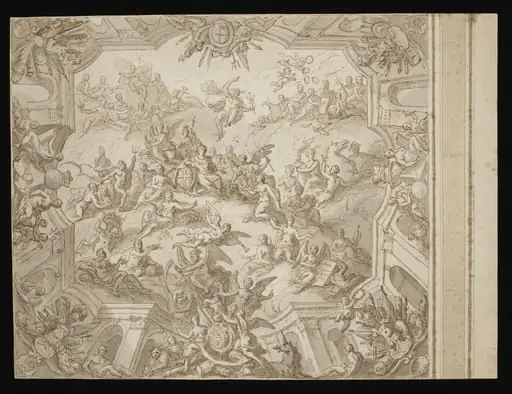 Preliminary design for the ceiling of the Upper Hall at Greenwich