Artwork
Stage Design
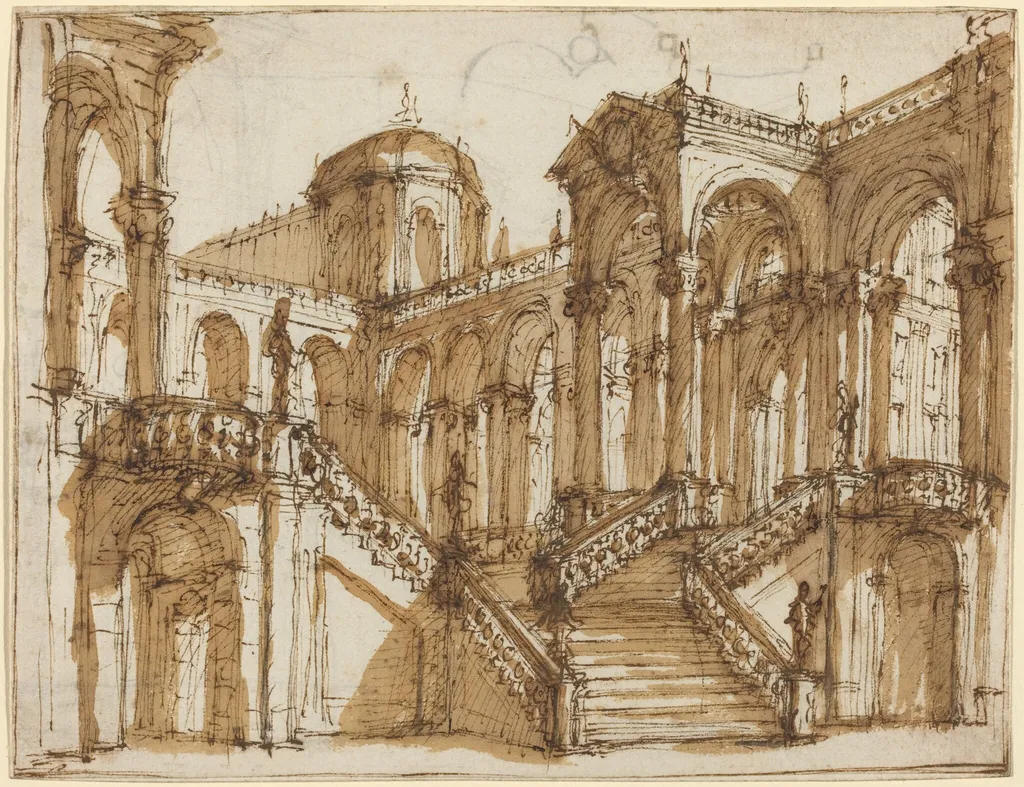
Stage Design is an ink drawing by the Romanticist artist Mauro Antonio Tesi. It dates from 1755 and is held in the collection of the National Gallery of Art.
About this work
Overview
Created around 1755 by Mauro Antonio Tesi, this drawing serves as a stage design, rendered in pen and brown ink with wash over graphite underdrawing.
Created around 1755 by Mauro Antonio Tesi, this drawing serves as a stage design, rendered in pen and brown ink with wash over graphite underdrawing. It depicts an elaborate, fictional architectural space filled with arches, staircases, and ornamental details. The work reflects the technical precision required for theatrical set design in the mid-eighteenth century, prioritizing spatial clarity and visual impact for live performance.
Subject & Meaning
The subject is an imaginary monumental structure, likely intended as a backdrop for opera or drama. Its grandeur—evident in layered arches, elevated platforms, and carved railings—evokes idealized classical grandeur rather than any real location. The design functions as a theatrical illusion, guiding the audience’s perception of depth and scale, without conveying narrative or symbolic content beyond architectural spectacle.
Technique & Style
Tesi employed graphite for initial layout, then refined the composition with pen and brown ink, adding tonal depth through washes. The handling of light and shadow suggests careful consideration of stage lighting effects. Details like railings and balustrades are rendered with fine, controlled lines, demonstrating the draftsperson’s skill in translating three-dimensional space onto a two-dimensional surface for practical use.
History & Provenance
The drawing originates from Tesi’s work as a scenic designer for Italian theaters during the mid-1700s. Though its specific theatrical production remains unconfirmed, it aligns with the practices of Bolognese stage designers of the period. The piece likely passed through theater archives or private collections before entering institutional holdings, preserving its function as a working design rather than a finished artwork.
Context
In mid-eighteenth-century Italy, stage design was a specialized discipline blending architecture, engineering, and art. Tesi operated within a tradition where designers created elaborate, temporary environments for opera houses, often drawing from classical and Baroque precedents. This drawing reflects the era’s emphasis on illusion and spectacle, where architectural fantasy served dramatic narrative rather than personal expression.
Legacy
Tesi’s work exemplifies the technical rigor of theatrical design before the rise of modern scenography. While not widely known outside specialized circles, his drawings contribute to the understanding of how performance spaces were conceived in the Enlightenment era. They remain valuable references for historians studying the intersection of architecture, theater, and visual culture in eighteenth-century Europe.
Artist & collection


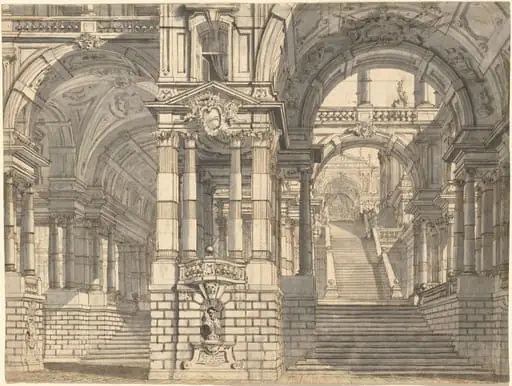 Fantasy of Magnificent Courtyards and Loggie with a Monumental Staircase
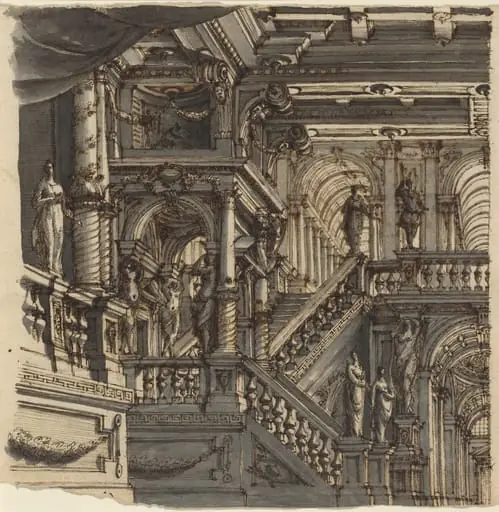 An Elaborate Staircase in a Palace
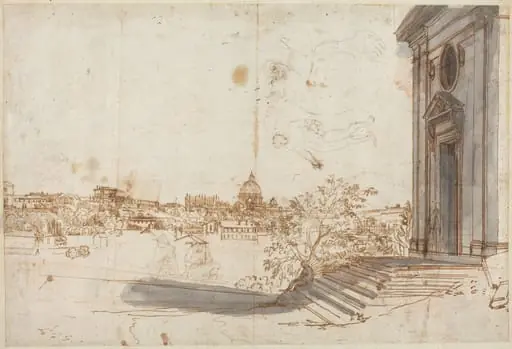 A View of Rome from Santa Maria del Priorato
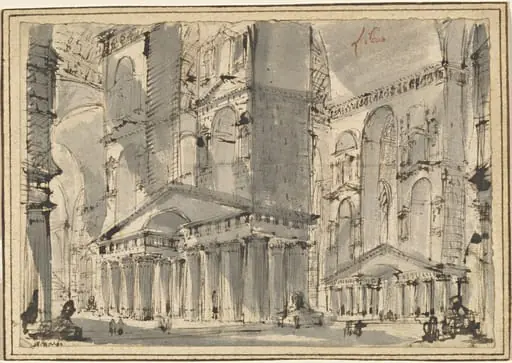 Fantasy of an Ancient Bath
![Designs for Palatial Staircases [recto], by Lorenzo Sacchetti](https://artifactworldgallery.com/img/lorenzo-sacchetti--designs-for-palatial-staircases-recto--e49f5f8955b9d67b-w320.webp) Designs for Palatial Staircases [recto]
Designs for Palatial Staircases [recto]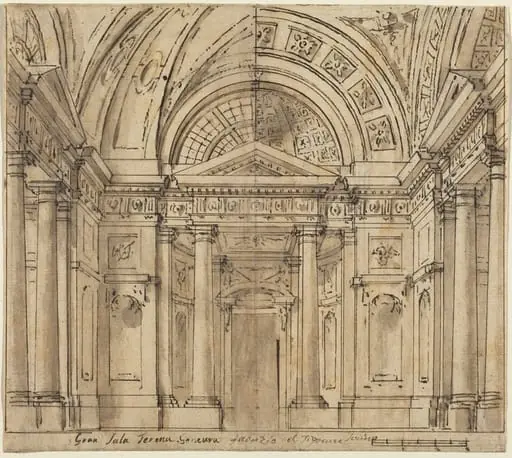 Design for Entrance to a Hall
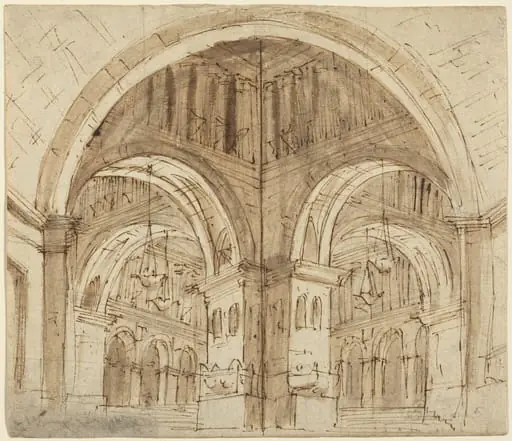 Design for a Vaulted Hall
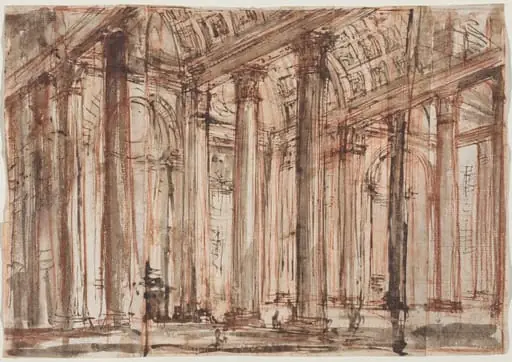 The Portico of the Pantheon
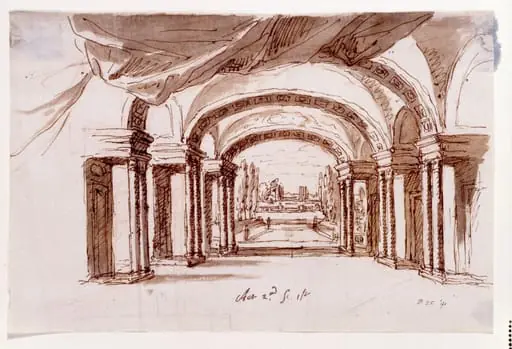 Drawing, Design for a stage set for Arsinoe, Queen of Cyprus at the Theatre Royal, London for Act II, scene 1, a great hall looking into a garden