Artwork
Capriccio with a Palladian Villa
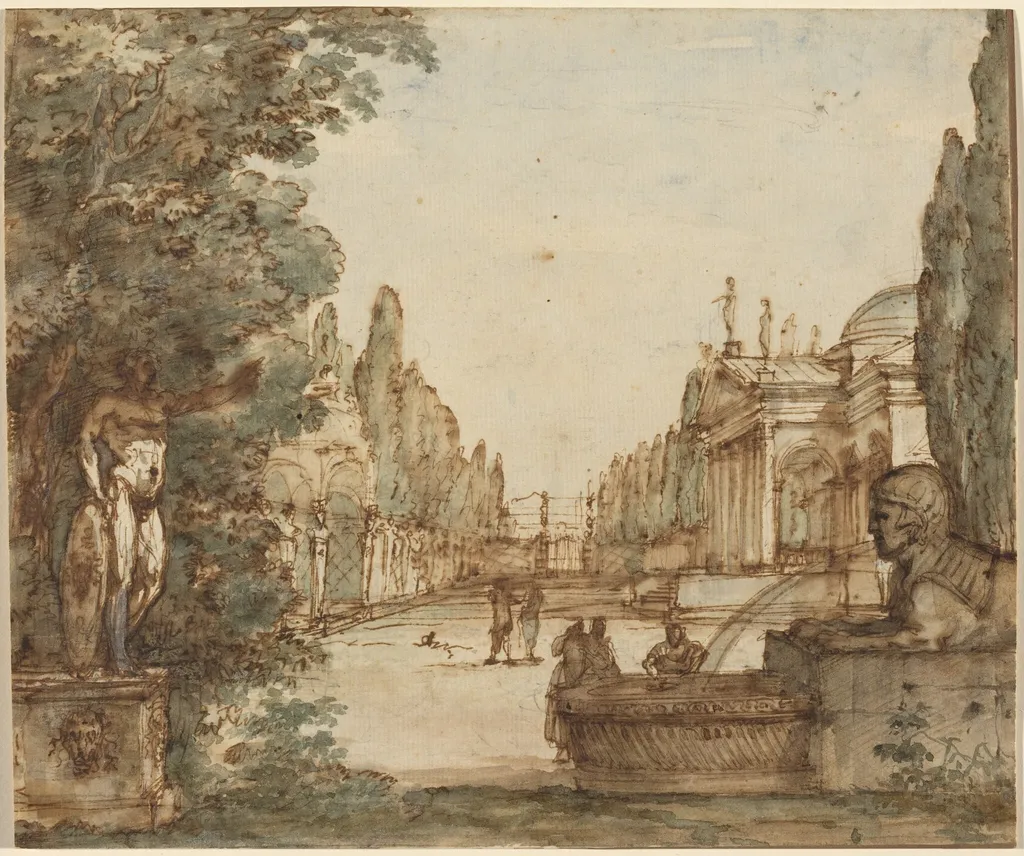
Capriccio with a Palladian Villa is an ink drawing by the Romanticist artist Mauro Antonio Tesi. It dates from 1760 and is held in the collection of the National Gallery of Art.
About this work
Overview
Mauro Antonio Tesi’s capriccio, executed around 1760, depicts an imagined landscape centered on a Palladian villa. Rendered on laid paper, the work combines pen and brown ink with brown wash and watercolor, creating a composition that balances architectural grandeur with natural surroundings.
Subject & Meaning
The scene presents a tranquil setting where a stately villa rises amid tall trees, a winding path, and a small pond. Figures are placed in the foreground, some standing, others seated, engaged in quiet conversation, suggesting a leisurely, perhaps pastoral, atmosphere.
Technique & Style
Tesi employed graphite as a base, over which he applied brown ink for precise architectural lines and fine details. Subsequent layers of brown wash and watercolor generate atmospheric depth, while glazing techniques lend the surface a soft, diffused quality that contrasts with the exacting ink work.
History & Provenance
Created in the mid‑18th century, the drawing reflects the period’s interest in idealized landscapes and classical architecture. It remains attributed to Tesi, an Italian artist known for his architectural fantasies, though specific ownership records prior to its museum acquisition are not documented.
Context
The work aligns with the capriccio tradition, wherein artists combined real and imagined elements to explore aesthetic ideals. Though predating the full emergence of Romanticism, its emphasis on mood, nature, and the sublime anticipates later Romantic concerns.
Artist & collection


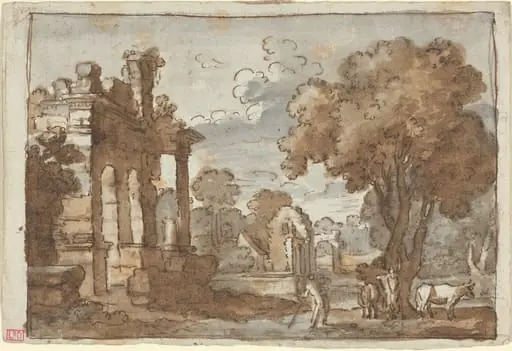 Landscape
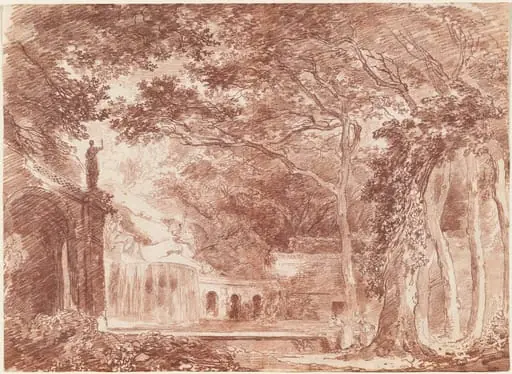 The Oval Fountain in the Gardens of the Villa d'Este, Tivoli
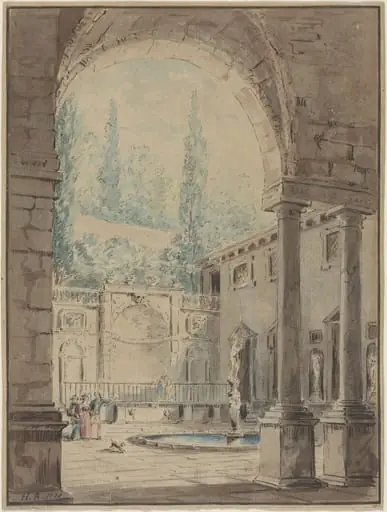 Courtyard of the Villa Pliniana
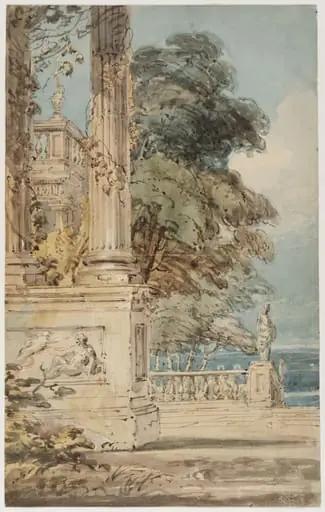 A Garden Terrace
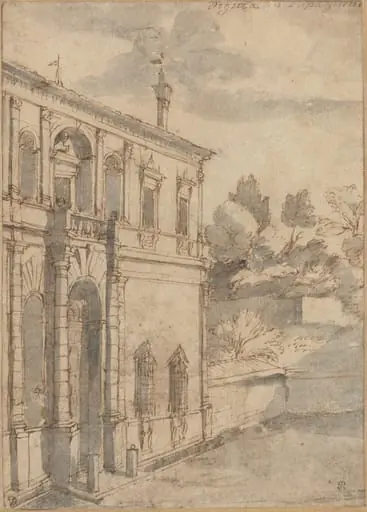 Villa di Papa Giulio
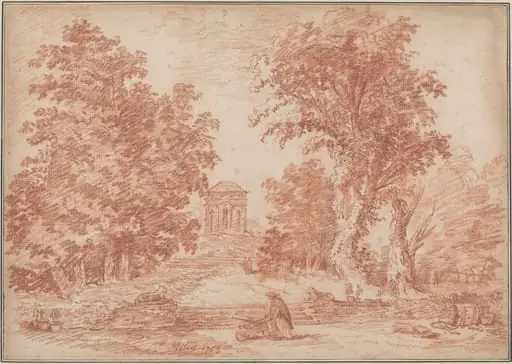 Italian Park with a Tempietto
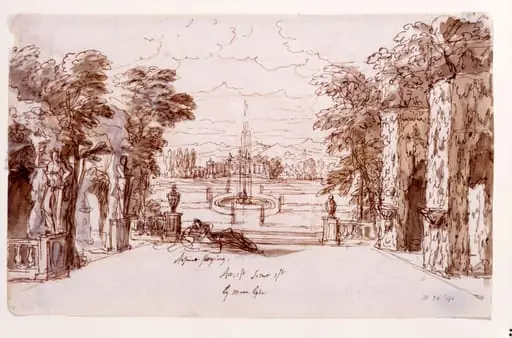 Design for a stage set for Arsinoe, Queen of Cyprus at the Theatre Royal, London for Act I, scene 1, Arsinoe sleeping in a garden at night
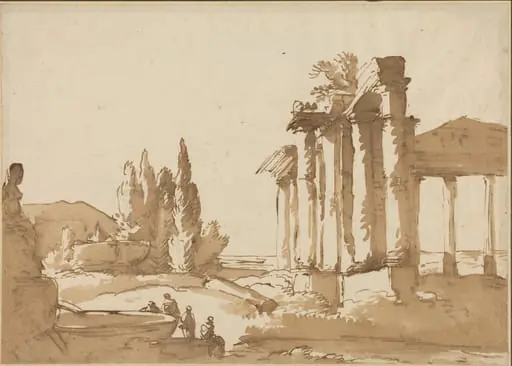 Landscape with Ruins