Artwork
Italian Hills
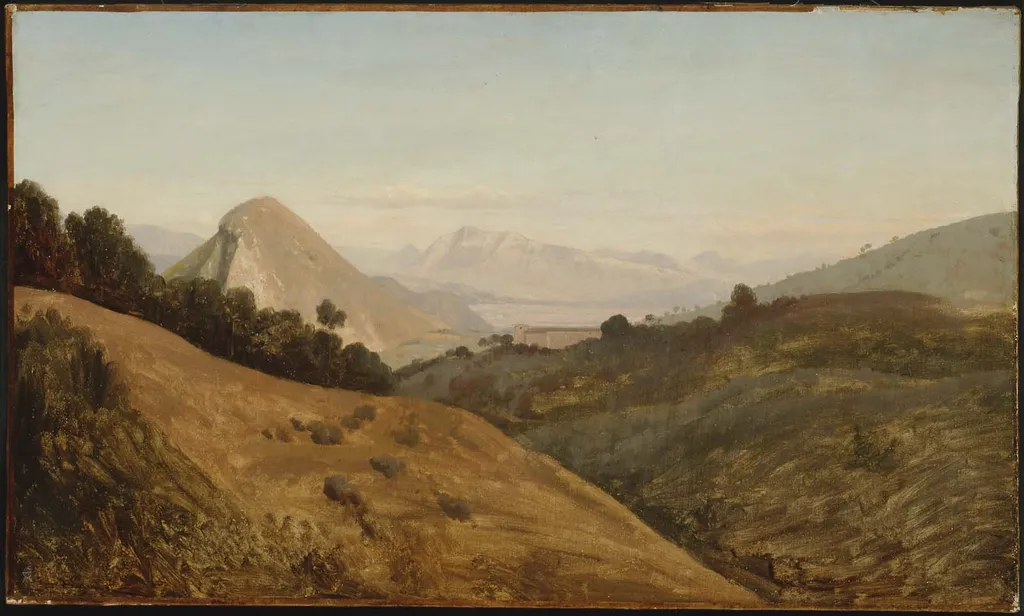
Italian Hills is an unspecified painting by Théodore Caruelle d'Aligny. It dates from 1826 and is held in the collection of the Museum of Fine Arts Boston.
About this work
Overview
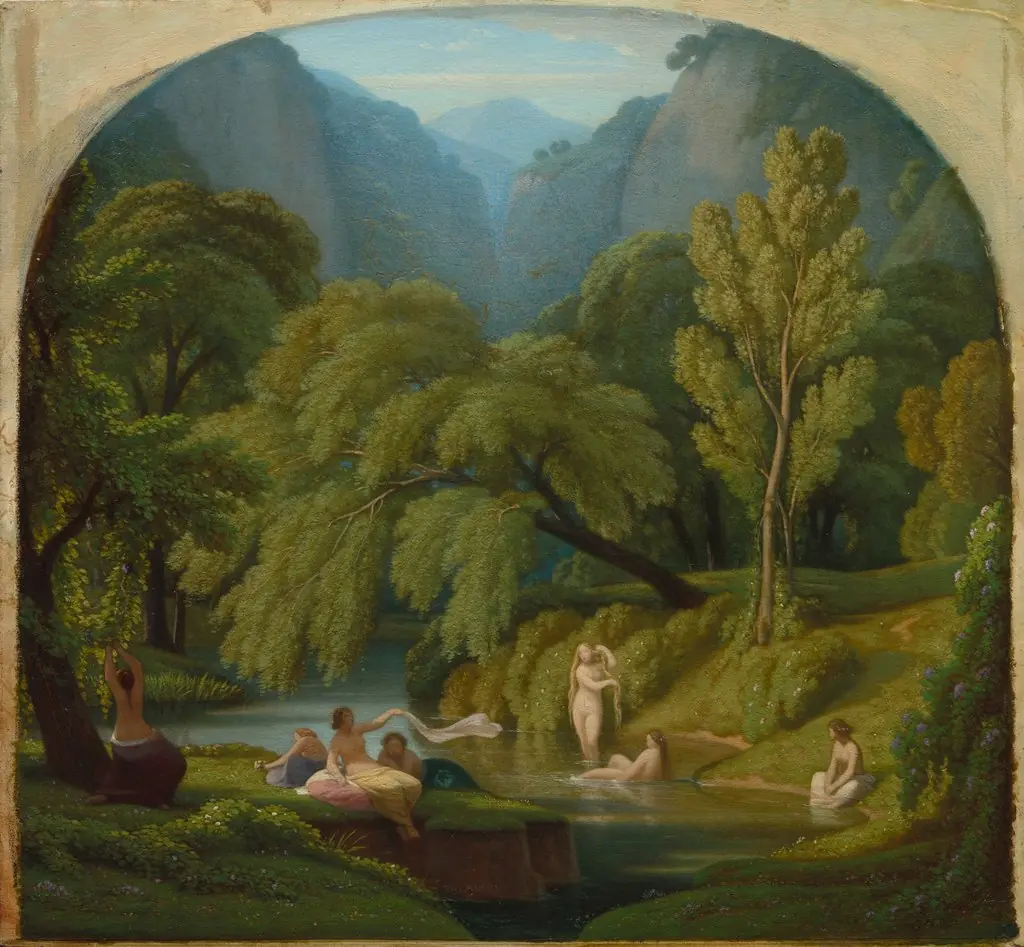
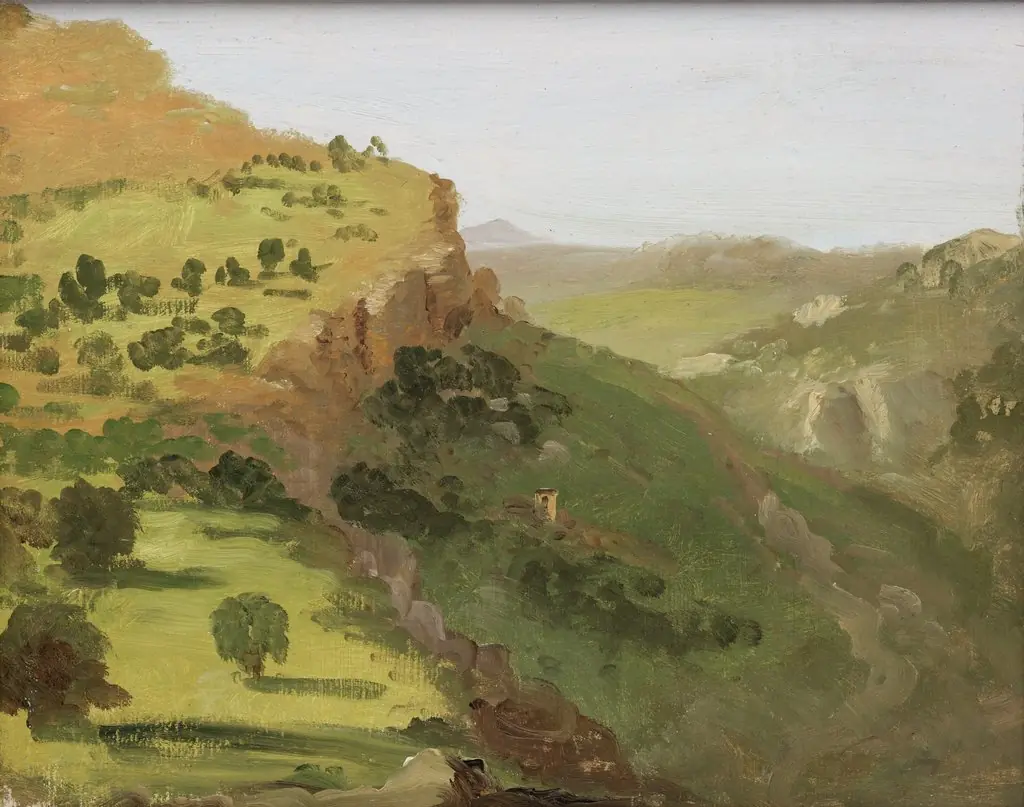
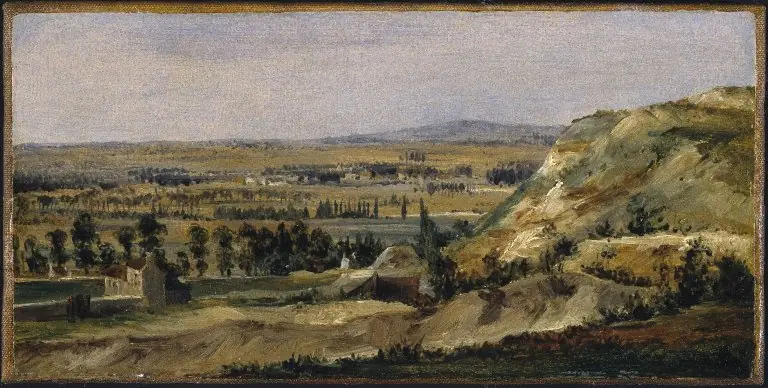
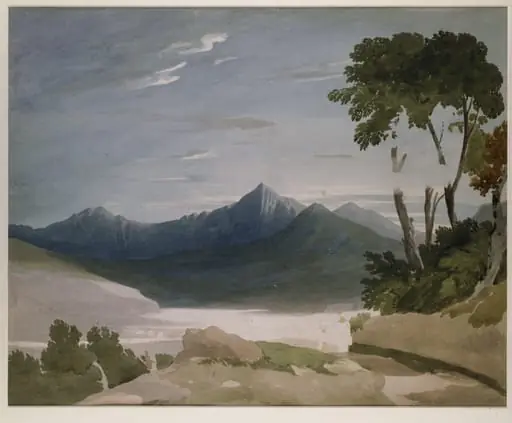
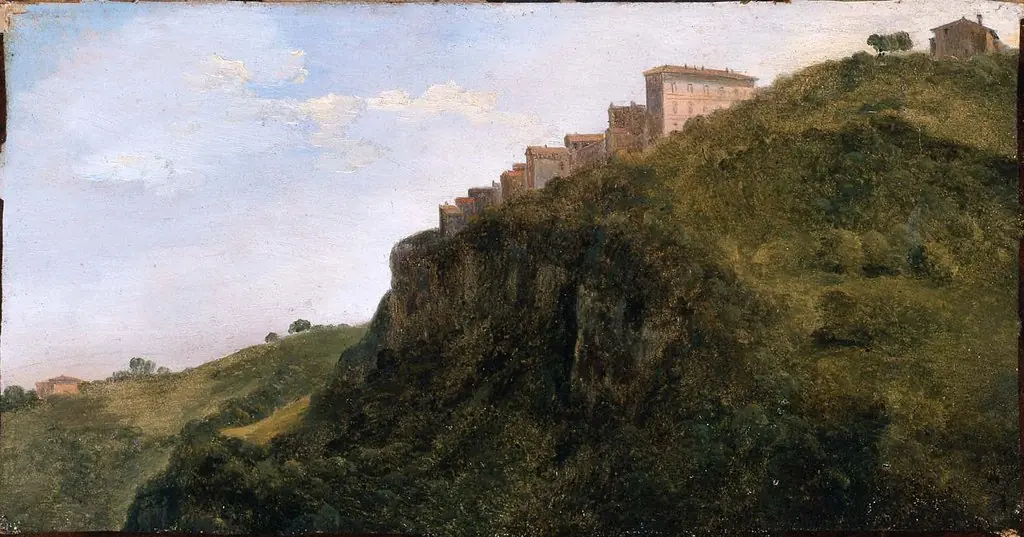
Italian Hills, painted in 1826 by Théodore Caruelle d'Aligny, is a landscape depicting the gentle topography of the Italian countryside. The work is part of the collection at the Museum of Fine Arts, Boston. It captures a quiet expanse of rolling terrain, with distant peaks and scattered architecture, rendered in a subdued palette that emphasizes atmospheric depth and stillness.
Subject & Meaning
The scene presents an idealized view of rural Italy, free from human activity or dramatic events. Rolling hills, sparse vegetation, and distant buildings suggest a tranquil, timeless countryside. The composition invites contemplation rather than narrative, reflecting 19th-century European tastes for serene, harmonious nature as a refuge from industrialization and urban life.
Technique & Style
D'Aligny employs subtle gradations of tone to distinguish foreground from background, using warmer earth tones in the nearer land and cooler, bluish hues for the distant mountains. The sky is softly rendered with minimal detail, enhancing the sense of atmospheric haze. Light is diffused evenly, avoiding strong contrasts, which contributes to the painting’s quiet, meditative mood.
History & Provenance
Created in 1826, the painting entered the Museum of Fine Arts, Boston’s collection in the early 20th century. D'Aligny, a French artist known for his Italianate landscapes, traveled extensively in Italy during the 1820s, producing numerous works inspired by its terrain. This piece is one of several from that period that reflect his fascination with the region’s topography and light.
Context
In the 1820s, French artists increasingly turned to Italy as a source of artistic inspiration, drawn by its classical ruins and pastoral scenery. D'Aligny’s work aligns with this trend, though he avoids overt historicism. His landscapes emphasize mood over detail, reflecting broader Romantic-era interests in nature’s emotional resonance and the sublime in quiet, unspoiled environments.
Legacy
Though not widely known today, D'Aligny’s Italian Hills exemplifies a quiet strain of 19th-century landscape painting that prioritized atmosphere and tonal harmony over dramatic effect. It remains a representative example of French artists’ engagement with Italian scenery during the early Romantic period, offering insight into evolving perceptions of nature as a space for reflection.
Artist & collection
Artist
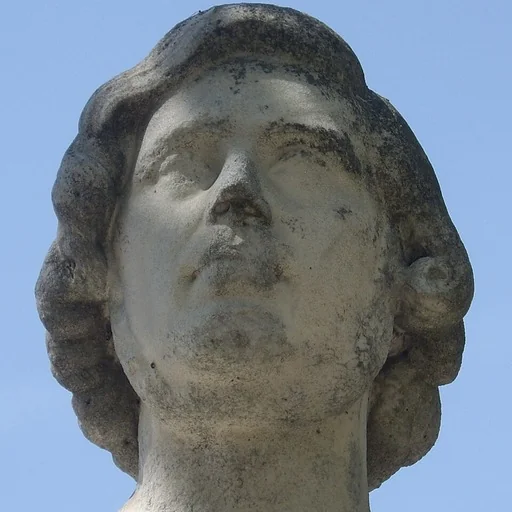
Théodore Caruelle d'Aligny (1798–1871) was a French artist, born in Saint-Aubin-des-Chaumes.


 Italian Landscape
 Italian Landscape with Bathers
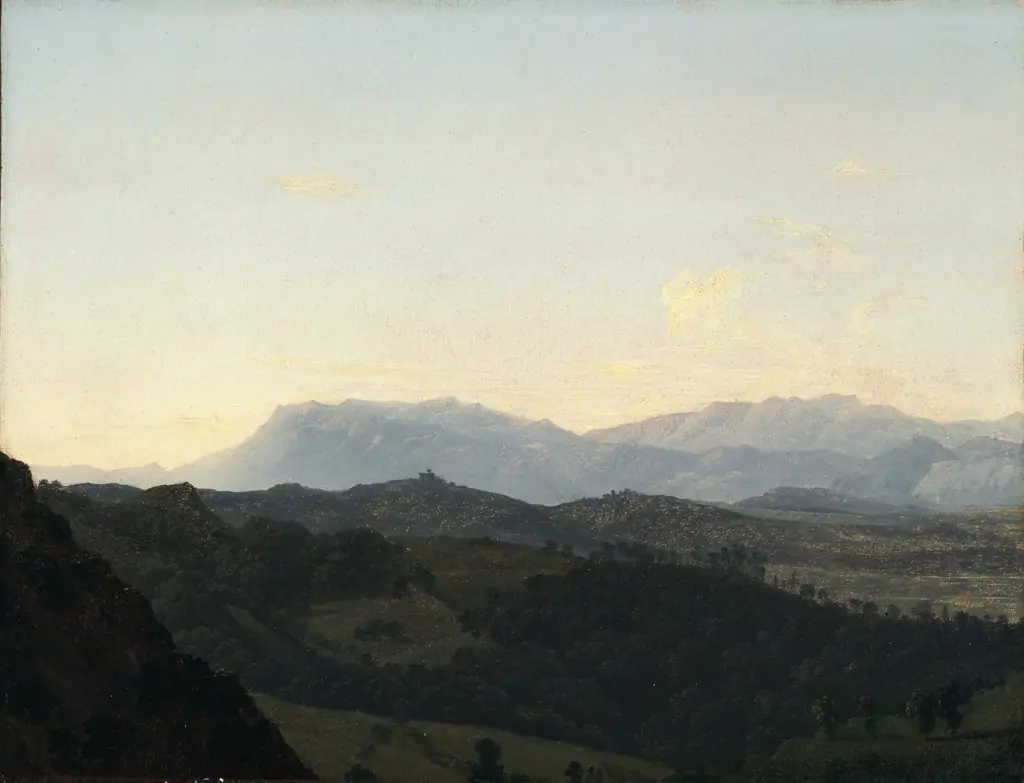 The Sabine Mountains
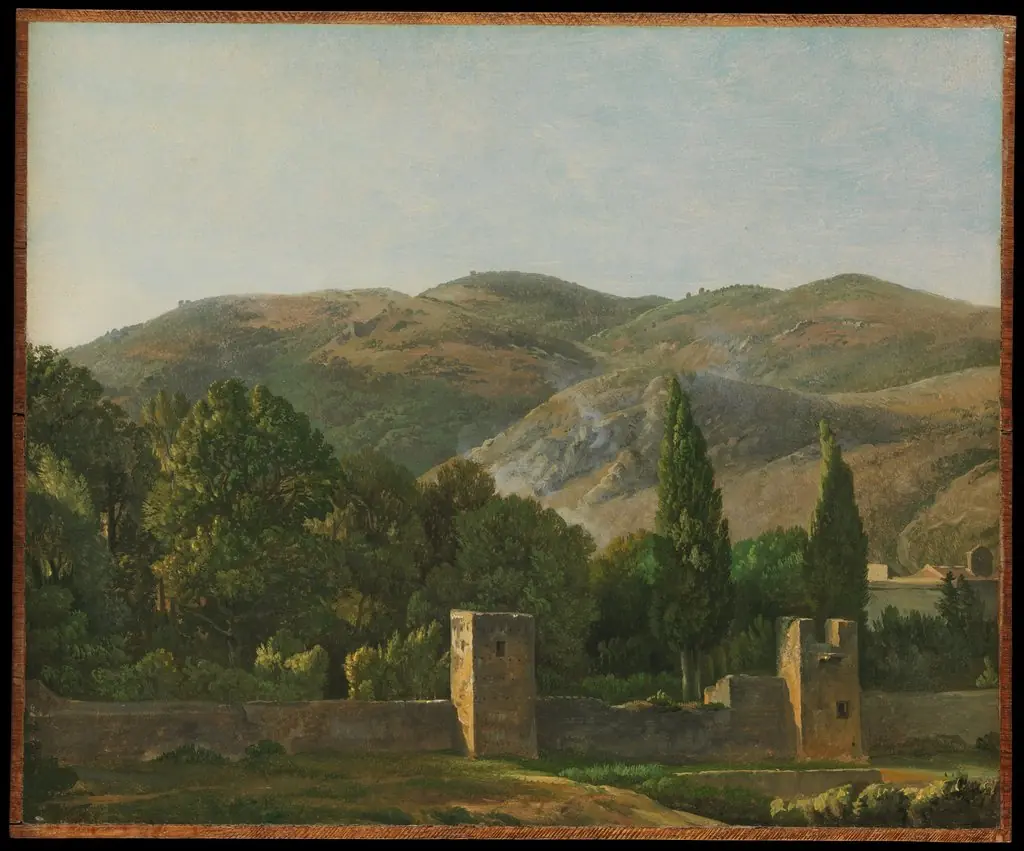 Fortified Wall, Italy
 View near Naples
 Cader Idris, with the Mawddach River
 Panoramic Landscape
 Civitella Seen from the North
 View of the Roman Campaign near Subiaco
 Schatacook Mountain, Housatonic Valley, Connecticut
 Snowdon
 Italian Hill Town