Artwork
Civitella Seen from the North
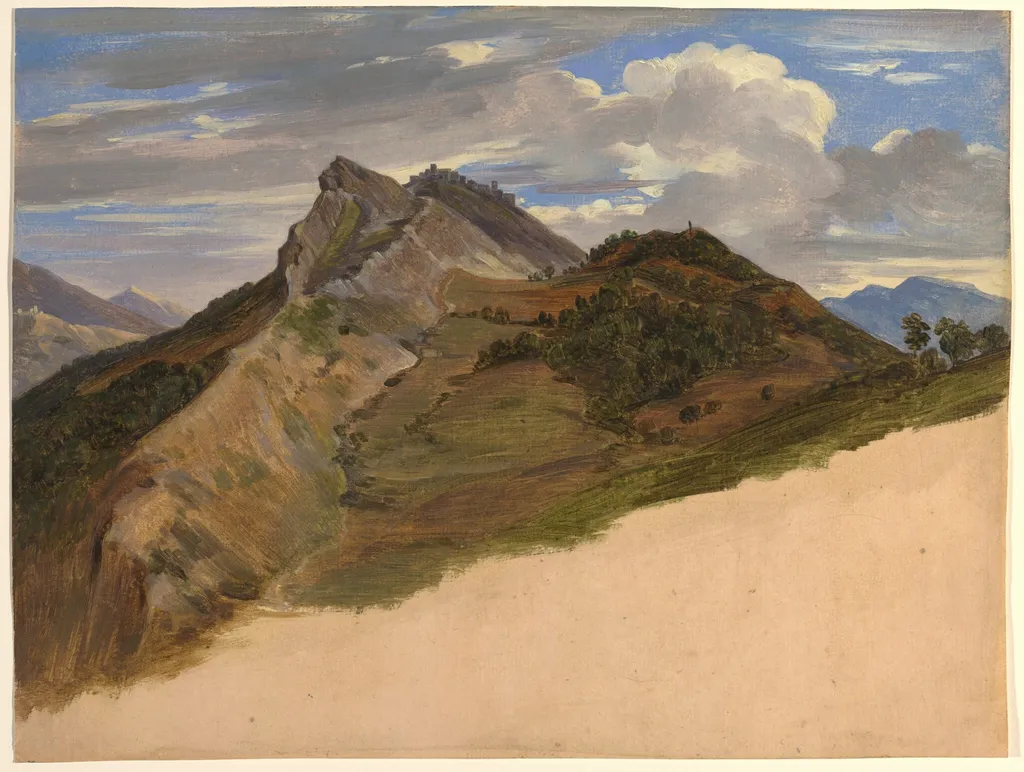
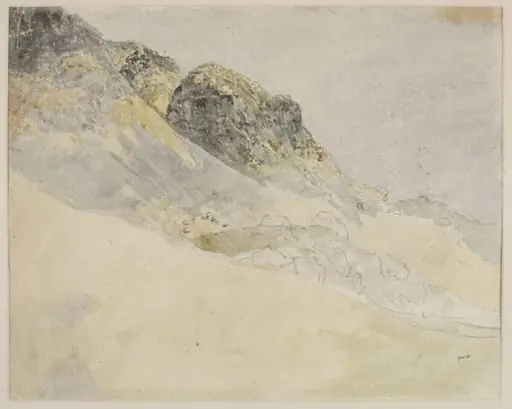
Civitella Seen from the North is an oil drawing by the Romanticist artist Johann Joachim Faber. It dates from 1822 and is held in the collection of the National Gallery of Art.
About this work
Overview
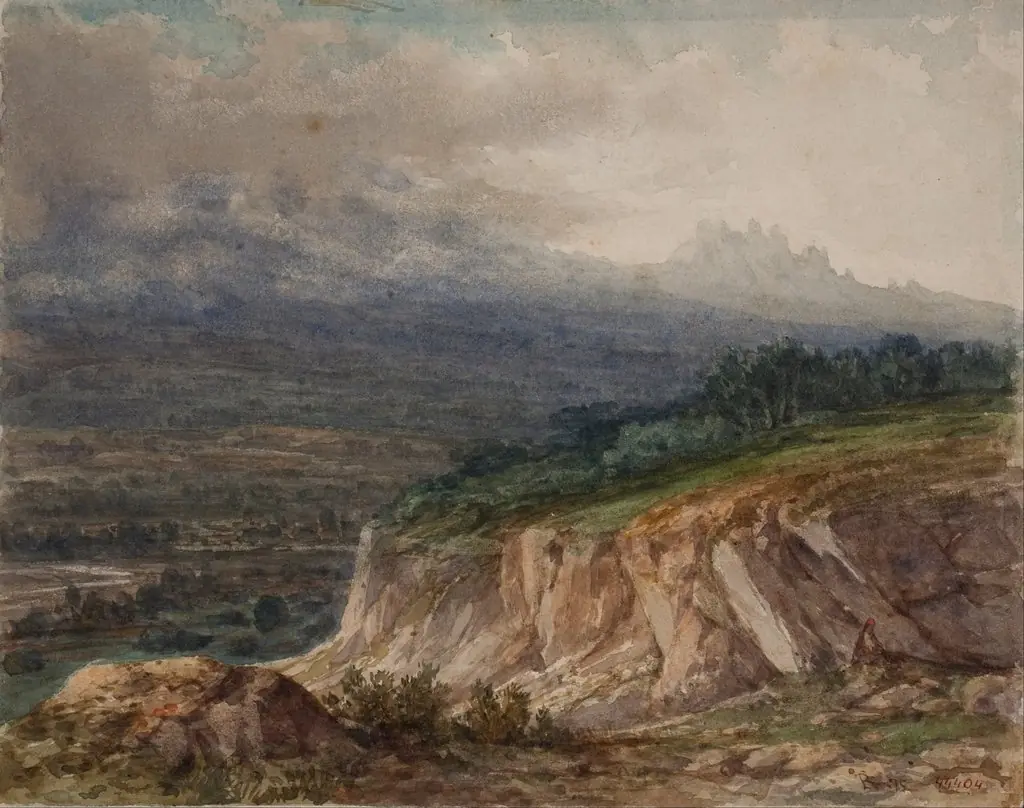
Created in 1822, *Civitella Seen from the North* is an oil drawing executed on beige, prepared paper. The artist, Johann Joachim Faber, applied oil paint over a network of indented lines, a method that allowed both drawing and painting to coexist on a single support.
Subject & Meaning
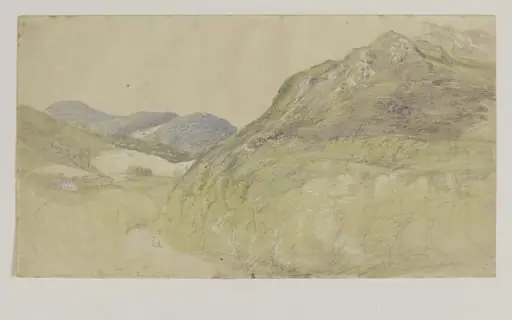
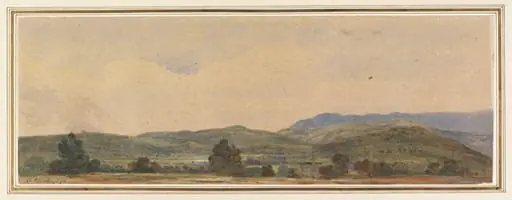
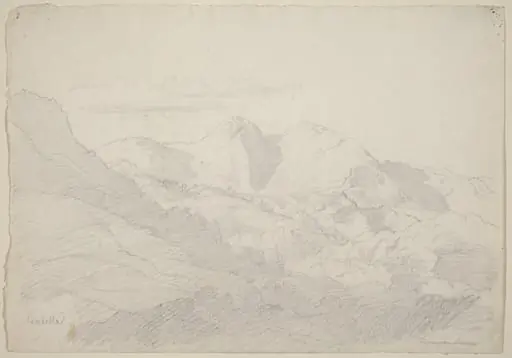
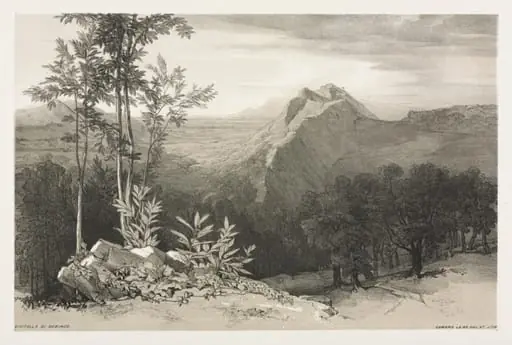
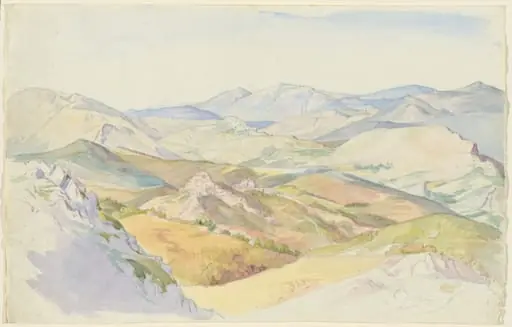
The composition presents a northern perspective of the town of Civitella, perched atop a steep cliff amid rolling hills. A modest, dark structure crowns the ridge, suggesting a fortified building, while the surrounding landscape is rendered with gentle hills, scattered trees, and a sky broken by light clouds.
Technique & Style
Faber employed a loose brushwork and a warm palette of blues, greens, and earth tones. In several areas the paint is built up thickly, creating a tactile surface that emphasizes the contours of the hills—a practice typical of early‑19th‑century landscape sketches that blended drawing with impasto.
History & Provenance
Born in Hamburg in 1778, Faber initially trained in historical painting before turning to landscape after a study trip to Italy with fellow artists J. A. Koch and Reinhardt. The work was likely produced during his Italian period, when he began to specialize in depictions of local scenery such as Civitata.
Context
The early 1820s saw German painters traveling to Italy to absorb its light and topography, integrating those influences into their own traditions. Faber’s northern view of Civitella reflects this trend, combining Germanic compositional clarity with the atmospheric qualities observed in the Italian countryside.
Own this work as a print
Artist & collection

Artist
Johann Joachim Faber (12 April 1778 – 2 August 1846) was a landscape painter who was born in Hamburg.