Artwork
Scene from the Gallic Wars: The Gaul Littavicus, Betraying the Roman Cause, Flees to Gergovie to Support Vercingétorix
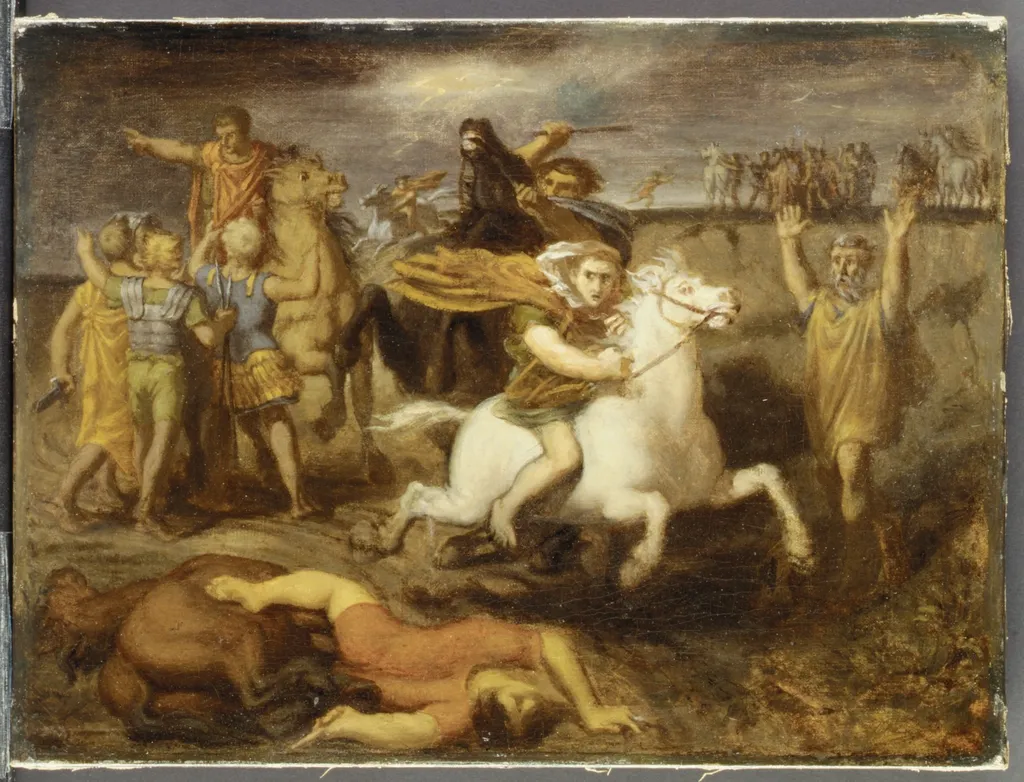
Scene from the Gallic Wars: The Gaul Littavicus, Betraying the Roman Cause, Flees to Gergovie to Support Vercingétorix is an oil painting by Théodore Chassériau. It dates from 1838 and is held in the collection of the Metropolitan Museum of Art.
About this work
Overview
It is a significant example of historical painting from the period, depicting a moment of shifting loyalties during the conflict between Gauls and Romans.
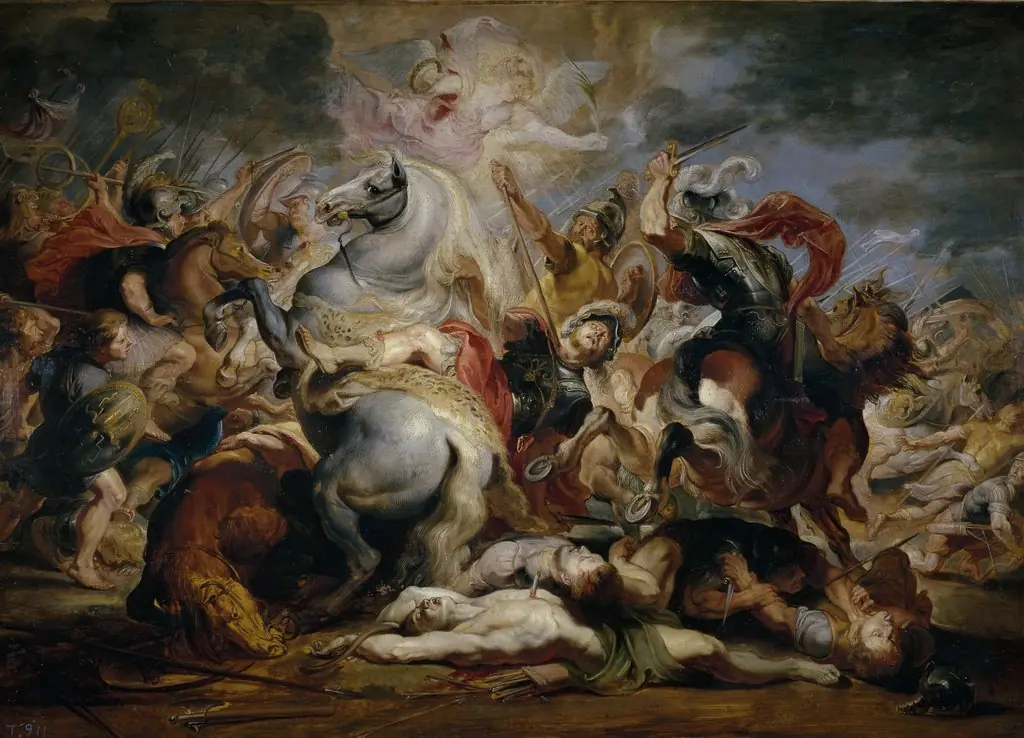
Théodore Chassériau's 1838 oil painting, "Scene from the Gallic Wars: The Gaul Littavicus, Betraying the Roman Cause, Flees to Gergovie to Support Vercingétorix," captures a pivotal and dramatic event from ancient history. This large-scale work showcases the artist's early Romantic tendencies through its dynamic composition and intense subject matter. It is a significant example of historical painting from the period, depicting a moment of shifting loyalties during the conflict between Gauls and Romans. The artwork is part of The Metropolitan Museum of Art's collection.
Subject & Meaning
The painting illustrates a specific episode from the Gallic Wars, detailing the defection of the Aeduan chieftain Littavicus. Betraying his alliance with the Roman forces, Littavicus is shown in flight towards Gergovie, intending to join the resistance led by Vercingétorix. This historical narrative provided Chassériau with an opportunity to explore themes of loyalty, treachery, and the chaos of conflict, rendered through a central equestrian figure amidst a tumultuous battle. The scene emphasizes the high stakes and moral complexities of ancient warfare.
Technique & Style
Chassériau employed oil paint to create a visually intense and active composition. The central figure, mounted on a white horse, dominates a chaotic battleground populated by armored soldiers, some in combat, others fallen. Earthy browns and yellows define the palette, with the horse's white coat providing a stark contrast. Dramatic lighting, often referred to as chiaroscuro, accentuates the figures and action, while a stormy background enhances the sense of urgency and impending conflict. This approach reflects the emerging Romantic style of the era.
History & Provenance
Created in 1838, this painting emerged during Théodore Chassériau's formative years as an artist. Born in the Dominican Republic, Chassériau trained initially under the Neoclassical master Jean-Auguste-Dominique Ingres. While his early works, including this one, show a classical foundation, the dramatic intensity and emotional charge here foreshadow his later embrace of Romanticism, influenced by artists like Eugène Delacroix. The artwork is currently housed in the collection of The Metropolitan Museum of Art, where it represents a key moment in 19th-century French historical painting.
Artist & collection
Artist
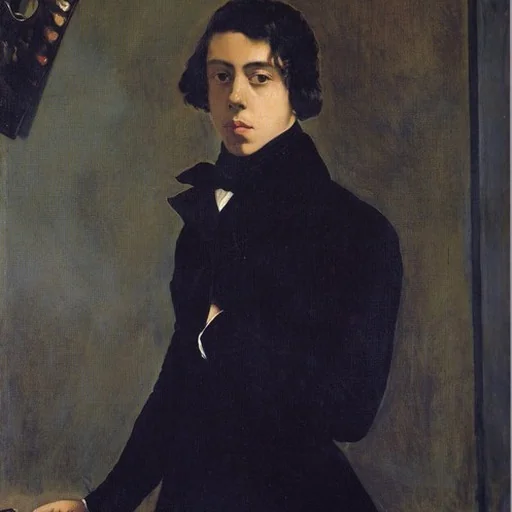
Théodore Chassériau (French pronunciation: ; Spanish: Teodoro Chasseriau; September 20, 1819 – October 8, 1856) was a Dominican-born French Romantic painter noted for his portraits, historical and religious paintings,…