Artwork
Arab Horse
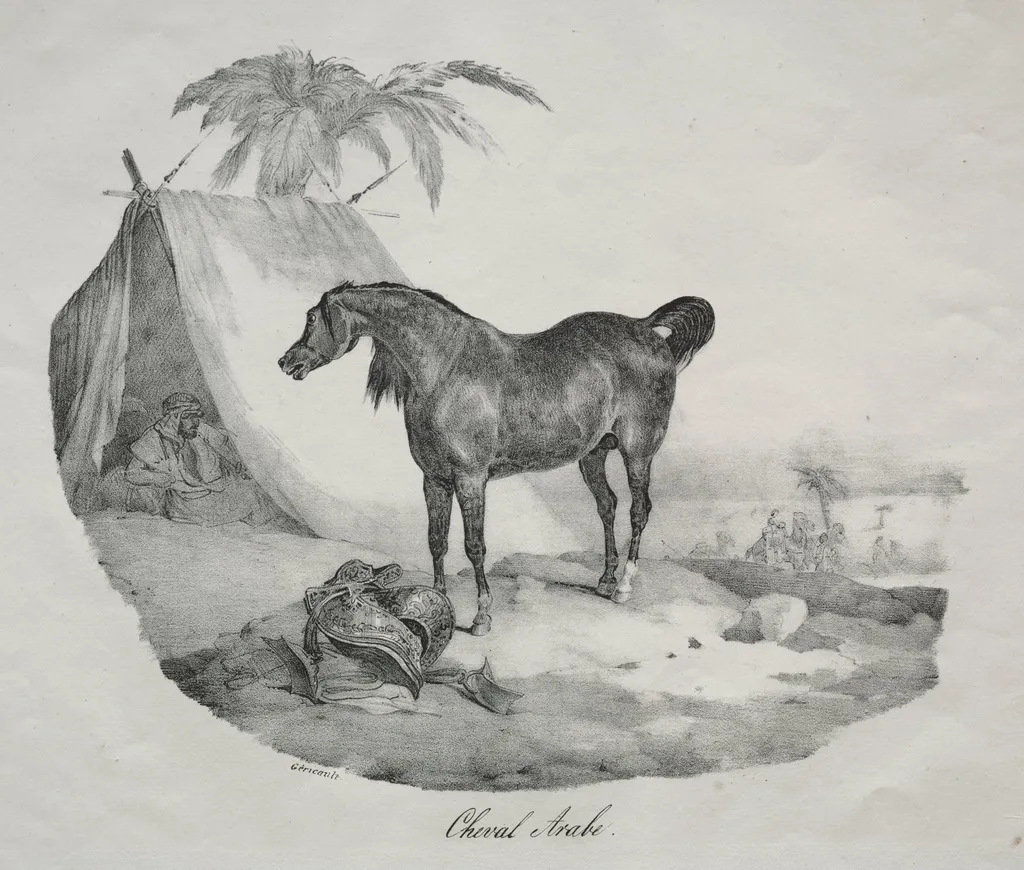
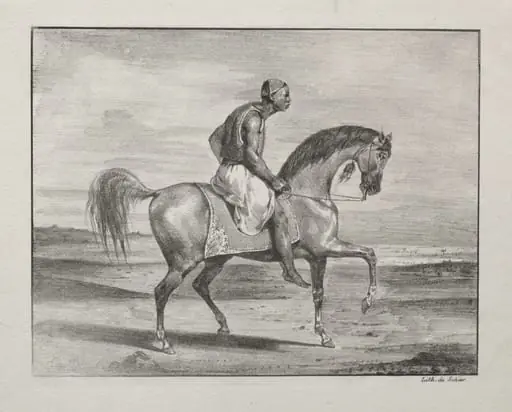
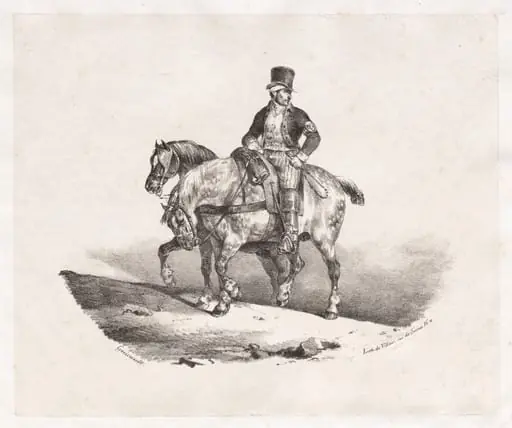
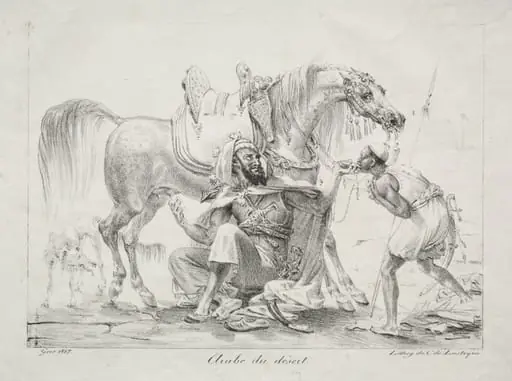
Arab Horse is a print by the Romanticist artist Théodore Géricault. It dates from 1822 and is held in the collection of the Cleveland Museum of Art.
About this work
Overview
Created in 1822 by French artist Théodore Géricault, *Arab Horse* is a print that belongs to the collection of the Cleveland Museum of Art. Executed during the brief but productive span of Géricault’s career, the work reflects his interest in the Romantic emphasis on emotion and the natural world.
Subject & Meaning
The image centers on a solitary Arab horse standing in a stark, desert‑like setting. A lone figure is seated near a tent, with a palm tree and a rolled blanket or saddle visible on the ground, suggesting a quiet moment of rest within an expansive landscape.
Technique & Style
Géricault employs simplified forms and broad shading rather than intricate detail, giving the horse a calm, almost austere presence. The composition relies on contrast between the dark silhouette of the animal and the lighter, sparse background, reinforcing the work’s contemplative mood.
History & Provenance
The print was produced early in Géricault’s output, a period marked by his exploration of animal anatomy and movement. After changing hands through private collections, it entered the Cleveland Museum of Art, where it remains on view.
Context
*Arab Horse* aligns with the Romantic movement’s fascination with untamed nature and the emotional resonance of solitary figures. Géricault’s broader oeuvre includes dramatic scenes of human struggle, yet his studies of horses reveal a parallel preoccupation with the power and grace of animal forms.
Artist & collection
Artist
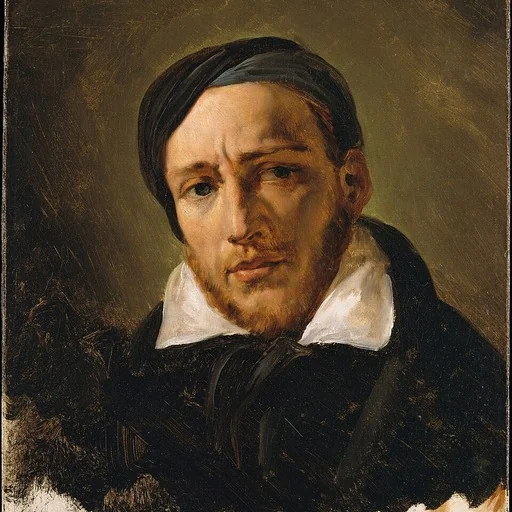
Jean-Louis André Théodore Géricault (French: ; 26 September 1791 – 26 January 1824) was a French painter and lithographer.